
In This Article
- The Source Material and Its Origins
- Who Is Involved in the Adaptation
- Why This Adaptation Matters
- What to Watch Next
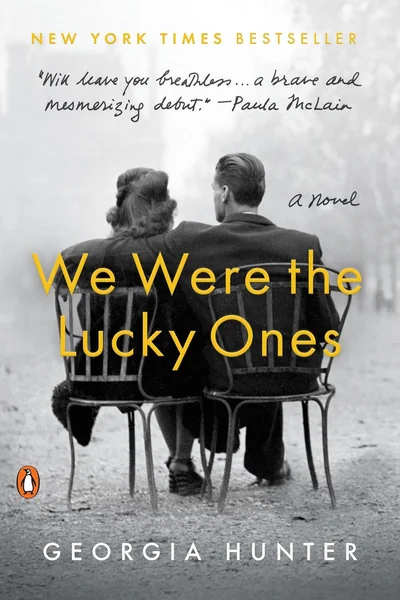
Georgia Hunter's We Were the Lucky Ones — a novel tracing the fragmented survival of a single Polish Jewish family across multiple continents during the Holocaust — made its television debut on Hulu on March 28, 2024. The limited series, which concluded on May 2, 2024, was adapted by screenwriter Erica Lipez, according to Wikipedia's entry on the adaptation. The premiere marks the first time Hunter's meticulously documented family story has reached a global streaming audience.
The Source Material and Its Origins
Published in February 2017, Hunter's debut novel is grounded in more than a decade of archival research that Hunter conducted after discovering, at age fifteen, that she came from a family of Holocaust survivors, according to Penguin Random House's author page. The result was a New York Times bestseller that has since been published in over 20 languages. The book follows the Kurc family of Radom, Poland — parents and grown children scattered by the war to Siberian gulags, South American refugee trails, and European battlefronts. Kirkus Reviews noted that Hunter's extensive research is evident in the novel's thorough, precise historical detail. For a full assessment of the book, see our review.
Who Is Involved in the Adaptation
The Hulu series was adapted by Erica Lipez, previously known for her work on The Morning Show, as noted by the Los Angeles Times. The cast includes Logan Lerman as Addy, the novel's middle-child composite of Hunter's own grandfather, alongside Joey King and Lior Ashkenazi as the family patriarch Sol, and Robin Weigert as mother Nechuma. Per Hulu's official press page, the series is described as "inspired by the incredible true story of one Jewish family separated at the start of World War II, determined to survive."
The Los Angeles Times described the series as working best as "a family drama" that "never leaves its characters' sides to take in the bigger picture" — noting, for example, that the Warsaw ghetto uprising appears only as "noise and smoke across a wall, glimpsed from afar." Entertainment Weekly observed that Lerman's performance "melds easily" with the ensemble, and that Ashkenazi and King manage to draw occasional humor from the material — "[no] small feat in a Holocaust drama," according to EW's review.
Why This Adaptation Matters
The series arrives as the Holocaust passes further from living memory, a concern the Los Angeles Times raised directly in its premiere-day coverage. A title card in the show states that by the end of the Holocaust, 90 percent of Poland's three million Jews had been annihilated — a figure the LA Times called "an incomprehensible fact" that the show attempts to make human by staying close to a single family's experience.
The Jewish Book Council has highlighted the novel's unflinching depiction of violence at the hands of Nazi mobile killing squads alongside the grinding conditions of displacement — dimensions that the adaptation carries into a medium capable of reaching audiences who may never have encountered the source novel. That the story is autobiographical adds a further layer: as Today.com reported, Hunter wrote the book directly from her family's real experiences, making the Hulu series an unusually direct translation of documented history.
What to Watch Next
Hunter has continued writing; her second novel, One Good Thing, is noted on her Penguin Random House author page, establishing her beyond the single title that brought her to wide attention. For readers arriving at the story through the Hulu series, the novel — published in over 20 languages and available wherever books are sold — remains the foundational document from which both the series and Hunter's decade of research originate.
Frequently Asked Questions
Is We Were the Lucky Ones: A Novel worth reading in 2024?
Yes, for readers with an interest in Holocaust history and family survival narratives, We Were the Lucky Ones is a deeply researched and emotionally powerful read. We rate it 3.8/5 stars at LuvemBooks. Its exploration of lesser-known aspects of the Holocaust — beyond the concentration camp experience — makes it especially valuable for those looking to broaden their understanding of that era.
Should I read We Were the Lucky Ones or watch the Hulu series?
Both are worthwhile, and they complement each other well. The Hulu miniseries format handles the multiple storylines more fluidly for some audiences, while the novel by Georgia Hunter provides richer historical context and interior character depth. If pacing is a concern, consider starting with the series and then diving into the book for the full story.
What is the main message of We Were the Lucky Ones by Georgia Hunter?
At its heart, We Were the Lucky Ones is a testament to family bonds, resilience, and the role of chance in survival. Hunter traces her own family — the Kurcs of Radom, Poland — as they are scattered across the globe by World War II, each member fighting to survive long enough to find the others again. The title itself reflects the bittersweet reality that survival, amid such widespread loss, was never guaranteed.
Who should read We Were the Lucky Ones: A Novel?
This novel is ideal for readers who enjoy meticulously researched historical fiction, particularly those interested in World War II and Holocaust narratives beyond the concentration camp setting. It suits patient readers who appreciate character-driven storytelling across multiple perspectives. It may be less suited to those looking for fast-paced plotting or a tightly focused single-protagonist narrative.
Is the Hulu adaptation of We Were the Lucky Ones faithful to the book?
The Hulu miniseries, developed by Erica Lipez and premiering March 28, 2024, is broadly faithful to Georgia Hunter's source material, drawing on the same multi-generational Kurc family story. The miniseries format gives the adaptation enough room to honor the novel's multiple storylines, though as with any screen adaptation, some compression and creative interpretation is inevitable.
When did the Hulu series We Were the Lucky Ones premiere and end?
The Hulu miniseries We Were the Lucky Ones premiered on March 28, 2024 and concluded on May 2, 2024. It is based on Georgia Hunter's 2017 novel of the same name and was developed for television by Erica Lipez.
Reader Discussion
No comments yet
Be the first to share your thoughts!