At a glance
LuvemBooks Verdict
Best for: Readers who love emotionally driven, research-anchored multi-generational wartime family epics — particularly book-club groups who want a sweeping, true-story-rooted Holocaust narrative spanning five continents.
Worth it? Skip it? Read the full verdict →Ask LuvemBooks
Was this helpful?
- Is it worth reading?
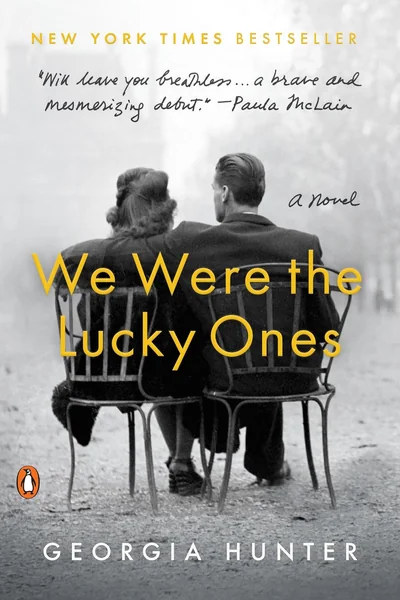
- For readers drawn to emotionally driven, research-anchored wartime family epics, We Were the Lucky Ones delivers genuine rewards: an extraordinary geographic sweep across five continents and six years, and the authenticating weight of a story grounded in Hunter's own documented family history, which Kirkus Reviews itself acknowledged as "thorough and precise in its details." The meaningful caveat is that Kirkus also found the prose "too beholden to sentimentality and cliché" and the characters "flat and unknowable," citing specific passages — such as Halina steeling herself with "You'll get only one shot at this. Don't botch it" — as inadequate to the gravity of the subject. The novel is best approached as emotionally driven historical testimony rather than as literary fiction.
- Similar books
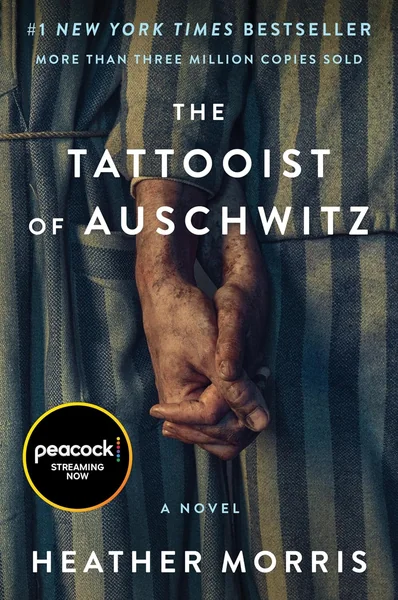
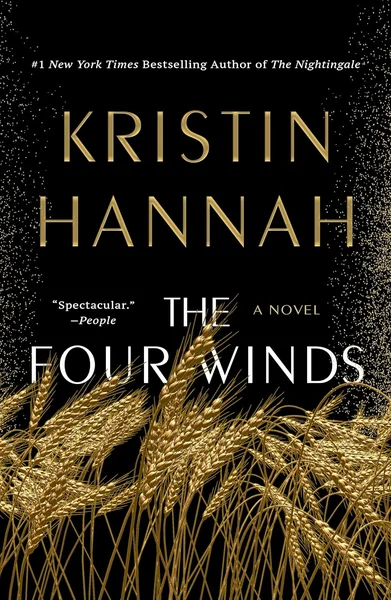
- Readers who responded to We Were the Lucky Ones will likely gravitate toward other research-grounded wartime family narratives. The Nightingale by Kristin Hannah is a close companion — another emotionally driven WWII story centring on family survival and resistance — and Hannah's The Four Winds similarly follows a family fractured by historical catastrophe. Before We Were Yours by Lisa Wingate is another multi-generational saga rooted in real events, while The Tattooist of Auschwitz by Heather Morris shares the combination of documented history and accessible, emotionally direct prose. For readers interested in the broader tradition of family epics shaped by historical trauma, The Color Purple by Alice Walker and Sold on a Monday by Kristina McMorris round out the picture, each exploring survival, separation, and reunion across generations.
- Who should read this?
- We Were the Lucky Ones is written for general adult readers rather than literary-fiction devotees or academic specialists — specifically those drawn to multi-generational wartime survival stories structured as family epics. It is a natural fit for book clubs, supported by a full readers' guide from Penguin Random House. Readers who responded to emotionally driven, research-anchored Holocaust narratives will find its scope and momentum rewarding. Those who prioritise stylistic rigour and deep character interiority should approach it with the Kirkus critique in mind.
- About Georgia Hunter
- Georgia Hunter is the author of the New York Times best-selling novel We Were the Lucky Ones (2017) and a producer of its Hulu series adaptation. At fifteen, she discovered she came from a family of Holocaust survivors, which inspired years of intensive research to unearth and record her Polish family's remarkable story. She is also a public speaker.
- Tell me about the adaptation
- We Were the Lucky Ones was adapted as a Hulu series, with Georgia Hunter herself serving as a producer on the production — a role that kept the adaptation closely tied to the source material and to Hunter's original research into her family's history. The series brings the Kurc family's multi-continental wartime story — spanning Siberia, Brazil, Nazi-occupied Poland, and beyond — to the screen.
- What are the main themes?
- At its core, We Were the Lucky Ones is about the will to survive and the drive to reunite — the Kurc family's dispersal across Siberia, West Africa, Brazil, and Nazi-occupied Poland is not a narrative device but a documented reality, and the novel frames every individual storyline through the lens of that shared goal. Themes of Jewish identity and its concealment run throughout: Genek must decide whether to hide his Jewishness on a form he understands to be "life and death," while Halina works with her resistance-fighter husband to protect those around her. The novel also engages, less explicitly, with questions of testimony and memory — Hunter's decision to render her family's history as fiction rather than memoir is itself a thematic choice the publisher's readers' guide invites readers to examine.
- Is this a good book club pick?
- We Were the Lucky Ones is a strong book club choice: Penguin Random House's readers' guide includes substantial discussion questions probing character choices, survival strategies, and Hunter's decision to write the story as historical fiction rather than memoir. The novel's structure — a dozen parallel storylines across five continents — naturally generates debate about whose story resonates most, how the parallel-cutting technique shapes emotional investment, and what it means to fictionalise documented family testimony. The contrast between the novel's extraordinary research credentials and the Kirkus critique of its prose also makes for a productive critical conversation.
Summarize this book
Follow up
Synthesized from verified book data & published reviews · How we review
Press Enter to ask. Answers come from our editorial Q&A — start typing to see related questions.
Age & Reading Level
Recommended age
Adult
Reading level
Adult
4 content notes · who it suits
Content to know about
Skip if you're looking for literary fiction with precise prose and deeply interiored characters
Editorial Review
Georgia Hunter's debut novel We Were the Lucky Ones tells the true-rooted story of the Kurc family — three generations of Polish Jews from Radom — scattered across five continents by the Second World War and driven by an unwavering will to reunite. The novel's extraordinary geographic and historical sweep, grounded in years of personal research, gives it genuine power; a critical reservation about its prose style and character depth keeps it from reaching the full weight of its subject matter.
Read the Full ReviewBooks like We Were the Lucky Ones
Curated picks for readers who enjoyed We Were the Lucky Ones, with our reasoning for each match.
If you liked We Were the Lucky Ones