Skip to content
Reviewed

Read Time

8 min read

Our age bandAdult
Reader rating
4.6 · 35,297 Amazon ratings, as of Nov 2026
reader ratings, not a LuvemBooks score
Curated & edited by

LuvemBooks Editorial

How we create our reviews →
Share This Review
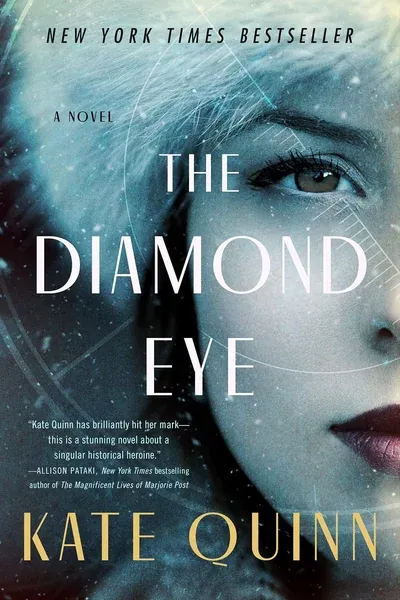
The Diamond Eye: A Novel – The New York Times Bestselling WWII Historical Fiction About Lady Death, History's Deadliest Female Sniper by Kate Quinn front cover

Our review

The Diamond Eye

The Diamond Eye by Kate Quinn Review: A Sniper's Wartime Rise

Based on the life of Soviet sniper Lyudmila Pavlichenko, this historical novel delivers meticulous battlefield detail and a compelling portrait of a woman navigating misogyny and trauma, though its shifting timelines occasionally dilute the combat narrative.

Our age band: Adultgraphic violence · wartime trauma

LuvemBooks Verdict

Best for

Grounded in meticulous historical research and lush prose, this novel appeals to readers who prioritize immersive combat detail and the psychological weight of war, balancing it with a poignant exploration of female resilience.

Worth it if

Worth reading if you enjoy character-driven biographical fiction that weaves diplomatic intrigue and wartime romance into a richly researched World War II narrative.

Skip if

Skip it if you prefer tightly focused combat narratives, as the shifting dual timelines and lengthy diplomatic sequences may slow the pacing for some.

Where reviewers agree and split

Readers rate it 4.6 on Amazon. The reviews we read that discuss it in depth split on some points:

  • Positive · ★★★★

    kara.reviews · Book blog: excellent historical fiction with compelling transformation themes and rich character development

  • Positive

    Nichole Louise · Book blog: beautifully crafted relationships and characters that linger after finishing

  • Positive

    That Artsy Reader Girl · Book blog: stunning writing and gripping historical narrative that surpasses expectations

  • Positive

    Marie Claire · Book blog: captivating historical fiction with meticulous research and compelling narrative

  • Positive

    Gilmore Guide to Books · Book blog: gripping intimate novel that riveted the reader throughout (from its headline)

  • Mixed

    Shelf Reflection · Book blog: enjoyable but less compelling than Quinn's previous work (from its headline)

    Overall verdicts are our summary of each review we read, from its headline, rating and conclusion.

    Critics and bloggers consistently praise Quinn’s meticulous historical research and lush prose, with kara.reviews and thatartsyreadergirl.com highlighting the immersive sniper sequences and stunning writing. While gilmoreguidetobooks.com celebrates the compelling character dynamics and gripping narrative, shelfreflection.com offers a mixed take, finding the story less suspenseful than Quinn's previous work.

    Sources: kara.reviews, That Artsy Reader Girl, Marie Claire, Gilmore Guide to Books, Shelf Reflection
    4.6from 35,297 Amazon ratings, as of Nov 2026— reader ratings, not a LuvemBooks score

    Ask LuvemBooks

    Was this helpful?

    Kate Quinn’s The Diamond Eye chronicles Mila Pavlichenko’s transformation from a Kiev history student into a legendary Soviet sniper and Washington diplomat. The novel delivers meticulous combat detail and a poignant exploration of female resilience, though its shifting dual timelines occasionally dilute the battlefield narrative. It remains a compelling tribute to a forgotten historical figure, best suited for readers who value historical authenticity over fast-paced plotting.
    Is it worth reading?
    Readers drawn to historical detail and understanding war's impact will find it rewarding, as Quinn meticulously reconstructs the Eastern Front. However, critics note that the pacing in Washington sections can be slower, making it less ideal for those seeking a combat narrative.
    Similar books
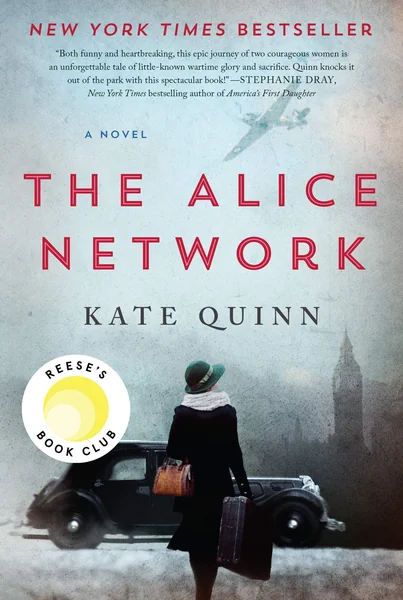
    Fans of this title often enjoy other meticulously researched WWII works that center female perspectives. Readers should look into The Alice Network by Kate Quinn for another deep dive into women’s wartime roles, or Between Shades of Gray by Ruta Sepetys for harrowing accounts of displacement under totalitarian regimes. Those drawn to political intrigue may also appreciate March by Geraldine Brooks.
    Who should read this?
    This novel is best suited for readers who enjoy immersive storytelling about real historical figures. It particularly appeals to those interested in WWII history, female resilience, and the psychological toll of combat. It may not satisfy readers seeking fast-paced plotting or a singular, tightly focused perspective over a sprawling dual-timeline structure.
    What age is it for?
    Written for adult readers, the novel contains mature themes including graphic scenes and complex ideological conflicts. Its depiction of combat makes it appropriate for mature audiences rather than younger readers.
    About Kate Quinn
    Kate Quinn is an American writer known for her works of historical fiction.
    How does it handle history?
    Quinn roots her narrative in the true story of Lyudmila Pavlichenko, the deadliest female sniper in recorded history. She uses an author's note to clarify where she draws directly from Pavlichenko's memoirs versus where she departs from fact. Reviewers like That Artsy Reader Girl and Shelf Reflection note this transparency helps readers distinguish fact from fiction.
    What are the key relationships?
    The story centers on Mila’s fierce bond with her son, Slavka, which drives her wartime decisions. Her relationship with Lieutenant Lyonya develops into a fast and wildly romantic partnership that critics like Nichole Louise highlight as a lingering emotional core. Mila’s interactions with First Lady Eleanor Roosevelt also reveal the complex diplomatic ties and personal sacrifices behind wartime alliances.
    Summarize this book

    Summarize this book

    Kate Quinn's novel follows Mila Pavlichenko, a young mother in 1937 Kiev who enlists in the Red Army after the Nazi invasion. She transforms into a legendary sniper dubbed Lady Death, surviving the brutal Siege of Odessa and Battle of Sevastopol before embarking on a diplomatic tour of Washington, D.C. The narrative alternates between frontline combat and political maneuvering as Mila navigates wartime romance, psychological trauma, and the glare of American diplomacy.

    Follow up

    How much of this is fictional?
    Is the pacing slow?

    Synthesized from verified book data & published reviews · How we review

    Ask LuvemBooks

    What would you like to know about The Diamond Eye?

    Answers come from our editorial notes on this book. If we haven't covered something, we'll say so.

    Readers often ask

    Our Review

    We review the evidence: published critics, reader verdicts and BookTube reviews, gathered and weighed with AI assistance and edited by LuvemBooks, rather than one reader's first-hand take.

    What the Book Actually Is and Does
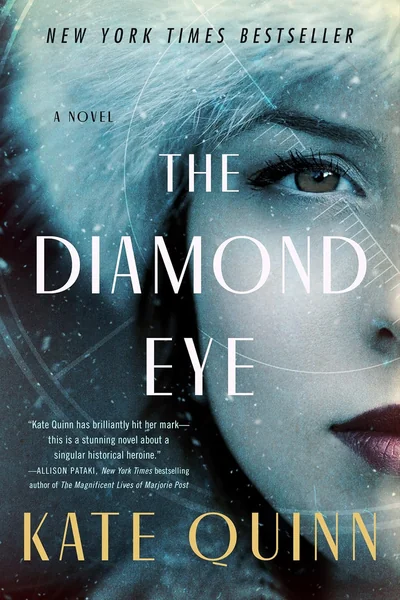
    The Diamond Eye: A Novel – The New York Times Bestselling WWII Historical Fiction About Lady Death, History's Deadliest Female Sniper by Kate Quinn front cover
    The Diamond Eye: A Novel – The New York Times Bestselling WWII Historical Fiction About Lady Death, History's Deadliest Female Sniper by Kate Quinn front cover
    The Diamond Eye is a historical fiction novel by Kate Quinn, published in paperback by William Morrow Paperbacks in March 2023 following its 2022 debut. The narrative follows Mila Pavlichenko, a young mother and history student in 1937 Kiev who enlists in the Red Army after the Nazi invasion.
    Quinn traces Mila's transformation into a lethal sniper known to the Germans as Lady Death and her subsequent diplomatic tour of the United States. The story alternates between the brutal front lines of the Siege of Odessa and the Battle of Sevastopol, and Mila's time in Washington, D.C. Mila navigates the glittering political world alongside First Lady Eleanor Roosevelt while grappling with the psychological toll of her combat record.
    She is driven by a desperate need to protect her son and provide a future free from the threat of fascism. Mila's journey forces her to confront the harsh realities of war while maintaining her humanity in an increasingly brutal world.
    The narrative carefully balances her professional achievements with her deeply personal motivations as a parent.

    Scope and Historical Context

    The novel is rooted in the true story of Lyudmila Pavlichenko, who became the deadliest female sniper in recorded history with 309 confirmed kills. Quinn utilizes her author's note to clarify which elements are drawn directly from Pavlichenko's memoirs and where artistic license is applied.
    The book serves as a corrective to the often-overlooked contributions of women on the Eastern Front. The Washington, D.C. Timeline explores the complex diplomatic efforts to secure American aid for the Soviet Union, weaving in the real-life friendship between Pavlichenko and Eleanor Roosevelt.
    The narrative also introduces a fictionalized threat involving a marksman. This thriller element adds a layer of historical tension to the biographical framework, challenging Mila to protect a foreign leader while battling her own demons.
    The novel highlights the stark contrast between the brutal reality of the front and the polished, often superficial, world of American diplomacy. It underscores the immense personal sacrifices made by those who fought in the shadows of global history.
    The diplomatic plotline reveals the complex ideological divides that persisted even among wartime allies.

    Strengths and Character Dynamics

    Readers and reviewers have consistently highlighted the meticulous research behind the sniper sequences. The book blogger behind That Artsy Reader Girl praised the detailed descriptions of Mila scouting locations and constructing camouflage.
    The book blogger behind Nichole Louise noted Quinn's success in fleshing out Mila's relationships, particularly her fast and wildly romantic bond with Lieutenant Lyonya. The portrayal of Mila's resilience against the misogyny of her superiors resonated strongly across reviews.
    The book blogger behind Shelf Reflection appreciated the theme of human strength and the pressure Mila places on herself to never miss. The author's note at the end of the book is considered essential reading for understanding the boundary between historical fact and fiction.
    Quinn successfully captures the quiet rage and relentless determination of women fighting on the front lines. The detailed rituals Mila employs to survive demonstrate her profound professional dedication and psychological fortitude.
    Mila's interactions with her fellow soldiers reveal a complex hierarchy of respect and survival.

    Genuine Limitations and Pacing

    The novel's structure divides its focus between the intense combat on the Eastern Front and the political maneuvering in Washington, D.C. The book blogger behind Shelf Reflection felt the story read more like a historical account than fiction and wished for more information about Mila's son, Slavka. The shifting timelines can occasionally slow the momentum, and the diplomatic intrigue does not carry the same visceral weight as the battlefield scenes.
    The book blogger behind That Artsy Reader Girl noted that while the Washington sections were gripping, they were ultimately less compelling than the time spent in the trenches. Some readers may find the fictionalized assassination plot detracts from the historical gravity of Pavlichenko's actual life.
    The narrative demands patience from readers who prefer a singular, focused perspective over a sprawling dual-timeline structure. The emotional distance from Mila's family life remains a noticeable gap in the otherwise intimate character study.
    The pacing shifts significantly as Mila transitions from the trenches to the political corridors of power.

    Is It Worth Reading?

    Weighing the reception, the book appeals strongly to readers who prioritize immersive historical detail and the psychological weight of war over fast-paced plotting. The tension lies in its dual focus, as it offers a profound look at a woman's trauma and triumph but asks readers to engage with lengthy diplomatic sequences.
    It aligns well with fans of meticulously researched WWII historical fiction that centers female perspectives. Readers seeking a tightly focused combat narrative may find the pacing uneven, while those drawn to character-driven stories about resilience will find it a rewarding read.
    The novel stands as a compelling tribute to a forgotten historical figure, even as its narrative choices divide attention between the battlefield and the ballroom. It ultimately rewards those willing to invest in Mila's long journey from a quiet student to a legendary warrior.
    The book serves as a powerful exploration of how ordinary individuals are forged into extraordinary heroes by the circumstances of their time. Readers who enjoy biographical fiction will find its historical grounding highly satisfying.

    Sources & Further Reading

    The key facts and claims in this review are grounded in the retrieved, verified sources listed below.

    1. Cited in this review
    2. 1
    3. 2
    4. Further reading
    5. 3

      Kate Quinn, LuvemBooks

    6. 4
    7. 5
    8. 6
    9. 7
    10. 8
    11. 9
    12. 10
    13. 11
    14. 12

      kara.reviews

    15. 13

      Marie Claire

    16. 14

      Gilmore Guide to Books

    Age & Reading Level

    Our age band

    Adult

    Our age band groups books for browsing; it isn't an age a review gave.

    Content to know about

    graphic violence
    wartime trauma
    misogyny

    Skip if you prefer tightly focused combat narratives without lengthy diplomatic sequences

    From our readers

    Reader reviews

    Be one of the first readers to answer.

    Read it? Was it right for you?

    Discussion

    Reader comments