Skip to content
Reviewed

Updated

Read Time

8 min read

Age & reading levelAdult
Reader rating
4.3 · 52,538 Amazon ratings
reader ratings, not a LuvemBooks score
Curated & edited by

LuvemBooks Editorial

How we create our reviews →
Share This Review
Front cover of Sold on a Monday: A True Story of Heartbreak and Resilience

Our review

Sold on a Monday

Sold on a Monday: A True Story of Heartbreak and Resilience by Kristina McMorris Review: A Novel Inspired by a Real Photograph

Kristina McMorris's Sold on a Monday follows reporter Ellis Reed, whose photo of a "2 CHILDREN FOR SALE" sign in 1931 launches his career at a heavy human cost. It is a novel inspired by a real newspaper photograph, backed mostly by blurbs and warm reader reactions.

Adultsale of children · a mother's impossible choices

LuvemBooks Verdict

Best for

Readers who want an emotionally direct, quick-moving Depression-era novel about hard moral choices, and book groups looking for something to discuss.

Worth it if

Worth reading if you can take a story-driven, tearjerking read on its own terms and are happy to accept uneven pacing near the end in exchange for strong emotional stakes.

Skip if

Skip it if you want a critically vetted or documented account, or if you tend to lose patience with slower middle chapters and a rushed finish.

Where reviewers agree and split

Readers rate it 4.3 on Amazon. The reviews we read that discuss it in depth split on some points:

Of the 3 reviews we read that discuss its pacing, 1 calls it fast and focused, but 2 find the ending rushed or chapters slow.

  • Pacing

    1 calls it fast and focused · 2 find the ending rushed or chapters slow

  • Characters

    1 finds the leads relatable · 1 felt distant from the characters

Pacing

Praise

“This is a fast, focused read, but grounded in a keen sense of the rhythms and style of the speakeasy era.”

— Historical Novel Society · Book blog
Criticism

“Occasionally, the pacing felt rushed, especially towards the conclusion, which could leave readers wanting more depth”

— turn-the-page.net · Book blog
Criticism

“There were Chapters that were slow and feeled like fillers.”

— bookclubs.com · Book blog

Characters

Praise

“Ellis Reed is genuinely relatable, embodying both the desperation and the empathy that many felt in those challenging times.”

— turn-the-page.net · Book blog
Criticism

“I did find that I didn't connect to the characters as much as I would have liked.”

— bookclubs.com · Book blog
3 reviews weigh in (3 book blogs); counts are per topic. A review counts only where we can quote it.

Reception leans positive but thin. The Historical Novel Society calls it a "finely told, emotionally satisfying gem of a novel" and a fast, focused read, while one book blogger found it paced unevenly through the end. A bookclubs.com reader liked the book but felt distant from the characters and found some chapters slow, so enthusiasm is real but the independent critical evidence is limited.

Sources: Historical Novel Society, turn-the-page.net, bookclubs.com
4.3from 52,538 Amazon ratings— reader ratings, not a LuvemBooks score

Ask LuvemBooks

Was this helpful?

Sold on a Monday is a novel inspired by a real newspaper photograph, following reporter Ellis Reed, whose career-making picture of a "2 CHILDREN FOR SALE" sign has devastating consequences. LuvemBooks' verdict: an emotionally direct, quick-moving read for fans of tearjerking Depression-era fiction, with the caveat that praise comes largely from enthusiastic readers and its pacing splits opinion.
Is it worth reading?
Yes, if you can take a story-driven, tearjerking novel on its own terms. The Historical Novel Society calls it a well-paced read grounded in the rhythms of the speakeasy era. The cooler reactions are about execution: one blogger found the ending rushed, and a bookclubs.com reader found it uneven in pacing. Professional reviews are sparse, so the case for it rests mostly on reader warmth.
Similar books
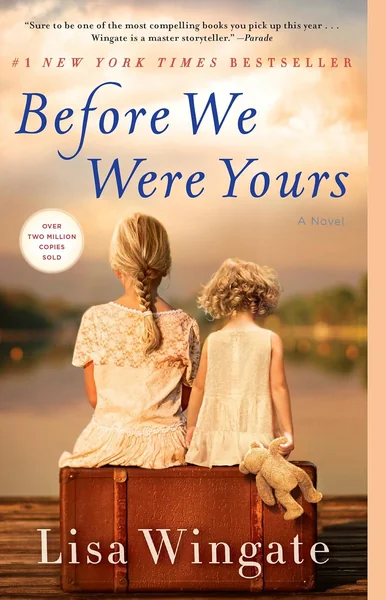
Readers who want emotional, history-rooted fiction about families under pressure are pointed to two titles. Lisa Wingate's Before We Were Yours centers on children taken from their family, and it is the comparison made by BookBrowse and by the author's own site.
Who should read this?
It suits readers who want a historical novel about hard moral choices, and book groups looking for discussion material. The Historical Novel Society adds that its focus on values and choices would suit church book clubs as well as secular ones. Anyone expecting a documented account should look elsewhere, since it serves only as inspiration.
What age is it for?
It is written for adults and is best for mature readers, mainly because of its subject: the sale of children and a mother's impossible choices. The material is emotionally heavy rather than graphic by any source we found. No review we found assigns an official age rating.
About Kristina McMorris
Kristina McMorris is an American author of several New York Times, USA Today, and Wall Street Journal bestselling books and a former actress.
How much of it is real?
The photograph is real; the story is not documentary. In her Behind the Story note, McMorris says the image first ran in The Vidette-Messenger in 1948 with a caption claiming to show a desperate Chicago family. Her imagined answers to why a parent would ask for money became the foundation of the novel. No review we found assesses its period accuracy or identifies the photograph beyond her own account.
Do readers connect with the characters?
Opinion is divided. Ellis Reed is described as genuinely relatable, embodying both desperation and empathy. A bookclubs.com reader said they did not connect with the characters as much as they would have liked.
Summarize this book

Summarize this book

In 1931 Philadelphia, struggling reporter Ellis Reed photographs two children beside a hand-lettered sign reading "2 CHILDREN FOR SALE." The picture becomes his big break, but its fallout is far worse than he imagined. Newspaper secretary Lillian Palmer, haunted by her own part in what followed, joins him as the two weigh how much they will risk to mend a fractured family.

Follow up

Whose point of view does the story follow?
Do I need to read anything first?

Synthesized from verified book data & published reviews · How we review

Ask LuvemBooks

What would you like to know about Sold on a Monday?

Answers come from our editorial notes on this book. If we haven't covered something, we'll say so.

Readers often ask

Our Review

We review the evidence: published critics, reader verdicts and BookTube reviews, gathered and weighed with AI assistance and edited by LuvemBooks, rather than one reader's first-hand take.

Worth reading if you want a tearjerking Depression-era novel built on a startling real photograph and you can accept that the evidence for its quality here is mostly marketing blurbs and warm reader reactions rather than critical judgement.

What happens in Sold on a Monday: A True Story of Heartbreak and Resilience?

The novel opens in 1931 with a hand-lettered sign on a farmhouse porch reading "2 CHILDREN FOR SALE." Struggling reporter Ellis Reed snaps a photograph of the children, never meant for publication, but it becomes his big break, and the consequences are more devastating than he imagined.
At the paper, secretary Lillian Palmer is haunted by her own role in what followed. The two must decide how much they will risk to mend a fractured family.
The Historical Novel Society review places the story in Philadelphia.
The subtitle's "True Story needs care. This is a novel, inspired by an actual newspaper photograph that stunned the nation, in the publisher-backed description on the author's site. Her Behind the Story" note says the photo first appeared in The Vidette-Messenger in 1948, with a caption claiming to show a desperate Chicago family, and that her imagined answers to why a parent would ask for money became the foundation of the book.

What does Sold on a Monday have to say about choices, ambition and motherhood?

The author's own framing is of a story about love, redemption and the unexpected paths that bring people home. The excerpts show it traveling on moral dilemmas: a reporter's career-making shot against its human cost, and a woman carrying her own past.
The Historical Novel Society review calls it a "finely told, emotionally satisfying gem of a novel" and says McMorris handles the dual points of view confidently. The same review describes an intimate, modest scope with impressive moral and social implications, set against newspapers, rum-running gangs and Depression-era desperation.
It also calls the book "a fast, focused read, but grounded in a keen sense of the rhythms and style of the speakeasy era," though other readers found the pacing uneven. The review adds that, though not a religious novel, its focus on values and choices would suit church book clubs as well as secular ones.
The author's site notes that the book features a few familiar characters from The Edge of Lost. A book club guide with recipes and playlists is offered there too.

What did readers and reviewers say about Sold on a Monday?

Start with what is marketing. The author's site collects praise blurbs, including one calling it "touching and never maudlin" and suggesting fans of Lisa Wingate's Before We Were Yours, and another praising "historical detail depicting the tragedies of families who are poor and ill."
Treat these as promotion, not independent verdicts.
Pam Jenoff is quoted on that site, on bookclubs.com and on the turn-the-page.net blog calling it "a masterpiece that poignantly echoes universal themes of loss and redemption." BookBrowse's coverage of the book carries a similar mix of blurbs and reader remarks, and the bookclubs.com page itself is largely publisher copy.
On the reader side, the blogger behind turn-the-page.net responds enthusiastically. That blogger calls the writing evocative and immersive, and Ellis genuinely relatable.
The same post says the pacing felt rushed near the conclusion and that readers might want more depth there. It is one blogger's view, not a critical consensus.
Bookclubs.com carries a few community reviews. One reader called it "such a surprise" with more storyline than the cover suggested, and enjoyed the back half more than the first.
Another liked it but did not connect with the characters as much as hoped and found some chapters slow, though the last portion "turned themselves."
The page carries the publisher's claim of more than a million copies sold and five months on the New York Times bestseller list; no year accompanies the sales figure, so treat it as promotional.

Is Sold on a Monday worth reading? Our take

Weighing these reviews, the tension is between emotional pull and depth. The enthusiastic voices praise heartbreak and moral stakes; the cooler ones mention uneven pacing, a rushed ending in one blogger's view, slower middle chapters and a reader who stayed at a distance from the characters.
That points the book toward readers who want a story-driven, emotionally direct historical novel about hard choices, and toward book clubs looking for discussion material, as turn-the-page.net suggests. It points away from anyone expecting a rigorous account of the real photograph, which is only the inspiration.
Bookbrowse.com compares it to Before We Were Yours, and the author's site makes the Before We Were Yours comparison too. Readers who liked those emotional, history-rooted novels are the audience the sources describe.
No source we found judges whether the book fully succeeds, assesses its period accuracy, or identifies the photograph beyond the author's own account, so this page cannot offer those judgements. Readers wanting to know whether the real-life history holds up will need to look beyond the reviews gathered here.

What to know before you pick up Sold on a Monday

Published by Sourcebooks Landmark on August 28, 2018, this paperback edition runs 352 pages. It is a story about the sale of children and a mother's impossible choices, so expect heavy subject matter.
Readers curious about the real image can start with the author's "Behind the Story" note on kristinamcmorris.com.
If the premise grips you, the sourced signals are that its heart is in its moral dilemmas, though some reviewers found the pacing quick and focused while others found it rushed or slow in places. If you prefer analytical or critically vetted historical fiction, note how little independent critical reception appears among these sources.

Sources & Further Reading

The key facts and claims in this review are grounded in the retrieved, verified sources listed below.

  1. Cited in this review
  2. 1

    historicalnovelsociety.org

  3. 2
  4. Further reading
  5. 3

    Kristina McMorris, LuvemBooks

  6. 4
  7. 5
  8. 6
  9. 7

Age & Reading Level

Recommended age

Adult

Content to know about

sale of children
a mother's impossible choices
poverty and family separation
a past that haunts a character

Best for: Written for adults; mature teens may manage it, but the subject of children being sold is emotionally heavy

Skip if you want a lighter or critically vetted historical read rather than a heavy, emotionally driven tearjerker.

From our readers

Reader reviews

Be one of the first readers to answer.

Read it? Was it right for you?