10 min read
4.8
· 4,675 Amazon ratingsShare This Review
An Echo in the Darkness by Francine Rivers Review: RITA-Winning Biblical Fiction of Enduring Faith
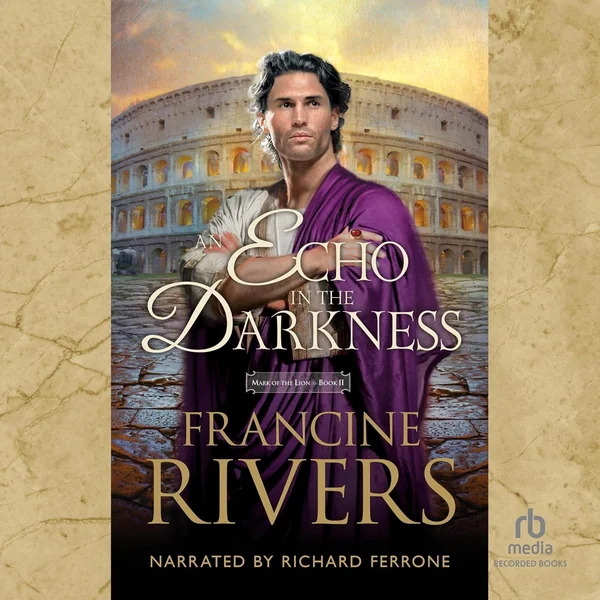
An Echo in the Darkness is the second novel in Francine Rivers's three-book Mark of the Lion series, set against the backdrop of ancient Rome during the period of Christian persecution following the crucifixion of Christ. Originally published in 1994 and winner of the RITA Award for best inspirational romance from the Romance Writers of America in 1995, it picks up directly from the cliff-hanger ending of A Voice in the Wind, following Hadassah — a courageous Christian slave girl who survives being thrown to the lions in the arena at Ephesus — and Marcus Valerian, the Roman aristocrat whose spiritual journey anchors the sequel's emotional core. Critical coverage, in a starred review, called the two novels "deeply felt efforts" that together read as "one long novel." The audiobook edition, narrated by Richard Ferrone and released by Recorded Books, runs 18 hours and 27 minutes in its unabridged form. This review is based on the book's content and published critical reception, not firsthand use or listening.
LuvemBooks Verdict
Best for
Readers already invested in A Voice in the Wind who want richly researched Roman-era historical fiction anchored by an explicitly evangelical Christian worldview — and who welcome conversion and faith as the engine of the drama.
Worth it if
You have read the first book in the Mark of the Lion trilogy and are looking for substantive, multi-threaded historical Christian fiction with genuine emotional stakes and proven craft — the 1995 RITA Award and Booklist starred review signal this is no generic inspirational title.
Skip if
Skip it if you haven't read A Voice in the Wind — critical coverage is clear that both books function as one long novel and this volume is essentially inaccessible as a standalone — or if you prefer secular historical fiction untethered from conversion-centered drama.
What readers & critics say
Wikipedia confirms the novel won the RITA Award for best inspirational romance from the Romance Writers of America in 1995, and Barnes & Noble's product page carries critical coverage description of the book as "compelling" historical Christian fiction, reflecting the starred critical recognition the novel earned at publication.
Sources: Wikipedia, Barnes & NobleAsk LuvemBooks
Was this helpful?
- Is it worth reading?
- For readers already invested in the Mark of the Lion series or drawn to evangelical Christian historical fiction, An Echo in the Darkness delivers on its promise: Booklist awarded it a starred review, calling it 'compelling' and 'emotionally charged,' and the 1995 RITA Award from the Romance Writers of America signals recognized craft at the time of publication. The introduction of Alexander, a fully realized physician character, gives the novel genuine dramatic range beyond a simple romance continuation. The key caveat is series dependency — critical coverage is explicit that this volume and A Voice in the Wind 'should be read as one long novel,' making series order non-optional. Readers who prefer secular historical fiction will also find the explicitly evangelical worldview and conversion-centered drama central rather than incidental to the story.
- Similar books
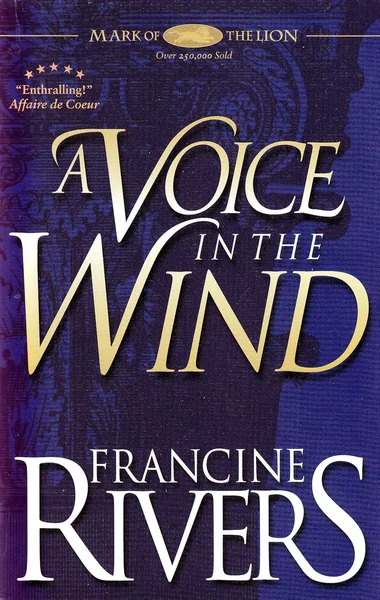
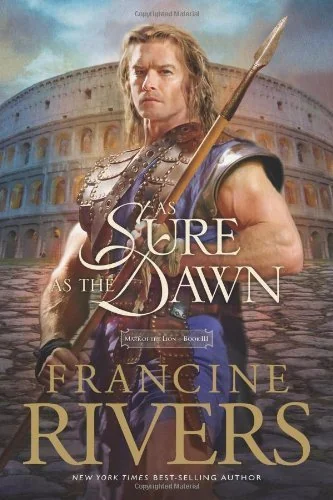
- Readers who connect with An Echo in the Darkness will want to complete the trilogy: A Voice in the Wind, the first book, is essential groundwork, and As Sure as the Dawn brings the series to its conclusion — both are reviewed on LuvemBooks. For Christian historical fiction with similarly strong spiritual themes, Redeeming Love by Francine Rivers is a natural companion, though it is not currently in the LuvemBooks catalogue. Readers drawn more broadly to faith-tested characters in demanding historical settings might also find The Bronze Bow by Elizabeth George Speare resonant, while those who appreciate richly researched historical fiction with moral weight — albeit from a secular perspective — may enjoy March by Geraldine Brooks.
- Who should read this?
- An Echo in the Darkness is squarely aimed at adult readers of evangelical Christian historical fiction — particularly those who find that spiritual depth enhances rather than intrudes upon historical narrative. The series has demonstrated remarkable staying power across three decades within that readership, and the novel's discussion questions and glossary make it a practical choice for book clubs and church reading groups. It is not well suited to readers seeking secular historical fiction, nor to those who want a self-contained story — series order is non-optional, and the evangelical worldview and conversion-centered drama are central to every plot thread.
- About Francine Rivers
- Francine Sandra Rivers is an American author of fiction with Christian themes, including inspirational romance novels.
- Is this a good book club pick?
- An Echo in the Darkness is particularly well designed for book clubs and church reading groups: the publisher includes both a glossary of ancient Roman terms to help readers navigate the historical world and discussion questions suitable for individual reflection and group settings. The novel's dual-protagonist structure — Hadassah's life in disguise and Marcus Valerian's spiritual search running in parallel — and its morally weighty historical backdrop give groups substantive themes to discuss. It is best suited to groups with shared interest in Christian historical fiction or spiritual themes, as the evangelical worldview is the story's central framework rather than an optional layer.
- Where to start with this series?
- The Mark of the Lion trilogy must be read in order: A Voice in the Wind is the essential starting point, followed by An Echo in the Darkness, and concluding with As Sure as the Dawn. Booklist's critical coverage notes that the first two books in particular 'should be read as one long novel,' and An Echo in the Darkness opens directly from A Voice in the Wind's cliff-hanger — beginning anywhere other than the first book means missing the foundational emotional investment the series is built on. All three volumes are reviewed on LuvemBooks.
Summarize this book
Follow up
Synthesized from verified book data & published reviews · How we review
Press Enter to ask. Answers come from our editorial Q&A — start typing to see related questions.
Age & Reading Level
Recommended age
Adult
Reading level
Adult
2 content notes · who it suits
Content to know about
Skip if you're looking for secular historical fiction where spiritual themes are incidental rather than central to the plot.
Our Review
What the Story Actually Covers
The Series Context and Its Significance
Strengths: Faith, Character, and Historical Texture
The Audiobook Format: An Extended, Immersive Listen
Who This Book Is For — and Where It Demands Commitment
Sources & Further Reading
The key facts and claims in this review are grounded in the retrieved, verified sources listed below.
- Cited in this review
- 1
en.wikipedia.org
- 2
store.focusonthefamily.com
- 3
- Further reading
- 4
Francine Rivers, Wikipedia
- 5
francinerivers.com
- 6
- 7
Books like An Echo in the Darkness
Curated picks for readers who enjoyed An Echo in the Darkness, with our reasoning for each match.
Read Next
If you liked An Echo in the Darkness