9 min read
4.7
· 77 Amazon ratingsShare This Review
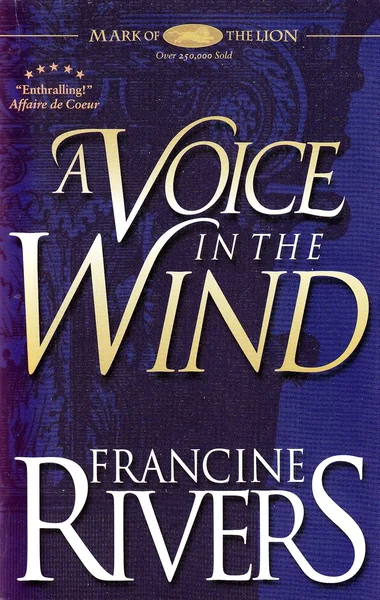
A Voice in the Wind by Francine Rivers Review: A Landmark of Christian Historical Fiction
First published in 1993, A Voice in the Wind is the opening novel in Francine Rivers's Mark of the Lion series — a sweeping Christian historical fiction set in first-century Rome that follows Hadassah, a young Jewish-Christian slave, as she navigates faith, survival, and conscience amid the decadence and brutality of the Roman Empire. It is widely credited with reshaping the possibilities of the Christian fiction genre.
LuvemBooks Verdict
Best for
Readers of Christian historical fiction who want the genre taken seriously — those ready to inhabit a morally complex first-century Roman world where faith is a lived, costly thing rather than a comfortable backdrop.
Worth it if
You want a fully humanized protagonist whose courage is earned under genuine historical and personal pressure — slavery, grief, forbidden love, and persecution — anchored in a richly rendered ancient world.
Skip if
Readers with no appetite for explicitly faith-centered narrative, those expecting full romantic or plot resolution within a single volume, or anyone looking for light escapist historical fiction should approach with caution.
What readers & critics say
Francinerivers.com records critical coverage (starred) calling the novel "Compelling…Emotionally charged," and collects endorsements from fellow New York Times bestselling authors crediting Rivers with redefining the ambition and honesty of the entire Christian fiction genre. Bookclubs.com notes RT Book Reviews' verdict that "Francine Rivers puts readers right into the history of the moment," while virtue.harvest.org describes the Mark of the Lion trilogy as a personal "gold standard, the measure to which I compare all other works of fiction."
Sources: francinerivers.com, bookclubs.com, virtue.harvest.orgAsk LuvemBooks
Was this helpful?
- Is it worth reading?
- For readers who want Christian historical fiction taken seriously, A Voice in the Wind delivers on its considerable reputation. Its three-decade staying power is grounded in real literary ambition: Hadassah is not an idealized saint but a character described within the story as faithful yet afraid, whose courage grows through the narrative rather than being assumed from the outset. New York Times bestselling authors Liz Curtis Higgs and Debbie Macomber have both cited Rivers's work as genre-defining, and the Mark of the Lion series is widely described as a gateway to Rivers's work for readers across the spectrum of Christian fiction. The key caveat is that the book is demanding rather than escapist — its unflinching depictions of slavery, arena violence, and Roman moral decadence are the very qualities that made it a landmark.
- Similar books
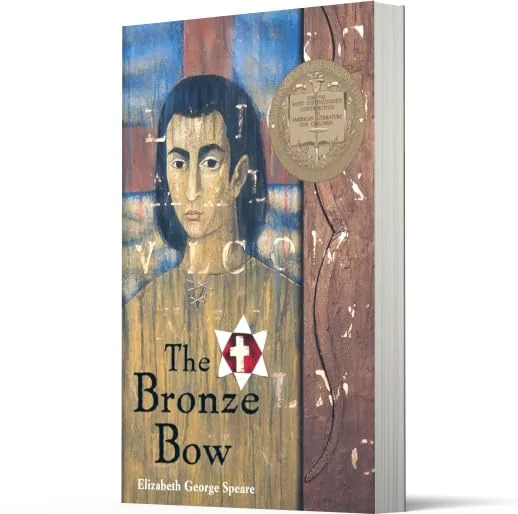
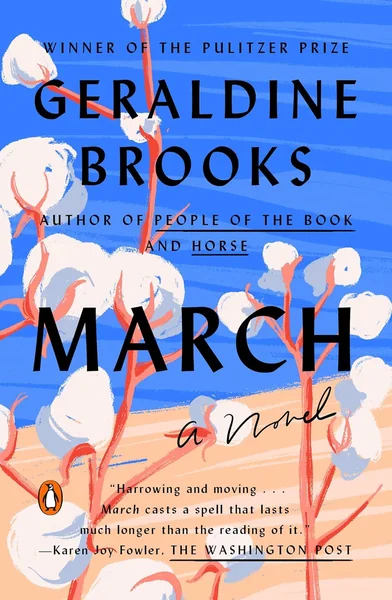
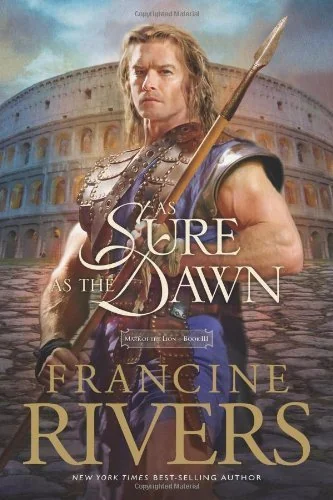
- Readers drawn to A Voice in the Wind's combination of faith, historical immersion, and moral seriousness have several strong comparisons to explore. Elizabeth George Speare's The Bronze Bow is also set in first-century Judea and wrestles with faith and hatred under Roman occupation, making it a natural companion. Geraldine Brooks's March and Georgia Hunter's We Were the Lucky Ones both share the novel's commitment to inhabiting morally demanding historical worlds through intimate character arcs. Alice Walker's The Color Purple — like A Voice in the Wind — centers on a resilient female protagonist whose spiritual life is tested by oppression and suffering, giving it thematic resonance even across very different settings. Francine Rivers's own As Sure as the Dawn: v. 3 (Mark of the Lion) completes the trilogy begun here for readers ready to see these storylines through.
- Who should read this?
- A Voice in the Wind is designed for readers of Christian historical fiction who want their genre taken seriously — those willing to inhabit a morally complex ancient world in which faith is a lived, costly thing rather than a comfortable backdrop. Its reach has extended well beyond a narrow audience: the Mark of the Lion series is widely described as a gateway to Rivers's work for readers across the spectrum of Christian fiction, and it has attracted broad endorsement from major bestselling authors. Readers who appreciate dual-perspective historical novels with genuine theological weight, strong female protagonists, and unflinching period detail will find it particularly rewarding. Those seeking escapist period atmosphere, a self-contained story, or fiction without an explicit faith framework are likely to find it a poor fit.
- About Francine Rivers
- Francine Sandra Rivers is an American author of fiction with Christian themes, including inspirational romance novels.
- What are the main themes?
- Faith under pressure is the governing theme: Rivers treats Christian belief not as a comfortable given but as something tested under genuine stakes — slavery, grief, forbidden love, and persecution. The novel also examines the moral and spiritual emptiness of Roman imperial society through the Valerian household's world of wealth, ambition, and moral drift, set against the arena's blood-and-survival narrative centered on Atretes. Running through both storylines is the question of conscience and courage: Hadassah is designed not as an idealized saint but as a character who is faithful yet afraid, whose quiet courage becomes the moral center of the narrative. The impossible tension between Hadassah's love for Marcus and her religious convictions gives the novel its emotional spine and drives its central moral crisis.
- Is it a good book club pick?
- A Voice in the Wind is a strong book club choice for groups open to sustained theological and moral discussion. The central dilemma — whether Hadassah will choose devotion to God or a life with Marcus, who does not share her faith — is exactly the kind of question that generates real disagreement and reflection. The dual storylines of the Valerian household and Atretes's gladiatorial narrative also allow discussion to range across Roman society's privileged interior and its most brutalized margin simultaneously. The main consideration is that faith themes are not incidental but the organizing principle of every major character arc, which works best in groups willing to engage with explicitly Christian themes.
- How does it compare to the rest of the trilogy?
- A Voice in the Wind establishes the world, characters, and central tensions of the Mark of the Lion series: Hadassah's faith under pressure, Marcus's spiritual fascination with her, and Atretes's arc from captive warrior to gladiator. As the first installment, it is deliberately open-ended — major narrative threads are left unresolved in ways that reward readers who continue the series. LuvemBooks has also reviewed As Sure as the Dawn: v. 3 (Mark of the Lion), the trilogy's concluding volume, which brings these storylines to their conclusion. The series as a whole is widely described as a gateway to Rivers's work and as a landmark that reshaped the ambition of the entire Christian fiction genre.
Summarize this book
Follow up
Synthesized from verified book data & published reviews · How we review
Press Enter to ask. Answers come from our editorial Q&A — start typing to see related questions.
Age & Reading Level
Recommended age
Ages 16+
Reading level
Adult
3 content notes · who it suits
Content to know about
Best for: Adults / mature 16+ — unflinching depictions of slavery, arena violence, and Roman moral decadence alongside demanding theological themes.
Skip if you're looking for historical fiction driven by period atmosphere rather than sustained faith-centered and moral inquiry — or you want a self-contained story with full narrative resolution.
Our Review
What the Novel Is and What It Contains
The Novel's Place in the Genre and Its Significance
Strengths: Character, Conflict, and Historical Setting
Genuine Limitations and Who May Be Frustrated
Who This Book Is For and How It Holds Up
Sources & Further Reading
The key facts and claims in this review are grounded in the retrieved, verified sources listed below.
- Cited in this review
- 1
- 2
- Further reading
- 3
Francine Rivers, Wikipedia
- 4
en.wikipedia.org
- 5
francinerivers.com
- 6
openbooksummary.com
- 7
- 8
thebookandbeautyblog.com
- 9
Books like A Voice in the Wind
Curated picks for readers who enjoyed A Voice in the Wind, with our reasoning for each match.
More by Francine Rivers
If you liked A Voice in the Wind