At a glance
LuvemBooks Verdict
Best for: Scholars, historians, and serious yoga practitioners who want a rigorously documented, interdisciplinary account of how modern postural yoga actually emerged — and are prepared to have its claimed ancient lineage challenged head-on.
Worth it? Skip it? Read the full verdict →Ask LuvemBooks
Was this helpful?
- Is it worth reading?
- For readers in religious studies, history, or serious yoga practice, Yoga Body is directly and substantively relevant — Gary Kraftsow characterized it as 'sweeping and nuanced' and recommended it to any serious asana practitioner who wants to understand the place of asana in the broader tradition. Its publication by Oxford University Press and review in Religious Studies Review confirm the scholarly rigor behind its claims. The key caveat is that it is an academic monograph, not a practice guide, and practitioners seeking affirmation of yoga's spiritual lineage may find the thesis uncomfortable. Readers who want a historically grounded account of how modern postural yoga came to look and feel the way it does will find the book directly rewarding.
- Similar books
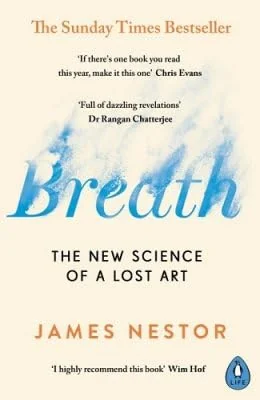
- Readers drawn to Yoga Body's investigation of the body, breath, and wellness history may find several related titles of interest. James Nestor's Breath explores the science and history of breathing with similar investigative rigor. Jon Kabat-Zinn's Full Catastrophe Living examines mindfulness-based stress reduction and the clinical role of mind-body practice. Gabor Maté's When the Body Says No offers a deeply researched account of how stress and emotional suppression manifest in physical illness. For readers interested in how health and wellness ideas are packaged and sold — a theme Singleton touches on in his analysis of transnational yoga marketing — Michael Pollan's In Defense of Food and Michael Moss's Salt Sugar Fat both dissect how cultural and commercial forces shape what we believe about our bodies.
- Who should read this?
- Yoga Body is most directly suited to readers in religious studies, history, physical culture studies, and serious yoga practice — particularly teachers and practitioners who want a historically grounded account of how modern asana developed. Scholars across disciplines will find the interdisciplinary methodology — spanning Indian nationalist politics, Theosophy, European physical culture, and visual reproduction — genuinely relevant to their fields. Casual yoga practitioners curious about the origins of their practice can also benefit, provided they are prepared for academic prose. Those seeking spiritual affirmation or a practice guide will find the book a mismatch.
- About Mark Singleton
- Mark Singleton is a scholar and practitioner of yoga.
- What are the main themes?
- The book's central theme is the constructed, hybrid nature of modern postural yoga — specifically, the argument that it emerged from a historically specific confluence rather than from unbroken ancient tradition. Closely related themes include the politics of nationalist identity and colonial encounter in early twentieth-century India, the global spread of physical culture movements, the role of visual reproduction (photographs and instructional manuals) in standardizing practice, and what Yoga International summarized as a core mechanism of transnational yoga marketing: 'a new thing becomes an attractive and sellable thing by being wrapped in the mantle of antiquity.' Theosophy and its connections to the yoga revival also receive dedicated attention.
- Why is this book controversial?
- The controversy stems from Singleton's central argument that modern postural yoga owes as much to European gymnastics and Western physical culture as to ancient Indian tradition — a claim that directly challenges the identities and marketing narratives of many yoga communities worldwide. As documented by Yoga International, critics called Singleton 'a debunker, a cultural appropriator, a junior scholar from England, and a pro-colonial revisionist intent on delegitimizing the Indian roots of postural practice.' Yoga International also noted that critics' distortions of his 'rather straightforward research' reflected how uncomfortable its implicit revelations were to face directly. The debate touches on questions of cultural ownership, colonial history, and the authenticity of spiritual practice.
Summarize this book
Follow up
Synthesized from verified book data & published reviews · How we review
Press Enter to ask. Answers come from our editorial Q&A — start typing to see related questions.
Age & Reading Level
Recommended age
Adult
Reading level
Adult
who it suits
Skip if you're looking for a spiritual practice guide or affirmation of yoga's ancient lineage rather than a documented historical argument.
Editorial Review
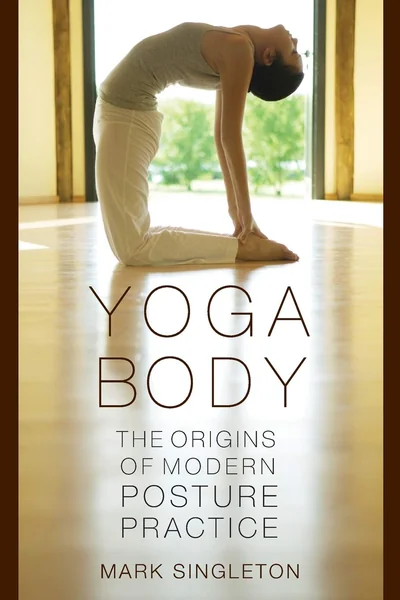
Mark Singleton's Yoga Body: The Origins of Modern Posture Practice (Oxford University Press, 2010) is a scholarly work of historical inquiry that challenges widely held assumptions about the ancient roots of modern postural yoga, tracing the form practiced by millions today to a convergence of early twentieth-century Indian and Western physical culture movements.
Read the Full ReviewBooks like Yoga Body
Curated picks for readers who enjoyed Yoga Body, with our reasoning for each match.