
7 min read
4.4
· 371 Amazon ratingsShare This Review
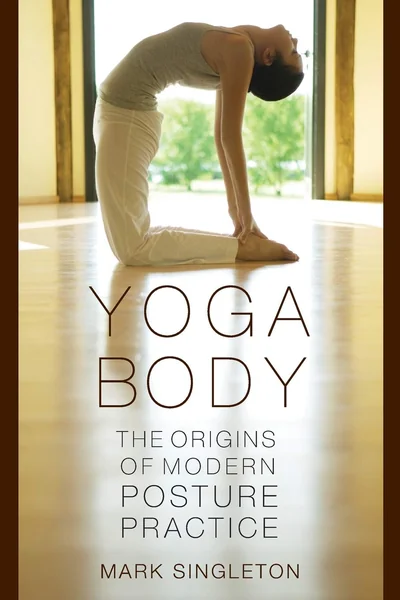
Yoga Body: The Origins of Modern Posture Practice by Mark Singleton Review: A Watershed Scholarly Reassessment of Yoga
Mark Singleton's Yoga Body: The Origins of Modern Posture Practice (Oxford University Press, 2010) is a scholarly work of historical inquiry that challenges widely held assumptions about the ancient roots of modern postural yoga, tracing the form practiced by millions today to a convergence of early twentieth-century Indian and Western physical culture movements.
LuvemBooks Verdict
Best for
Scholars, historians, and serious yoga practitioners who want a rigorously documented, interdisciplinary account of how modern postural yoga actually emerged — and are prepared to have its claimed ancient lineage challenged head-on.
Worth it if
You want to understand the real historical forces — Indian nationalism, European gymnastics, physical culture, and colonial encounter — that shaped the yoga practiced in studios worldwide today, grounded in primary sources and peer-reviewed scholarship.
Skip if
If you're approaching it as a practice guide, an introduction to yoga philosophy, or seeking affirmation of yoga's ancient spiritual lineage, this dense academic monograph will frustrate and likely unsettle.
What readers & critics say
Yoga International described the 2010 publication as "a watershed moment in the history of global asana culture," while also documenting fierce pushback from communities invested in yoga's claimed antiquity — with Singleton labelled "a debunker, a cultural appropriator, and a pro-colonial revisionist." Wikipedia's overview confirms the book attracted wide interest among both scholars and yoga teachers, with its core argument — that modern asana owes substantial debts to 20th-century physical culture movements — proving genuinely disruptive across both audiences.
Sources: Yoga International, WikipediaAge & Reading Level
Recommended age
Adult
Reading level
Adult
who it suits
Skip if you're looking for a spiritual practice guide or affirmation of yoga's ancient lineage rather than a documented historical argument.
In This Review
- What Works & What Doesn't
- What the Book Actually Argues
- Structure and Scope
- Significance and Reception
- Genuine Strengths
- Who It Is For — and Who May Struggle
What Works & What Doesn't
What Works
- Advances a specific, well-documented historical thesis that reframes the origins of modern postural yoga with concrete evidence spanning India and Europe
- Endorsed by Gary Kraftsow (founder of the American Viniyoga Institute) as 'sweeping and nuanced' and a necessary corrective to mythology in the asana world
- Covers an unusually broad interdisciplinary range — physical culture, nationalist politics, Theosophy, visual reproduction, and key lineage figures like Krishnamacharya and Iyengar
- Published by Oxford University Press, situating it within rigorous peer-reviewed academic standards
- Reviewed in Religious Studies Review, confirming its reach across scholarly disciplines
What Doesn't
- Written as an academic monograph, making it a demanding read for practitioners without a scholarly background
- Its central argument — that modern postural yoga owes as much to European gymnastics and physical culture as to ancient Indian tradition — has proven deeply contentious, generating strong ideological pushback that may color how some communities receive it
What the Book Actually Argues
Structure and Scope
Significance and Reception
Genuine Strengths
Who It Is For — and Who May Struggle
Frequently Asked Questions
Sources & Further Reading
The key facts and claims in this review are grounded in the retrieved, verified sources listed below.
- Cited in this review
- 1
- 2
- 3
yogainternational.com
- Further reading
- 4
Mark Singleton, Wikipedia
- 5
- 6
digitalcommons.butler.edu
- 7
- 8
yogacritiques.org
- 9
- 10
- 11
- 12
Related Reviews
Reviews of books we picked for readers who enjoyed Yoga Body.
Reader Comments
No comments yet
Be the first to share your thoughts!