

8 min read
4.2
· 308 Amazon ratingsShare This Review
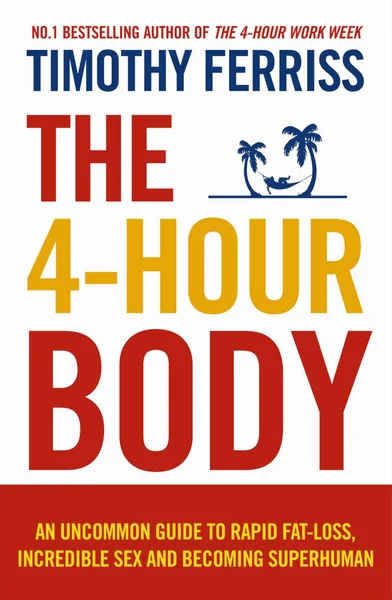
The 4-Hour Body by Timothy Ferriss Review: A Polarizing, Bestselling Biohacking Guide
Timothy Ferriss's The 4-Hour Body is a wide-ranging nonfiction guide to physical self-optimization — covering fat loss, exercise, sleep, and sexual performance — that debuted at number one on the New York Times Bestseller List and generated both a devoted following and sharp expert skepticism. This review covers the book's content and published reception; assessments of its practical efficacy are drawn from named sources, not hands-on testing.
LuvemBooks Verdict
Best for
Self-directed experimenters and biohacking enthusiasts — particularly fans of Ferriss's The 4-Hour Workweek — who are comfortable treating their own bodies as data sources and want a single-volume reference spanning fat loss, exercise, sleep, skill acquisition, and sexual performance organized around the "minimum input, maximum output" philosophy.
Worth it if
Worth reading if you're drawn to Ferriss's minimalist, results-from-small-changes framework and want a broad physical-optimization reference you can navigate section by section rather than read cover to cover, without needing the approach to align with mainstream nutritional consensus.
Skip if
Skip it if you're looking for a diet-and-fitness plan validated by clinical evidence and conservative medical framing — multiple credentialed experts, quoted by sources including Harvard Business Review and U.S. News, disputed both the sustainability of the Slow-Carb Diet and the scope of the book's claims, and the book's high-energy, maximalist tone is a genuine barrier for readers who prefer measured, cautious writing.
What readers & critics say
According to Wikipedia's reception record, The 4-Hour Body debuted at number one on the New York Times Bestseller List and spent three weeks in the top three, while also eliciting significant controversy for the breadth of its claims. The Goodreads aggregate tracked by AbeBooks shows a 3.72 average across nearly 37,000 ratings, reflecting a large and genuinely divided readership rather than uniform enthusiasm.
Sources: Wikipedia, AbeBooksAge & Reading Level
Recommended age
Adult
Reading level
Adult
2 content notes · who it suits
Content to know about
Skip if you want a fitness or diet plan grounded in mainstream nutritional consensus and clinically conservative guidance.
In This Review
- What Works & What Doesn't
- What the Book Actually Is and Covers
- Reach and Significance
- What the Book Does Well
- Expert Pushback and Contested Claims
- Who This Book Is For
What Works & What Doesn't
What Works
- Debuted at number one on the New York Times Bestseller List and spent three weeks in the top three, reflecting exceptional commercial reach
- The Slow-Carb Diet framework is structurally simple — a repeating set of meals, slow-digesting carbohydrates, and one weekly cheat day — with even skeptical reviewers noting merit in its avoidance of refined carbohydrates
- Unusually broad scope covers diet, exercise, sleep, skill acquisition, and sexual performance, giving the book reference value across multiple areas of physical optimization
- Ferriss's minimalist, results-from-small-changes philosophy offers a distinctive organizing principle compared to conventional diet-and-fitness books
What Doesn't
- Multiple credentialed experts — including practitioners quoted by WebMD, Harvard Business Review, and U.S. News — disputed the diet's sustainability and the scope of its claims
- The book's maximalist, high-energy tone drew sharp critical notice, with the New York Times describing it as among the most breathless reads a reviewer had encountered; readers preferring measured, clinically grounded writing will find the register a poor fit
- A Goodreads average of 3.72 across nearly 37,000 ratings signals a large and genuinely divided audience — enthusiasm is not uniform
- The Slow-Carb Diet is not addressed by the Dietary Guidelines for Americans, and it falls outside mainstream nutritional consensus
What the Book Actually Is and Covers
Reach and Significance
What the Book Does Well
Expert Pushback and Contested Claims
Who This Book Is For
Frequently Asked Questions
Sources & Further Reading
The key facts and claims in this review are grounded in the retrieved, verified sources listed below.
- Cited in this review
- 1
- 2
- Further reading
- 3
Timothy Ferriss, Wikipedia
- 4
en.wikipedia.org
- 5
empowerprocess.com
- 6
Related Reviews
Reviews of books we picked for readers who enjoyed The 4-Hour Body.
Reader Comments
No comments yet
Be the first to share your thoughts!