BOOKS
Published

Read Time

3 min read

Curated & edited by

LuvemBooks Editorial

How we create our reviews →
Share This Review

Theo of Golden by Allen Levi Review: A Grassroots Debut That Became a Phenomenon

Allen Levi's debut novel Theo of Golden is the rare grassroots literary success story: self-published in 2023, reissued by Atria Books in 2025, and declared by critical coverage a "word-of-mouth smash hit," the novel follows an 86-year-old man named Theo as he arrives in a fictional Southern town called Golden and, portrait by portrait, builds an unexpected community — exploring generosity, connection, grief, and the quiet transformations that follow when people are truly seen.

LuvemBooks Verdict

Best for

Readers who love quietly moving, character-driven fiction — particularly fans of Tuesdays with Morrie or Fredrik Backman — who want a book-club-ready novel about unexpected connection, generosity, and the stories that shape a life.

Worth it if

The premise of portrait-gifting as a vehicle for human encounter sounds genuinely moving, and you want a novel with both emotional warmth and actual narrative momentum — not just inspirational sentiment.

Skip if

You prefer morally ambiguous, psychologically complex, or formally experimental literary fiction, or you're likely to find a faith-inflected, soft-lit allegorical resolution too tidy or conflict-light.

What readers & critics say

Slate calls Theo of Golden "an unexpected hit of a novel by a first-time author," documenting its 15-week run on the New York Times bestseller list — reaching No. 1 — and comparing its unlikely grassroots-to-mainstream arc to "something out of a fairy tale." The Moving Words praises "a contemplative calm to the writing" and Levi's "clear affection for his characters without lapsing into cynicism," while IveReadThis, though absorbed by the characters, notes a comparative lack of conflict relative to comparable authors such as Backman and Haig.

An unexpected hit of a novel by a first-time author — Levi built its fandom by hand, and its momentum is like something out of a fairy tale.

Slate
Sources: Slate, The Moving Words, IveReadThis, Bookclubchat
4.7from 121,587 Amazon ratings— reader ratings, not a LuvemBooks score

Look inside the book

Preview the actual pages, via Google Books
Trending Now
Cultural Resurgence

Theo of Golden: A Novel by Allen Levi is Trending

Theo of Golden Holds Steady on Bestseller Lists Into Summer 2026

More than a year after its Atria Books reissue, Theo of Golden is still showing up on weekly bestseller lists — a sign that word-of-mouth on this quiet, character-driven debut has real staying power. If you haven't heard of it yet, now's a good time to catch up.

Theo of Golden is still making the rounds on weekly bestseller lists as of mid-June 2026, appearing alongside titles like Project Hail Mary and The Deal in this week's roundup of top sellers. That kind of staying power — more than a year after its Atria Books reissue — is genuinely rare, especially for a debut novel that started out self-published.

The book's longevity on the lists likely comes down to the way it travels: it's the kind of story people press into someone else's hands. An 86-year-old stranger arrives in a small Southern town and starts giving residents hand-painted portraits of themselves. That premise sounds simple, but readers keep coming back to say it hit them harder than expected. It became a #1 New York Times bestseller and landed on the Times' list of surprising hits — and it's clearly still finding new readers.

If you've been meaning to pick it up but kept putting it off, the fact that it's still circulating this widely is a decent nudge. It's a slow, warm, faith-tinged read that seems to resonate especially when people are craving something a little more human.

Read more
Updated Jun 17, 2026
In This Review
  • What Works & What Doesn't
  • What the Novel Is and What It Does
  • The Publishing Journey Behind the Phenomenon
  • What the Novel Does Well
  • Limitations and Who May Struggle With It
  • Who This Book Is For

What Works & What Doesn't

What Works
  • A structurally inventive premise — portrait gifting drives both plot and character revelation — distinguishes it from purely inspirational books in the same vein
  • Sustained mystery around Theo's background and true motives gives the novel narrative momentum across its full length
  • Extraordinary grassroots-to-mainstream trajectory, culminating in a No. 1 New York Times bestseller ranking and a 4.56-star Goodreads rating, signals broad and genuine reader connection
  • Dual book club selection (Katie Couric and Jen Hatmaker) points to strong discussion potential, with themes of generosity, forgiveness, and connection that translate readily to group conversation
What Doesn't
  • The novel's soft-lit, allegorical tone — noted by critical coverage — may feel too gentle or tidily resolved for readers who prefer morally ambiguous or formally experimental literary fiction
  • The faith dimension that Slate identifies as central to the book's appeal will land differently depending on a reader's own relationship to that register
Theo of Golden is a novel built on a deceptively simple premise that steadily earns its considerable emotional weight.

What the Novel Is and What It Does

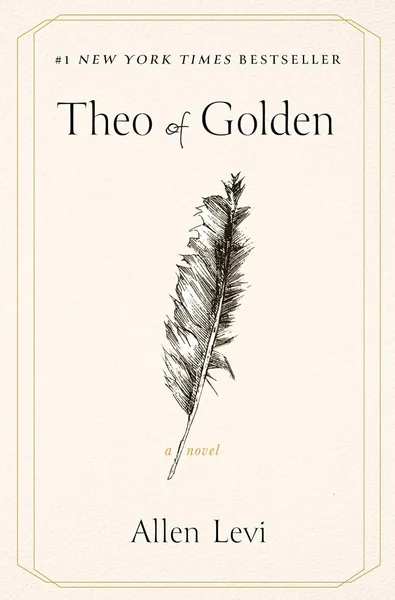
Theo of Golden: A Novel by Allen Levi front cover
Theo of Golden centers on an 86-year-old man who goes only by the name Theo. One spring, he arrives alone in a fictional small Southern city called Golden, knowing no one. He discovers portraits of the town's residents painted by a local artist, purchases them one by one, and arranges to deliver each portrait to its subject — beginning the encounter with a handwritten letter on fine paper, describing himself, in the book's own words, as "a harmless old man, a widower, a father, a toothless lion with only innocent intentions." The recipients who show up to the arranged meeting find, as the novel puts it, "a spry, bright-eyed soul." Levi is deliberate in framing Theo not as a "relic" or "frail" figure but as what the novel calls a "young old" man of "vigor." The structure of portrait-by-portrait gifting drives the plot forward: with each exchange, Theo learns more about the person across from him, and that person is changed by the encounter. Among the residents Theo befriends are a young cellist studying at a nearby university and a street musician who plays guitar for tips; music becomes one of the threads binding Theo's growing network. According to the publisher's synopsis, the novel accumulates into a story of loneliness, heartbreak, kindness, closure, and the invisible connections that form between people when generosity is offered without transaction.

The Publishing Journey Behind the Phenomenon

The path Theo of Golden traveled to wide readership is itself remarkable and directly shapes how the book is understood. Levi — an attorney, judge, and singer-songwriter from middle Georgia — was well into his 60s when he self-published the novel in 2023, promoting it through grassroots outreach rather than traditional marketing machinery. Slate described the book as "an unexpected hit of a novel by a first-time author," noting that Levi "built its fandom by hand." Atria Books published the novel traditionally in 2025, and its momentum only accelerated: the New York Times included it in a December roundup of the year's surprise breakout debuts, and as of the Slate report, Theo of Golden had spent 15 weeks on the Times' Best-Selling Combined Print & E-Book Fiction list, reaching No. 1. The novel has also been selected as a Katie Couric Book Club pick and a Jen Hatmaker Book Club pick. Slate compared its unlikely trajectory to that of The Correspondent by Virginia Evans, calling it "like something out of a fairy tale." The book holds a 4.56-star rating on Goodreads — a figure Slate puts in context by noting it exceeds the Goodreads ratings of both the 2025 Booker Prize winner and the 2025 National Book Award for Fiction winner.

What the Novel Does Well

The central mechanism of the novel — portraits as gifts, letters as introductions, meetings as revelations — gives Theo of Golden something that Slate specifically identifies as setting it apart from comparable works: it has a plot. The comparison Slate draws is to Mitch Albom's Tuesdays with Morrie, but the critic notes that while that book offered wisdom, Levi's novel offers narrative momentum. Each portrait delivery functions as a self-contained encounter that also advances the larger story, keeping the structure from feeling episodic in a limiting sense. Bookclubchat notes that "Theo does not show all his cards to the people of Golden," maintaining an air of mystery that sustains curiosity through to a full revelation of why Theo chose Golden as the destination for his acts of kindness. The publisher describes the novel as exploring the "transformative power of being truly seen" and the "redemptive value in sadness and joy," themes that reviewers and readers have consistently cited as the book's emotional core. USA Today called it "an emotional and heartwarming tale," and critics noted it has "a soft-lit, allegorical quality."

Limitations and Who May Struggle With It

The novel's gentle, allegorical register — praised by many — is also the quality most likely to divide readers. Critical coverage's description of a "soft-lit, allegorical quality" points to a stylistic mode that prioritizes feeling and theme over psychological complexity or narrative friction. Readers drawn to darker, more ambiguous literary fiction may find the novel's orientation toward kindness and uplift less satisfying than those who come to it seeking warmth, meaning, and community. The content guide based on the 2023 first edition notes that the novel does contain depictions of death and grief, so it is not without weight — but the overall design intent, as both the publisher synopsis and critical reception make clear, is life-affirming. The book's faith dimension, which Slate identifies as central to understanding its appeal, will resonate differently across readerships; those less attuned to that register may experience some of the novel's resolutions as arrived at too cleanly.

Who This Book Is For

Theo of Golden has found its audience among readers who prize character-driven fiction about community, loss, and unexpected connection. Its book club adoption — by both Katie Couric and Jen Hatmaker — reflects its design as a novel built for shared reading and discussion: the portrait-by-portrait structure generates natural stopping points for reflection, and its themes of generosity, forgiveness, and the stories that shape a life translate readily into conversation. Readers who responded to Tuesdays with Morrie or to recent quiet literary phenomena will find Theo of Golden working in a kindred spirit, though with greater narrative architecture. For Levi — a first-time novelist who built his readership one reader at a time before a major publisher came calling — the book's success is a testament to the story's ability to travel on word of mouth alone, which is perhaps the most honest endorsement any novel can receive.

Sources & Further Reading

The key facts and claims in this review are grounded in the retrieved, verified sources listed below.

  1. Cited in this review
  2. 1
  3. 2
  4. Further reading
  5. 3
    Allen Levi — author profileHigh-authority source

    Allen Levi, Wikipedia

  6. 4
  7. 5
  8. 6
  9. 7
  10. 8
  11. 9