

9 min read
Share This Review
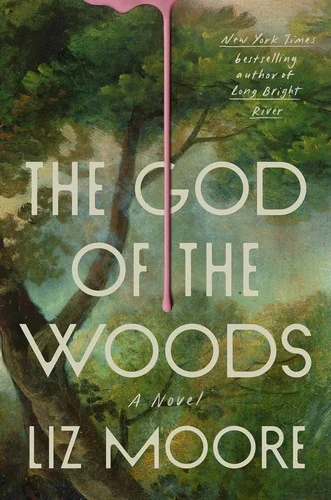
The God of the Woods by Liz Moore Review: A Gripping Literary Thriller with Real Depth
Liz Moore's The God of the Woods is a New York Times bestseller and one of critics of the Year — a multi-threaded literary thriller set in the Adirondacks that weaves a decades-spanning mystery of two disappearing children into a sharply observed portrait of class, family abuse, and inherited power. Published in 2024 by The Borough Press, the novel spent 38 weeks on the New York Times Best Seller List as of April 2025 and earned starred reviews from both Publishers Weekly and Booklist, cementing Moore's standing as one of contemporary fiction's most ambitious voices.
LuvemBooks Verdict
Best for
Readers who want their crime fiction to carry the weight of a family saga and social novel — particularly those drawn to multi-timeline, ensemble-cast stories where class dynamics, parental failure, and community trauma matter as much as the mystery itself.
Worth it if
You appreciate literary crime fiction in the tradition of Donna Tartt — where richly realised characters, a vividly rendered historical setting, and slow-burn structural intrigue reward patient, immersive reading over propulsive plot mechanics.
Skip if
You prefer lean, fast-paced thrillers with a single timeline and minimal cast, or are sensitive to sustained depictions of domestic abuse, parental cruelty, and the long aftermath of child loss.
What readers & critics say
Kirkus Reviews selected the novel for its Best Books of 2024 list, praising Moore's structural control — calling it "ever-expansive, intricate, emotionally engaging" yet never overplotted — and awarded it a "GET IT" verdict. Barnes & Noble's product page surfaces starred reviews from both critical coverage ("This astonishes") and critical coverage ("a compulsively readable novel that will appeal to fans of mysteries and historical fiction alike"), and confirms its status as a New York Times bestseller and Notable Book of the Year; Wikipedia records the novel spending 38 weeks on the New York Times Best Seller List as of April 2025.
“Moore's blend of domestic drama and crime novel — 'Don't go into the woods' takes on unsettling new meaning.”
— Kirkus ReviewsAge & Reading Level
Recommended age
Adult
Reading level
Adult
4 content notes · who it suits
Content to know about
Best for: Adults — sustained depictions of domestic abuse, parental cruelty, and child loss make this best suited to mature adult readers
Skip if you want a lean, fast-paced crime thriller rather than a dense, multi-timeline literary family saga
In This Review
- What Works & What Doesn't
- What the Novel Is and What Happens in It
- Place in the Genre and Its Cultural Significance
- What the Novel Does Exceptionally Well
- How It Connects to Moore's Wider Work
- Who This Novel Is For — and Where It Demands Patience
What Works & What Doesn't
What Works
- Named a New York Times bestseller, best thriller, and best crime novel of the year, with starred reviews from both Publishers Weekly and Booklist
- Kirkus Reviews' Best Books of 2024 praised its structural control — intricate and expansive yet never overplotted, with every character leaving an imprint
- The New Yorker and Washington Post both highlighted its dexterous handling of class tension and its richly realized social world
- Extends and deepens the family-trauma themes Moore established in Long Bright River, now across a broader historical and social canvas
- A Netflix series adaptation greenlighted with a high-profile cast signals the story's wide crossover appeal beyond the page
What Doesn't
- At nearly 450 pages with multiple timelines and a large ensemble, the novel's scope can be demanding for readers who prefer leaner, faster-paced crime fiction
- The book contains sustained depictions of domestic abuse, parental cruelty, and child loss — weighty material that requires readers to approach with awareness
What the Novel Is and What Happens in It
Place in the Genre and Its Cultural Significance
What the Novel Does Exceptionally Well
How It Connects to Moore's Wider Work
Who This Novel Is For — and Where It Demands Patience
Frequently Asked Questions
Sources & Further Reading
The key facts and claims in this review are grounded in the retrieved, verified sources listed below.
- Cited in this review
- 1
en.wikipedia.org
- 2
barnesandnoble.com
- 3
penguinrandomhouse.com
- Further reading
- 4
Liz Moore, Wikipedia
- 5
kirkusreviews.com
- 6
bookofthemonth.com
- 7
lizmoore.net
- 8
bookbrowse.com
- 9
- 10
- 11
magpiebyjenshoop.com
Related Reviews
Reviews of books we picked for readers who enjoyed The God Of The Woods.


Reader Comments
No comments yet
Be the first to share your thoughts!