
8 min read
4.7
· 6,391 Amazon ratingsFeatured In
Share This Review
The Count of Monte Cristo by Alexandre Dumas Review: A Towering Classic of Revenge and Redemption
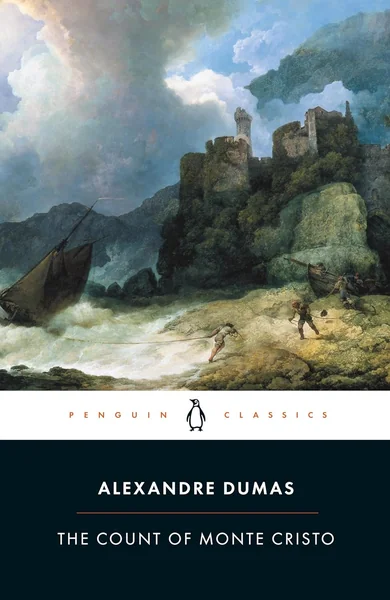
Originally serialized from 1844 to 1846 and regarded by Wikipedia as a classic of both French and world literature, Alexandre Dumas's The Count of Monte Cristo remains one of the most enduring adventure novels ever written — and Robin Buss's Penguin Classics translation brings it to modern English readers in a complete, scholarly edition. The novel follows Edmond Dantès from false imprisonment in the Château d'If through his transformation into the wealthy, enigmatic Count of Monte Cristo and his calculated campaign of revenge against the three men who destroyed his life. At over 1,300 pages, it is a commitment, but one whose scope matches the ambition of its themes: hope, justice, vengeance, mercy, and forgiveness.
LuvemBooks Verdict
Best for
Readers with an appetite for grand-scale adventure fiction who want the complete, unabridged experience of Dumas's intricate revenge plot — particularly those drawn to morally complex protagonists, nineteenth-century French history, and long-form narratives that reward patience.
Worth it if
Worth committing to if you relish sweeping historical storytelling, layered schemes that pay off across hundreds of pages, and a central moral question — whether calculated vengeance can ever truly be distinguished from the crime it answers.
Skip if
Skip it — or start with an abridgement — if you need propulsive, tightly paced contemporary plotting, since the novel's deliberately episodic, serialized rhythms and extended Parisian society sequences can test the patience of readers unused to nineteenth-century fiction's long game.
What readers & critics say
The Guardian calls it "the acme of Alexandre Dumas père's oeuvre," praising his "inimitable mastery of high adventure, deadly intrigue, revenge, and general derring-do," while Britannica describes the plot as "ingenious," built on concealment, revelation, and layered schemes. Across reader review sites, the novel is consistently treated as a towering achievement of world literature whose scale is its only real barrier to entry.
“Monte Cristo is the acme of Alexandre Dumas père's oeuvre, demonstrating his inimitable mastery of high adventure, deadly intrigue, revenge, and general derring-do.”
— The GuardianAge & Reading Level
Recommended age
Adult
Reading level
Adult
3 content notes · who it suits
Content to know about
Skip if you prefer tightly paced contemporary fiction and have little patience for the deliberate, episodic rhythms of nineteenth-century serialized novels.
The Count of Monte Cristo by Alexandre Dumas is Trending
A New TV Series Starring Sam Claflin Is Bringing Readers Back to The Count of Monte Cristo
A 2024 TV series adaptation of The Count of Monte Cristo, starring Sam Claflin and directed with Bille August's creative vision, has renewed reader interest in Dumas's classic novel. If you've been meaning to read the book, now's a great time to pick it up before (or after) watching the series.
A television adaptation of The Count of Monte Cristo — starring Sam Claflin in the lead role of Edmond Dantès — has been generating buzz and drawing readers back to Alexandre Dumas's original novel. The series aims to stay faithful to Dumas's story while giving it a modern feel, with the creative team specifically noting that they wanted to avoid the 'outdated' trap that classic adaptations can fall into. That combination of big-screen ambition and literary respect tends to send people straight to the source material.
The timing makes sense for new readers, too. A 1,300-page novel can feel like a big commitment to pick up cold, but knowing there's a vivid screen version to compare it to — or to look forward to — gives you a reason to dive in. Dumas's story of wrongful imprisonment, hidden treasure, and slow-burn revenge is exactly the kind of propulsive plot that translates well to prestige TV, which means the series is likely to attract viewers who've never touched the book and readers who want a refresher.
Alongside the TV buzz, a local theater company in Utah recently staged a new outdoor stage adaptation called The Count, so the story is clearly having a moment across multiple formats right now. If you're going to read one doorstop classic this year, this is a pretty compelling case for making it this one.
In This Review
- What Works & What Doesn't
- What the Novel Is and What Happens
- Historical Context and Literary Significance
- The Strengths of This Edition
- Genuine Limitations to Consider
- Who This Book Is For
What Works & What Doesn't
What Works
- Complete and unabridged text preserves the full complexity of Dumas's intricate plotting across its entire scope
- Robin Buss's translation is accompanied by a scholarly introduction contextualizing the novel's historical and political setting
- Regarded as a classic of French and world literature, with proven influence on adventure and revenge narratives across nearly two centuries
- The novel's exploration of hope, justice, vengeance, mercy, and forgiveness gives its adventure plot sustained moral depth
- Broad appeal for readers of historical fiction, adventure novels, and morally complex character studies
What Doesn't
- At over 1,300 pages, the novel's serialized, episodic structure demands a significant time investment and may challenge readers expecting tightly paced contemporary pacing
- The extended Parisian society sequences, central to the revenge plot, can feel slower than the novel's propulsive early prison narrative
What the Novel Is and What Happens
Historical Context and Literary Significance
The Strengths of This Edition
Genuine Limitations to Consider
Who This Book Is For
Frequently Asked Questions
Sources & Further Reading
The key facts and claims in this review are grounded in the retrieved, verified sources listed below.
- Cited in this review
- 1
- Further reading
- 2
Alexandre Dumas, Wikipedia
- 3
- 4
en.wikipedia.org
- 5
- 6
americanliterature.com
- 7
- 8
- 9
critiquingchemist.com
- 10
- 11
thelongvictorian.com
Related Reviews
Reviews of books we picked for readers who enjoyed The Count of Monte Cristo.
Reader Comments
No comments yet
Be the first to share your thoughts!