
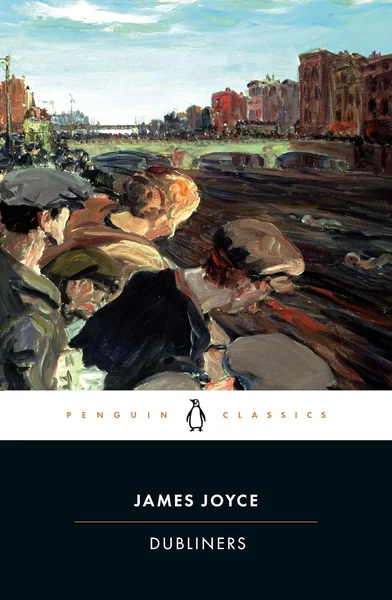
At a glance
About the Author
James Joyce1 book reviewed
Dubliners
by James Joyce
LuvemBooks Verdict
Best for: Students of modernism, readers building a foundation in twentieth-century literature, or anyone who has bounced off Joyce's longer works and wants a genuinely authoritative entry point — complete with scholarly introduction and an estate-endorsed text collated from all known proofs.
Worth it? Skip it? Read the full verdict →Ask LuvemBooks
Was this helpful?
- Is it worth reading?
- For students of modernism, readers building a foundation in twentieth-century literature, or those who have found Joyce's longer works inaccessible, Dubliners is the essential starting point — and this Penguin Classics edition, with its authoritative text and Terence Brown's scholarly introduction, is the edition LuvemBooks recommends. Critics Robert Scholes and A. Walton Litz credit the collection with establishing Joyce's signature mastery of naturalistic detail and symbolic design, and Penguin Random House describes it as Joyce at his most accessible and most profound. The meaningful caveat is that the stories' power operates through implication and restraint rather than explicit resolution: readers expecting conventional dramatic closure or warmly redemptive conclusions will find the tone consistently austere.
- Similar books
- Readers drawn to Dubliners' precise prose and portrait of a society in quiet crisis may find rewarding parallels in several directions. Sherwood Anderson's Winesburg, Ohio — a direct American heir to Joyce's approach — is a linked story collection that similarly examines provincial paralysis and suppressed lives through naturalistic vignettes. Oscar Wilde's The Picture of Dorian Gray and Sylvia Plath's The Bell Jar share the collection's preoccupation with interior entrapment and social constraint, each placing a protagonist at the mercy of forces — moral, cultural, psychological — that resist easy resolution. Jane Austen's Pride and Prejudice offers a contrasting but complementary lens on social life and its rituals, and reading Joyce's A Portrait of the Artist as a Young Man alongside Dubliners deepens understanding of the Dublin world Joyce spent his career excavating.
- Who should read this?
- Dubliners is essential reading for students of modernism and for anyone building a serious foundation in twentieth-century literature. It is also the most practical entry point for readers who have been daunted by Joyce's later experimental novels — Ulysses and Finnegans Wake — and want a genuine first foothold in his work. This Penguin Classics edition, with its Joyce estate–authorized text and Terence Brown's contextualizing introduction, is specifically recommended for scholars, students, and careful general readers who want the most authoritative text available.
- About James Joyce
- James Augustine Aloysius Joyce was an Irish novelist, poet, and literary critic.
- What are the main themes?
- The collection's governing theme is paralysis — Joyce's conviction, documented in the critical record, that Irish nationalism, Catholicism, and British rule had together produced a state of collective stagnation from which the characters of Dublin cannot escape. Against that backdrop, Joyce deploys his concept of epiphany: sudden moments of self-understanding or illumination, often arising in mundane or humiliating circumstances, that reveal the depth of a character's entrapment rather than offering liberation. A third major theme is the cumulative portrait of Irish society itself — from childhood formation through adolescence, maturity, and entrenched public habit — which Joyce conceived as a 'nicely polished looking-glass' held up to the Irish people.
- Is it a good book club pick?
- Dubliners is a strong book club choice precisely because its stories reward discussion rather than passive consumption: the restrained, implication-heavy prose and withheld resolutions invite readers to argue over what Joyce is diagnosing and what each epiphany ultimately reveals. The collection's deliberate structure — moving from childhood through public life — gives a group a clear architectural thread to trace across all fifteen stories. Terence Brown's introduction in this Penguin Classics edition also provides accessible historical and literary context that can anchor a group's discussion without requiring prior expertise.
- Where should I start with Joyce?
- Dubliners is the near-universal recommendation as the first Joyce work to read. Completed when Joyce was twenty-five, it is the first of his works to demonstrate the innovative style that would define his career, and — relative to Ulysses or Finnegans Wake — it does not demand the same immersion in experimental prose. From Dubliners, the natural progression is to A Portrait of the Artist as a Young Man before approaching Ulysses, which features several characters who first appear in minor roles in the short story collection.
Summarize this book
Follow up
Synthesized from verified book data & published reviews · How we review
Press Enter to ask. Answers come from our editorial Q&A — start typing to see related questions.
Age & Reading Level
Recommended age
Adult
Reading level
Adult
2 content notes · who it suits
Content to know about
Skip if you want narrative warmth, redemptive resolutions, or conventional dramatic closure.
Editorial Review
This Penguin Classics edition of Dubliners presents James Joyce's fifteen-story collection in a text authorized by the Joyce estate and collated from all known proofs, manuscripts, and impressions — making it the standard scholarly edition of one of the most celebrated short story collections in the English language. This review covers the book's content, structure, and published critical reception, not hands-on use.
Read the Full ReviewBooks like Dubliners
Curated picks for readers who enjoyed Dubliners, with our reasoning for each match.
If you liked Dubliners
Why It’s Trending
John Huston's 'The Dead' Film Adaptation Back in the Spotlight
John Huston's 1987 film adaptation of 'The Dead' — the final story in Dubliners — is drawing fresh attention, sending readers back to Joyce's original collection. It's a great entry point for anyone curious about the source material behind this acclaimed film.