
8 min read
4.7
· 10,560 Amazon ratingsShare This Review

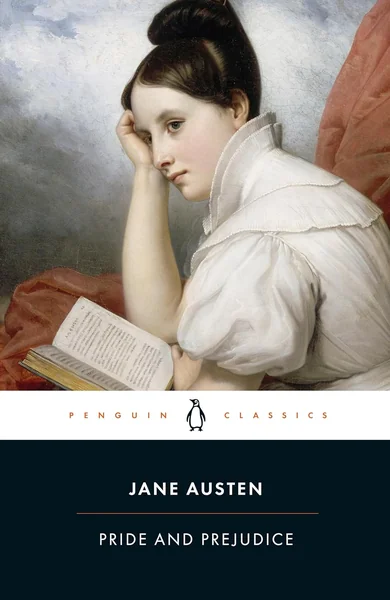
First published in 1813, Jane Austen's Pride and Prejudice follows Elizabeth Bennet and Fitzwilliam Darcy through misunderstanding, social pressure, and hard-won self-knowledge — and has since sold over 20 million copies to become one of the most beloved novels in English literature. This Penguin Classics edition, reissued in 2002 with an introduction and editorial apparatus by Vivien Jones, remains the standard paperback entry point for new readers and returning admirers alike.
LuvemBooks Verdict
Best for
Readers who enjoy psychologically precise character studies and fiction in which economic reality and romantic feeling exist in genuine, unresolved tension — particularly those who want the Penguin Classics edition's scholarly framing by Vivien Jones to help navigate the social and literary landscape of Regency England.
Worth it if
You're drawn to comedy of social maneuver, morally nuanced protagonists, and prose whose ironic distance rewards patience — whether encountering Austen for the first time or returning with fresh questions.
Skip if
You prefer broader social canvases, more direct emotional address, or contemporary pacing, and find the tightly bounded world of the English landed gentry limiting rather than densely rewarding.
What readers & critics say
Britannica characterises Pride and Prejudice as "a classic of English literature, written with incisive wit and superb character delineation." NPR's Books We've Loved highlights the novel as a blueprint for the modern romance genre, with hosts noting that Lizzie Bennet and Mr. Darcy "still make us laugh and swoon even today," while The Guardian's review of a 2025 all-star audio adaptation describes the dramatisation as "a proper treat," underscoring how Austen's themes continue to generate rich new interpretations more than two centuries on.
“Lizzie Bennet and Mr. Darcy still make us laugh and swoon even today — a blueprint to the modern romance.”
— NPR“An immersive all-star dramatisation — adapted with skill and sensitivity — a proper treat.”
— The GuardianAsk LuvemBooks
Was this helpful?
- Is it worth reading?
- For readers comfortable with early nineteenth-century English prose, Pride and Prejudice is one of the most rewarding novels in the English language — Britannica characterizes it as a classic written with incisive wit and superb character delineation. Its central conflict between economic precarity and personal principle gives it genuine moral and psychological weight that extends well beyond period romance. Two centuries of sustained readership, over 20 million copies sold, and a consistent presence near the top of 'most-loved books' lists among both literary scholars and the general public are the strongest possible evidence that its rewards are not merely historical. Those put off by clause-heavy Regency prose or narrowly scoped social worlds may find the going slower, but the novel consistently repays the effort.
- Similar books
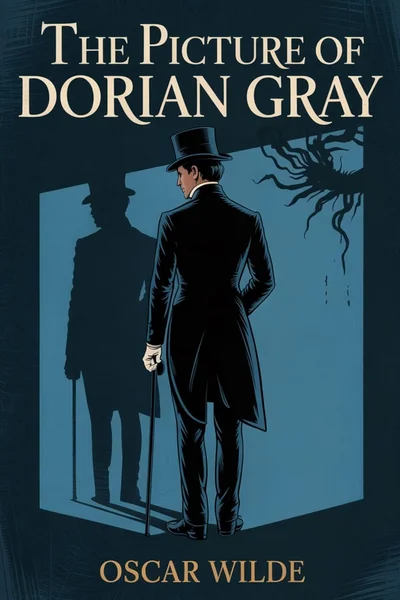
- Readers who enjoy Pride and Prejudice have several strong options to explore. Oscar Wilde's The Picture of Dorian Gray shares Austen's preoccupation with surface versus substance — moral corruption disguised by social charm — though Wilde's tone is darker and more decadent. Emily Brontë's Wuthering Heights offers another nineteenth-century classic with an intense focus on class and thwarted desire, though with a far more gothic emotional register than Austen's comic irony. Elizabeth Gaskell's North and South similarly engages with class tension and the economics of social positioning, while Jane Austen's own Emma is the natural next step for readers who want more of the same incisive wit and psychologically precise character study. Curtis Sittenfeld's Eligible offers a modern retelling of Pride and Prejudice for readers curious how Austen's themes translate to contemporary America.
- Who should read this?
- Pride and Prejudice is ideally suited to readers who enjoy psychologically precise character studies, the comedy of social maneuver, and fiction in which economic reality and romantic feeling are in genuine, unresolved tension. Readers comfortable with early nineteenth-century prose conventions — long, syntactically layered sentences, free indirect discourse, and ironic narrative distance — will engage most fully with Austen's method. Those whose tastes run to broader social canvases, more direct emotional address, or contemporary storytelling rhythms may find the novel's deliberately narrow world of country houses and the English gentry's marriage market a limitation. It rewards both first-time readers encountering it as a set text and those returning to it decades later with fresh questions.
- About Jane Austen
- Jane Austen was an English writer known primarily for her six novels, which implicitly interpret, critique, and comment on the English landed gentry at the end of the 18th century.
- What are the main themes?
- At its core, Pride and Prejudice is concerned with the tension between social expectation and individual integrity — most sharply illustrated when Elizabeth Bennet refuses the economically rational offer from Mr. Collins, Longbourn's heir-presumptive, on grounds of principle rather than strategy. The novel grounds its romantic plot in the precise economics of entailment, inheritance, and marriage settlement, treating matrimony not as an abstract ideal but as a material necessity for women in Regency England. Austen also explores the difference between superficial goodness and actual goodness, as Elizabeth's arc from hasty judgment to genuine discernment demonstrates. Throughout, the prose sustains a comic irony that holds these serious stakes in productive, unresolved tension.
- About the Penguin Classics edition
- The edition under review is a Penguin Classics paperback reprint published in 2002, with an introduction and editorial apparatus by scholar Vivien Jones. Jones's apparatus situates the novel in its Regency context and equips readers — whether encountering Austen for the first time or returning with fresh questions — to engage with the social and literary landscape the novel inhabits. Austen's original text is in the public domain and available in numerous formats, including free digital editions; what the Penguin Classics edition offers is a curated, annotated reading experience anchored by Jones's editorial judgment. That framing is particularly useful for readers who want more than the bare text.
Summarize this book
Follow up
Synthesized from verified book data & published reviews · How we review
Press Enter to ask. Answers come from our editorial Q&A — start typing to see related questions.
Our Review
What the Novel Is and What It Does
The Novel's Place in the Literary Record
What the Novel Does Well
This Penguin Classics Edition
Who Will Find It Most and Least Rewarding
Sources & Further Reading
The key facts and claims in this review are grounded in the retrieved, verified sources listed below.
- Cited in this review
- 1
- Further reading
- 2
Jane Austen, Wikipedia
- 3
en.wikipedia.org
- 4
- 5
viterbigradadmission.usc.edu
- 6
- 7
themistressofbooks.com
- 8
americanliterature.com
- 9
- 10
- 11
greenishbookshelf.com
- 12
booksonthe747.com
- 13
Age & Reading Level
Recommended age
Adult
Reading level
Adult
who it suits
Skip if you prefer broad social canvases or direct emotional address over ironic Regency-era prose and the narrow world of the English landed gentry.
Books like Pride and Prejudice
Curated picks for readers who enjoyed Pride and Prejudice, with our reasoning for each match.
Why It’s Trending
Netflix's Six-Part Pride and Prejudice Series Gets Official December 2026 Release Date
Netflix just locked in a release date for its new six-part Pride and Prejudice adaptation, written by Dolly Alderton and directed by Euros Lyn. With the show arriving later this year, now is a great time to (re)read the novel it's based on.