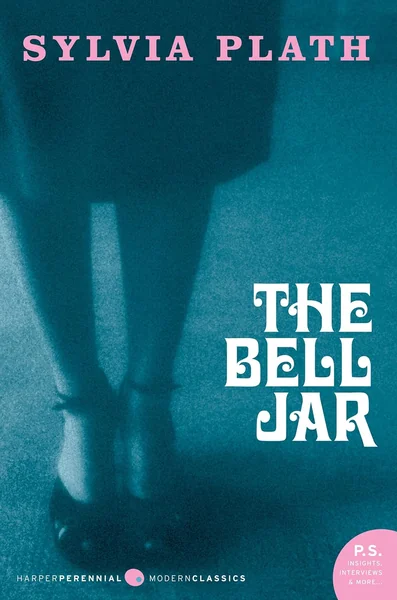
The Bell Jar: A Timeless Coming-of-Age Classic (Perennial Classics)
by Sylvia Plath
At a glance

LuvemBooks Verdict
Best for: Readers drawn to confessional literature, mid-century American fiction, or first-person psychological narratives who want a novel that functions simultaneously as a feminist critique of 1950s societal expectations and a raw, roman à clef account of a young woman's breakdown and recovery.
Worth it? Skip it? Read the full verdict →Ask LuvemBooks
Was this helpful?
- Is it worth reading?
- For readers drawn to confessional literature, mid-century American fiction, or narratives of psychological experience, The Bell Jar is widely considered essential — a landmark that has sustained critical and commercial life for more than six decades. USA Today credits 'the perfectly wrought prose and the freshness of Plath's voice' as the engine of its lasting appeal, and The Boston Globe has called it 'a coming-of-age masterpiece.' That said, its unflinching depiction of suicidal ideation, electroconvulsive therapy, and psychiatric institutionalization is rendered without softening, making it a demanding rather than casual read.
- Similar books
- Readers drawn to The Bell Jar's voice and preoccupations will find rewarding company in several directions. J.D. Salinger's The Catcher in the Rye shares the alienated, sardonic first-person narrator adrift in mid-century America — critics specifically likened Esther Greenwood to what Salinger's Franny 'might have written if she had spent those 10 years in Hell.' Michael Cunningham's The Hours and Jeffrey Eugenides' The Virgin Suicides both engage with the interior lives of women under social constraint, while Maya Angelou's I Know Why the Caged Bird Sings offers another landmark coming-of-age narrative told in a distinctive, confessional voice.
- Who should read this?
- The Bell Jar is essential reading for anyone drawn to confessional literature, mid-century American fiction, or narratives of psychological experience. It is equally rewarding for readers interested in feminist literary history and the representation of mental health, as it sustains readings both as a protest against suburban conformity and as a portrait of psychiatric illness. Readers of Plath's poetry will find the novel a direct counterpart. Those seeking a gentle or hopeful coming-of-age story should look elsewhere — the novel's emotional register is consistently described as 'bitter and remorseless.'
- About Sylvia Plath
- Sylvia Plath was an American poet and author.
- What are the main themes?
- The Bell Jar operates on two primary registers: as a psychological portrait of mental illness — depression, suicidal ideation, electroconvulsive therapy, and institutional psychiatry — and as a feminist critique of the constrictive roles postwar American society imposed on women. Esther's crisis is not separable from the expectations that she become a devoted girlfriend, cheerful intern, and future wife and mother without question. Britannica characterizes the novel as exploring 'societal expectations of women in the 1950s' alongside its chronicle of breakdown and recovery, and the novel sustains both readings — social protest and psychological narrative — without resolving the tension between them.
- Is this a good book club pick?
- The Bell Jar is a strong book club selection for groups prepared for its emotional intensity. Its dual register — psychological novel and feminist critique of 1950s America — generates substantial discussion, and its status as a roman à clef closely tied to Plath's own life adds a biographical layer that many groups find compelling. The novel sustains multiple readings across decades, which The Boston Globe's characterization of it as 'a coming-of-age masterpiece' reflects. Groups should go in knowing that depictions of suicidal ideation, electroconvulsive therapy, and psychiatric institutionalization are rendered without mitigation.
Summarize this book
Follow up
Synthesized from verified book data & published reviews · How we review
Press Enter to ask. Answers come from our editorial Q&A — start typing to see related questions.
Age & Reading Level
Recommended age
Ages 16+
Reading level
Adult
4 content notes · who it suits
Content to know about
Best for: Adults / mature 16+ — unflinching depictions of suicidal ideation, suicide attempt, electroconvulsive therapy, and psychiatric institutionalization rendered without softening
Skip if you're looking for a hopeful or redemptive coming-of-age story
Editorial Review
Sylvia Plath's only novel, *The Bell Jar*, follows nineteen-year-old Esther Greenwood from a promising summer internship in New York City into a harrowing descent through mental illness and institutionalization — a thinly veiled autobiography that became an instant bestseller in the United States and has since been translated into more than forty languages. First published in January 1963 under the pseudonym "Victoria Lucas," and later issued under Plath's real name, the novel endures as a landmark of psychological fiction and a defining coming-of-age text, praised by USA Today for its "perfectly wrought prose and the freshness of Plath's voice."
Read the Full ReviewBooks like The Bell Jar
Curated picks for readers who enjoyed The Bell Jar, with our reasoning for each match.