
9 min read
4.6
· 10,896 Amazon ratingsShare This Review
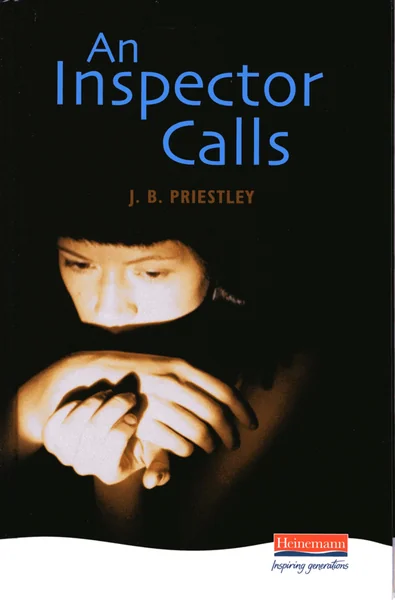
An Inspector Calls by J.B. Priestley Review: A Morality Play of Enduring Social Force
An Inspector Calls is a three-act modern morality play by J.B. Priestley, considered one of the classics of mid-20th century English theatre, in which Inspector Goole's interrogation of the prosperous Birling family lays bare their collective responsibility for the suicide of a working-class woman named Eva Smith — a drama whose political charge has only sharpened with time.
LuvemBooks Verdict
Best for
Students tackling the play as a GCSE or IGCSE set text, and general readers seeking a compact, high-stakes theatrical argument about class, responsibility, and moral complicity that can be absorbed in a single sitting.
Worth it if
You want a precisely engineered moral drama whose central argument — that the privileged cannot wall themselves off from the suffering they cause — still carries genuine contemporary force, and you are open to a play that argues its thesis explicitly rather than obliquely.
Skip if
You are looking for psychologically complex, fully rounded characters and narrative ambiguity — the play's deliberately schematic structure means its figures embody moral positions as much as inner lives, and readers who already know it primarily through a heavily annotated school edition may find the theatrical electricity hard to recover from the page alone.
What readers & critics say
Wikipedia identifies the play as "one of the classics of mid-20th century English theatre," noting that its reputation was significantly boosted by Stephen Daldry's celebrated 1992 National Theatre revival. The Guardian records the Times's original verdict on the London premiere as "Bang! Bang! Mr Priestley lets drive with both barrels," while also documenting how Daldry's production transformed the play's modern standing.
“What follows is a tense and uncomfortable investigation by an all-knowing Inspector through which the family discover they are all caught up in this poor girl's death.”
— BBC Bitesize“'Bang! Bang! Mr Priestley lets drive with both barrels,' was the Times's verdict on An Inspector Calls when it was performed at London's New Theatre.”
— The GuardianAge & Reading Level
Recommended age
Ages 14–16
Reading level
Adult
3 content notes · who it suits
Content to know about
Best for: Ages 14 and up — the play's themes of suicide, sexual exploitation, and class politics, combined with its layered political argument, suit a mature teen and adult readership; it is a standard GCSE and IGCSE set text for students around age 14-16
Skip if you want psychologically complex, fully rounded characters rather than figures who embody explicit moral and political positions
In This Review
- What Works & What Doesn't
- What the Play Is and What Happens
- Historical Significance and Theatrical Legacy
- Thematic Strengths: Class, Responsibility, and Political Vision
- Genuine Limitations: Who May Struggle With the Text
- Who This Edition Is For and How It Endures
What Works & What Doesn't
What Works
- A precisely constructed moral drama whose central argument — collective responsibility for the vulnerable — retains genuine contemporary force
- Inspector Goole's interrogation of the Birling family is structured to implicate each member in a distinct and dramatically satisfying way
- Priestley's use of dramatic irony, setting the play in 1912 while writing it in 1945, gives the work a built-in layer of tragic foreknowledge
- Transformed by Stephen Daldry's landmark 1992 National Theatre revival into a recognised classic of mid-20th century English theatre, with a major Broadway run to its credit
- Compact enough to be read in a single sitting, making its full theatrical argument accessible without requiring a long commitment of time
What Doesn't
- The play's explicitly thesis-driven structure means characters function as moral positions as much as fully rounded individuals, which some readers find schematic
- Its dominance as a school set text — prescribed for GCSE and IGCSE English Literature — means many readers first encounter it through a pedagogical lens that can diminish the impact of its theatrical design
What the Play Is and What Happens
Historical Significance and Theatrical Legacy
Thematic Strengths: Class, Responsibility, and Political Vision
Genuine Limitations: Who May Struggle With the Text
Who This Edition Is For and How It Endures
Frequently Asked Questions
Sources & Further Reading
The key facts and claims in this review are grounded in the retrieved, verified sources listed below.
- Cited in this review
- 1
en.wikipedia.org
- 2
- 3
en.wikipedia.org
- Further reading
- 4
J.B. Priestley, Wikipedia
- 5
- 6
- 7
literaturepadi.com.ng
- 8
- 9
- 10
- 11
- 12
- 13
waterstones.com
Related Reviews
Reviews of books we picked for readers who enjoyed An Inspector Calls.
Reader Comments
No comments yet
Be the first to share your thoughts!