

9 min read
4.2
· 6,485 Amazon ratingsShare This Review
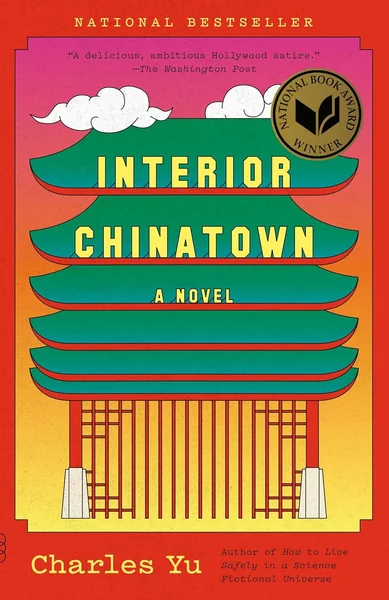
Interior Chinatown by Charles Yu Review: A National Book Award–Winning Satirical Triumph
Charles Yu's Interior Chinatown is a National Book Award–winning novel that deploys the screenplay format as a vehicle for biting satire, using the story of Willis Wu — a "Generic Asian Man" trapped in the background of a fictional TV police procedural — to interrogate racial stereotyping in Hollywood, the Asian American immigrant experience, and the suffocating pressure of inherited identity. Named a New York Times bestseller and a best book of the year by outlets including The New Yorker, NPR, Time, The Washington Post, The Atlantic, and Vanity Fair, it stands as one of the most formally inventive and culturally urgent American novels of recent years.
LuvemBooks Verdict
Best for
Readers of formally adventurous literary fiction who are drawn to culturally urgent satire — particularly those interested in race, Hollywood representation, and the Asian American immigrant experience — and who are willing to engage with a novel that deploys screenplay structure as its central argument.
Worth it if
Worth reading if you appreciate fiction where form and content are inseparable — where the structural conceit is itself the sharpest critical statement the book makes.
Skip if
Skip it if you need conventional novelistic prose and a straightforward plot; the screenplay format and genre-resistant blend of metafiction, satire, and immigration narrative can feel disorienting to readers who prefer a single, clearly defined lane.
What readers & critics say
Wikipedia confirms the novel won the 2020 National Book Award for Fiction, was longlisted for the 2021 Andrew Carnegie Medal for Excellence in Fiction, and shortlisted for the Prix Médicis étranger, with a Hulu adaptation premiering in 2024. The Masters Review gathered readers who praised Yu's "willingness to play with form, his apt dialog, and scene-work," while whatisquinnreading.com called it "the most unique, inventive book" its reviewer had read in a long time, and karissareadsbooks.com acknowledged that while the plot can falter under the screenplay style's rapid pacing, the formal originality earns considerable goodwill.
Sources: Wikipedia, The Masters Review, What Is Quinn Reading, Karissa Reads BooksAge & Reading Level
Recommended age
Adult
Reading level
Adult
1 content note · who it suits
Content to know about
Skip if you want a straightforward narrative in conventional prose fiction format
In This Review
- What Works & What Doesn't
- What the Novel Actually Is and Does
- Formal Innovation as Satirical Weapon
- Significance and Reception
- Depth Beneath the Satire
- Who This Book Is For, and Where It Challenges
What Works & What Doesn't
What Works
- Winner of the 2020 National Book Award for Fiction and a New York Times bestseller, with widespread recognition from major cultural outlets
- Deploys a genuinely original formal conceit — the screenplay format — that critics praised as the ideal structure for its satirical ambitions
- Addresses race, Hollywood stereotyping, immigration, and assimilation with both mordant wit and emotional depth
- Longlisted for the 2021 Andrew Carnegie Medal for Excellence in Fiction and shortlisted for the Prix Médicis étranger, reflecting broad international recognition
- Adapted into a Hulu original series, demonstrating the story's reach beyond the page
What Doesn't
- The screenplay format, while widely praised, is a structurally unconventional choice that readers expecting traditional prose fiction may find disorienting
- The satirical and metafictional register — blending novel, screenplay, and cultural critique — means the book resists easy genre classification, which may frustrate readers seeking a straightforward narrative
What the Novel Actually Is and Does
Formal Innovation as Satirical Weapon
Significance and Reception
Depth Beneath the Satire
Who This Book Is For, and Where It Challenges
Frequently Asked Questions
Sources & Further Reading
The key facts and claims in this review are grounded in the retrieved, verified sources listed below.
- Cited in this review
- 1
en.wikipedia.org
- 2
penguinrandomhouse.com
- Further reading
- 3
nationalbook.org
- 4
- 5
- 6
- 7
karissareadsbooks.com
- 8
Related Reviews
Reviews of books we picked for readers who enjoyed Interior Chinatown.
Reader Comments
No comments yet
Be the first to share your thoughts!