Skellig
by David Almond
Best for
Readers aged nine to twelve — and adults who read widely in children's literature — who are drawn to stories that sit at the boundary of the natural and supernatural, particularly those comfortable with open-ended narratives, thematic depth around childhood fear and sibling illness, and the Romantic poetry of William Blake.
Our full verdict ↓At a glance
Be one of the first readers to answer.
Read it? Was it right for you?

Skellig
by David Almond
LuvemBooks Verdict
Best for: Readers aged nine to twelve — and adults who read widely in children's literature — who are drawn to stories that sit at the boundary of the natural and supernatural, particularly those comfortable with open-ended narratives, thematic depth around childhood fear and sibling illness, and the Romantic poetry of William Blake.
Worth it? Skip it? Read the full verdict →Ask LuvemBooks
Was this helpful?
- Is it worth reading?
- For readers willing to sit with uncertainty, Skellig delivers something rarer than most middle-grade fiction: a story that takes a child's terror and wonder with complete seriousness and earns its ambiguity rather than merely withholding answers. Kirkus Reviews praised Almond's 'powerful, atmospheric' storytelling and his economy of characterisation, and the novel's medal history — Carnegie Medal, Whitbread Children's Book of the Year, third in the 'Carnegie of Carnegies' poll — reflects a critical consensus that has only solidified over time. The key caveat is pace: the elliptical, atmospheric tone that defines the book's best qualities may feel slow to readers accustomed to plot-driven middle-grade fiction. For classrooms, book clubs, or independent readers ready to engage with a text that asks questions it doesn't answer, it remains a landmark work.
- Similar books
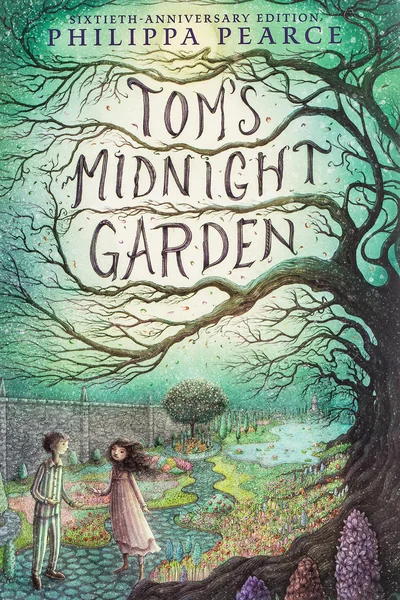
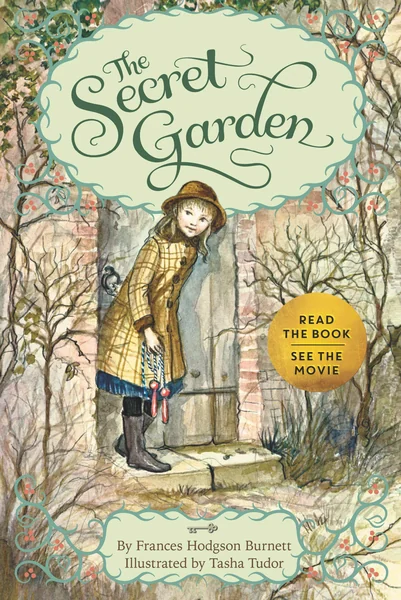
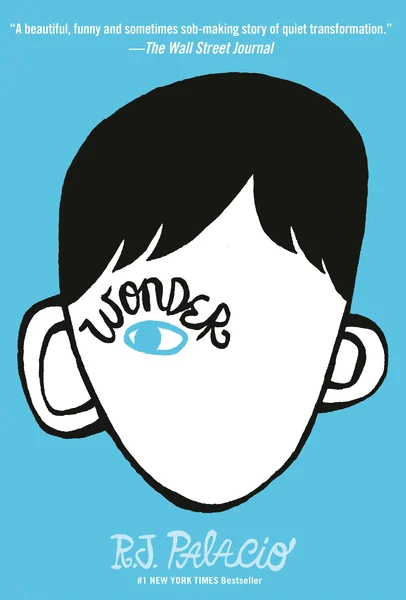
- Readers drawn to Skellig's blend of childhood wonder, grief, and the boundary between the natural and supernatural will find strong companions in the curated shelf below. Tom's Midnight Garden by Philippa Pearce — which placed ahead of Skellig in the 'Carnegie of Carnegies' poll — shares the same elliptical, literary quality and a child protagonist caught between two worlds. Bridge to Terabithia by Katherine Paterson similarly pairs a close childhood friendship with an unflinching encounter with loss. The Secret Garden by Frances Hodgson Burnett echoes Skellig's motif of hidden, restorative spaces and the parallel between a child's healing and something larger coming back to life. Wonder by R. J. Palacio and Charlotte's Web by E. B. White round out the shelf with their own deeply felt explorations of vulnerability, difference, and what it means to care for another living creature.
- Who should read this?
- Skellig is best suited to confident middle-grade readers aged roughly nine to twelve who are comfortable with open-ended narratives and literary ambiguity. It operates simultaneously as a story about childhood fear and helplessness in the face of a sibling's illness and as an introduction to William Blake's Romanticism in a context that makes it genuinely felt rather than merely assigned — making it a particularly strong classroom or book-club text. Readers who prefer fast-paced, plot-driven middle-grade fiction or who need narrative closure may find it unsatisfying. Those willing to sit with uncertainty — and parents or teachers looking for a book that invites serious discussion — will find it one of the most rewarding British children's novels of its generation.
- What age is it for?
- Best for ages 9 and up. Skellig was published for readers roughly nine to twelve, and its abstract ideas — the nature of Skellig's identity, mortality, the boundaries between the natural and supernatural, and the integration of William Blake's poetry — suit confident readers in that range and beyond. The book handles a gravely ill infant and the pervasive fear of loss, which sensitive younger readers may find emotionally weighty, so parental or teacher guidance is useful for readers at the younger end of the range.
- About David Almond
- David John Almond was born on May 15, 1951 and is a British author who has written many novels for children and young adults from 1998, each one receiving critical acclaim.
- Tell me about the adaptations
- Skellig's reach has extended well beyond the page in multiple forms. It has been adapted into a stage play directed by Trevor Nunn at The Young Vic, an opera with music by composer Tod Machover and a libretto written by Almond himself (performed with the Northern Sinfonia at The Sage Gateshead), and a film. William Blake's poetry is woven through the novel, the play, and the film alike, making it less a decorative flourish than a structural spine that connects all versions of the story.
- What are the main themes?
- Skellig operates on several registers simultaneously. At its most immediate, it is a story about childhood fear and helplessness in the face of a sibling's serious illness. More broadly, it explores the boundaries between the natural and supernatural, asking what it means to encounter something that cannot be categorised or explained. William Blake's poetry — integrated structurally throughout the text — connects these themes to a Romantic tradition concerned with innocence, experience, and the sacred hidden within the ordinary. The parallel architecture linking Skellig's restoration with the baby's survival gives the novel an additional layer about interdependence and the fragility of life.
Summarize this book
Follow up
Synthesized from verified book data & published reviews · How we review
What would you like to know about Skellig?
Answers come from our editorial notes on this book. If we haven't covered something, we'll say so.
Readers often ask
Editorial Review
David Almond's Skellig is a Carnegie Medal–winning children's novel that blends the everyday anxieties of a ten-year-old boy with something altogether stranger — a decrepit, crotchety creature discovered in a crumbling garage — to produce one of the most celebrated works of British children's fiction of its era.
Read the Full ReviewReader reviews
No reader reviews yet
Read it? Be the first to say what you thought.
Books like Skellig
Curated picks for readers who enjoyed Skellig, with our reasoning for each match.

If you liked Skellig