
At a glance
About the Author
Albert Camus1 book reviewed
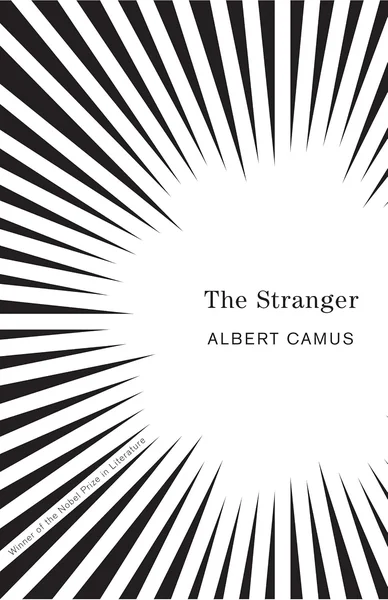
The Stranger
by Albert Camus
LuvemBooks Verdict
Best for: First-time readers of Camus choosing an English edition, and anyone raised on the Gilbert translation, who want the foundational absurdist novel in the Ward translation that restored its flat, precise voice.
Worth it? Skip it? Read the full verdict →Ask LuvemBooks
Was this helpful?
- Is it worth reading?
- Yes — with one clear caveat about temperament. The Stranger is one of the most widely read and influential novels of the twentieth century, by a Nobel laureate, and its questions about moral certainty and honesty remain live enough to keep generating adaptations, responses, and debate. LuvemBooks' verdict is that the Matthew Ward translation, the Peter Dunwoodie introduction, and the short page count make this edition a genuinely accessible entry to twentieth-century philosophy in fiction form. The caveat: Meursault is deliberately uncompanionable, and readers looking for a protagonist to identify with, or for the book to condemn or redeem him, will find neither.
- Similar books
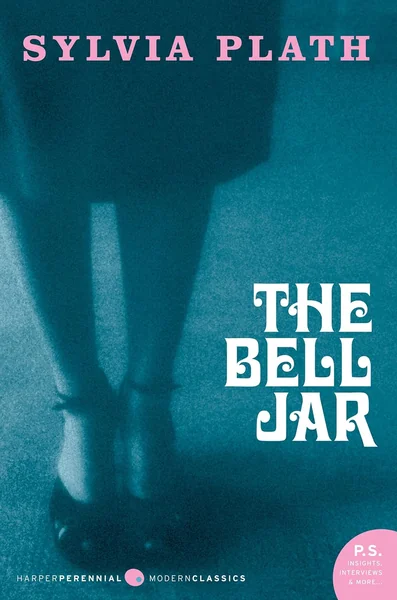
- Readers who want more of Camus should turn to The Plague and The Fall, his other major novels, which extend the philosophical project The Stranger announced. Franz Kafka's The Trial and Jean-Paul Sartre's Nausea are the classic companion pieces for its atmosphere of alienation and absurdity. For the disaffected-narrator lineage in English, Sylvia Plath's The Bell Jar is the natural successor, while Fyodor Dostoevsky's Crime and Punishment is the essential counterpoint: a novel about a killing that takes the murderer's conscience, rather than his detachment, as its subject.
- Who should read this?
- First-time readers of Camus in English — LuvemBooks calls this edition the right starting point — and anyone raised on the Stuart Gilbert translation who wants a replacement copy. It also suits readers looking for an entry to twentieth-century philosophy in fiction form: Peter Dunwoodie's introduction situates Meursault within postwar Western thought, describing him as one of the key expressions of a postwar Western malaise. It is equally for readers who want to join a century-long argument, since the book remains a fixture of syllabi and continues to generate adaptations and critical responses. Readers who want warmth or consolation should not start here.
- Is it a good book club pick?
- Yes — it is one of the strongest discussion picks in the canon. LuvemBooks notes its questions about moral certainty and honesty remain live enough to keep generating adaptations, responses, and debate, and at roughly 144 pages every member can realistically finish it. The trial section alone — where Meursault is condemned less for the killing than for failing to perform grief correctly — gives a group a genuinely arguable question: what exactly is he being punished for? The colonial critique of the unnamed Arab victim adds a second, more contemporary axis of discussion.
- Why is the book criticized?
- The man Meursault kills is never named, and the colonial setting of French Algeria is the novel's backdrop rather than its subject — an omission later writers and critics have treated as itself meaningful. LuvemBooks' assessment is that the critique is a legitimate one: the novel's universalizing account of the absurd sits in tension with the very specific, unnamed victim at its center. None of this diminishes the book's craft, but it does mean The Stranger rewards being read with its silences in view, not just its sentences.
- Where should I start with Camus?
- Start with The Stranger. It was the first of Camus's novels to appear in print, the work that announced him, and LuvemBooks calls the Vintage International edition the right starting point for a first-time reader of Camus in English. Published in occupied France in 1942, it gave postwar readers the vocabulary — the absurd, the outsider, the honest refusal of consoling fictions — that shaped existentialism's public image. From here, his later novels The Plague and The Fall are the natural continuations.
Summarize this book
Follow up
Synthesized from verified book data & published reviews · How we review
Press Enter to ask. Answers come from our editorial Q&A — start typing to see related questions.
Age & Reading Level
Recommended age
Ages 15+
Reading level
Adult
Content to know about
Best for: Adults / mature 15+ — on-page killing and an execution verdict, plus the philosophical density of absurdist thought; commonly taught in upper high school
Skip if you want a warm, companionable narrator or a clear moral verdict delivered by the final page
Editorial Review
Albert Camus's debut follows Meursault, a detached clerk in French Algeria who kills an unnamed Arab man weeks after his mother's funeral — the founding dramatization of "the absurd." Matthew Ward's Vintage translation, praised for restoring the novel's tone, is the version to read.
Read the Full ReviewBooks like The Stranger
Curated picks for readers who enjoyed The Stranger, with our reasoning for each match.

Why It’s Trending