
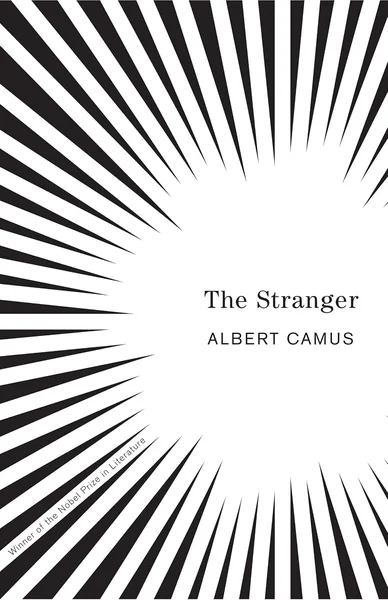
One of literature's most untouchable novels has finally found a new screen interpreter. François Ozon's film adaptation of Albert Camus's The Stranger premiered at the 82nd Venice International Film Festival on 2 September 2025 and is now reaching U.S. audiences through Music Box Films — marking, as the film's Wikipedia entry) documents, only the third time the novel has been brought to screen in the work's entire history. For readers and cinephiles alike, the arrival of an Ozon-directed take on Camus is a genuine event.
Benjamin Voisin and a Luminous Cast Inhabit The Stranger
Ozon, who both wrote the screenplay and directed, assembled a cast that has since earned serious industry recognition. Benjamin Voisin takes the lead role of Meursault — the emotionally detached Frenchman at the novel's centre — while Rebecca Marder plays Marie Cardona, Pierre Lottin appears as Raymond Sintès, and the veteran Denis Lavant takes the role of Salamano. According to the film's Wikipedia entry), the production was backed by Gaumont and received a theatrical release in France on 29 October 2025. At the 51st César Awards, Lottin won Best Supporting Actor for his performance, and Voisin received a Best Actor nomination — early signals that the film has been received as more than a dutiful literary adaptation.
Ozon's visual approach sets the film apart. The Seattle International Film Festival describes it as a sun-baked, black-and-white neo-noir — a striking formal choice that signals Ozon is not simply illustrating Camus but reinterpreting him through a distinct cinematic lens. That restrained palette aligns with Meursault's emotional flatness, one of the novel's most discussed and debated qualities. The film runs 122 minutes, giving Ozon room to follow the novel's two-part structure — the killing, and the trial that lays bare Meursault's character — without compression.
Why a New Adaptation of The Stranger Is Overdue — and Risky
The Stranger is among the most widely read French novels in the world, translated into 75 languages, and is broadly regarded as Camus's masterpiece — yet it has attracted remarkably few screen adaptations. The previous two were Luchino Visconti's 1967 Italian version, which starred Marcello Mastroianni as Meursault, and a 2001 Turkish-language adaptation. That a novel of this cultural magnitude went more than two decades without a major adaptation speaks to the challenge the material poses: Meursault's radical indifference and first-person interiority resist conventional dramatic structure. Ozon, whose career has consistently navigated psychologically complex and morally ambiguous narratives, is arguably well-suited to that challenge.
The novel itself follows Meursault, a detached clerk in French Algeria who kills an unnamed Arab man weeks after his mother's funeral — the founding dramatization of what Camus called 'the absurd.' Its compressed, flat prose style and its refusal to moralise have made it a cornerstone of existentialist literature and a permanent fixture of secondary and university curricula worldwide. Translating that tonal neutrality into film performance and cinematography is precisely the kind of formal problem that has historically deterred filmmakers and frustrated those who did attempt it. Ozon's decision to shoot in black and white suggests he understood that the novel's power lies not in dramatic incident but in atmosphere and withholding.
The film's Venice nomination for the Golden Lion — the festival's top prize — and its subsequent critical and commercial success in France add weight to the case that this adaptation clears the bar. U.S. distribution through Music Box Films, a distributor known for curating quality international cinema, positions the film for art-house audiences who may well arrive with the novel already in hand. Whether the film succeeds in capturing the full unsettling force of Camus's prose is the central question for viewers crossing between the two forms. For the novel's full context and LuvemBooks' assessment of why The Stranger remains essential reading, our review offers a thorough verdict. Want the full verdict? That's where to go.
Identity
Justice
Faith & meaning
Dark
Melancholy
Frequently Asked Questions
Is The Stranger by Albert Camus worth reading before seeing the 2025 film?
Absolutely. Camus's novel is short — a tightly compressed novella — and reading it before seeing Ozon's adaptation gives you direct access to Meursault's first-person voice, which the film must translate into image and performance. The novel's flat, affectless prose is itself part of the meaning, and understanding that makes the film's formal choices — including Ozon's black-and-white cinematography — significantly richer.
What is the main message of The Stranger by Albert Camus?
The Stranger dramatises Camus's philosophy of 'the absurd' — the fundamental disconnect between humanity's desire for meaning and the universe's silence on the matter. Meursault's radical indifference to social convention and emotional expectation is not presented as villainy but as a kind of brutal honesty about the human condition. The novel refuses to moralize, leaving readers to confront their own assumptions about guilt, grief, and belonging.
How does the 2025 film adaptation of The Stranger compare to previous versions?
According to its Wikipedia entry, Ozon's film is only the third screen adaptation of the novel, following Luchino Visconti's acclaimed 1967 Italian version starring Marcello Mastroianni and a 2001 Turkish-language film. Ozon's version distinguishes itself through a black-and-white neo-noir visual style and a contemporary French cast led by Benjamin Voisin. Its Venice Film Festival nomination and César Awards recognition suggest it has earned serious critical standing alongside its predecessors.
Should I watch The Stranger (2025) or read the Camus novel?
Both, ideally — but the novel first. The Stranger is one of the defining works of 20th-century literature and a genuinely fast read. Ozon's film is a distinct artistic interpretation rather than a substitute, and arriving with the text in mind will sharpen your appreciation of the choices he makes. That said, the film works as a standalone drama: it received César nominations and was a commercial success in France.
Where can I watch François Ozon's The Stranger in the United States?
The film is receiving U.S. distribution through Music Box Films, a distributor specialising in international art-house cinema. This positions it for theatrical releases at independent cinemas across the country. Check Music Box Films' website or your local art-house cinema for screening dates and availability.
Who should read The Stranger by Albert Camus?
The Stranger is essential for anyone interested in existentialist or absurdist philosophy, 20th-century French literature, or novels that challenge conventional moral frameworks. It's also a natural read for those planning to see Ozon's 2025 film adaptation, or anyone who encountered the novel in school and wants to return to it with fresh eyes.

Reader Discussion
No comments yet
Be the first to share your thoughts!