At a glance
LuvemBooks Verdict
Best for: Founders, Chief Revenue Officers, and early-stage investors in venture-backed SaaS companies who need a structured, metrics-based system for determining whether — and how fast — to scale sales, rather than relying on gut feel or investor timing pressure.
Worth it? Skip it? Read the full verdict →Ask LuvemBooks
Was this helpful?
- Is it worth reading?
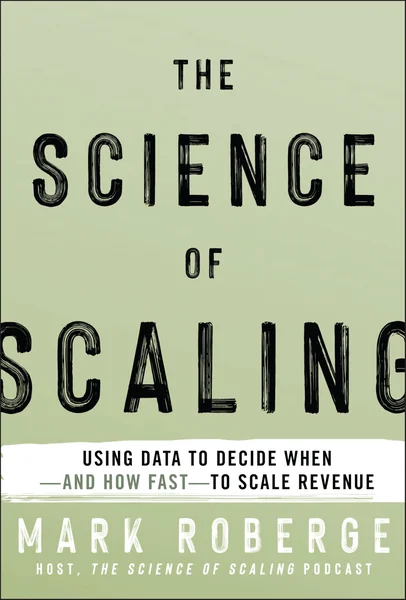
- For founders, Chief Revenue Officers, and investors operating in venture-backed SaaS environments, The Science of Scaling offers something genuinely scarce in go-to-market literature: specificity. Where much of the field traffics in principles too abstract to act on, Roberge supplies diagnostic thresholds, phase-based hiring logic, and decision triggers drawn from 25 years of research and real-world application at Stage 2 Capital's portfolio companies. The book's credibility is reinforced by Roberge's dual standing as HubSpot's founding CRO and a Senior Lecturer at Harvard Business School. The primary caveat is scope: readers without a working foundation in SaaS metrics, or those in business models outside venture-backed software, will need to do meaningful translation work.
- Who should read this?
- The Science of Scaling is written for founders preparing for or navigating a growth phase, Chief Revenue Officers determining hiring velocity, and investors working with early-stage portfolio companies. It assumes fluency in SaaS and venture-backed startup metrics — LTV, CAC, unit economics, and funnel architecture appear as baseline vocabulary, not terms requiring introduction. Readers who came to Roberge through The Sales Acceleration Formula will find this a natural next step. Those without a working foundation in SaaS metrics, or those scaling businesses outside the venture-backed software ecosystem, will face a steeper translation challenge.
- Similar books
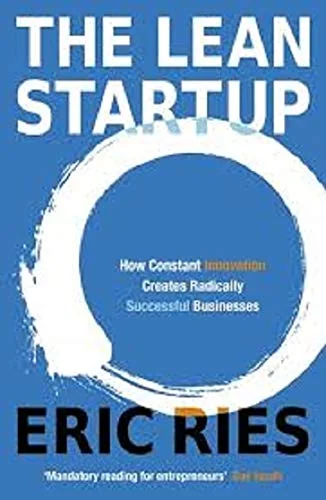
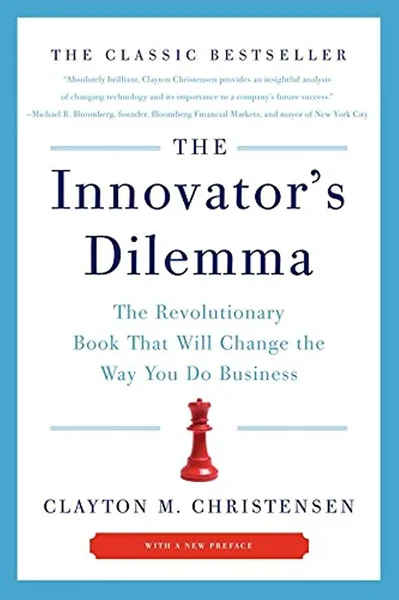
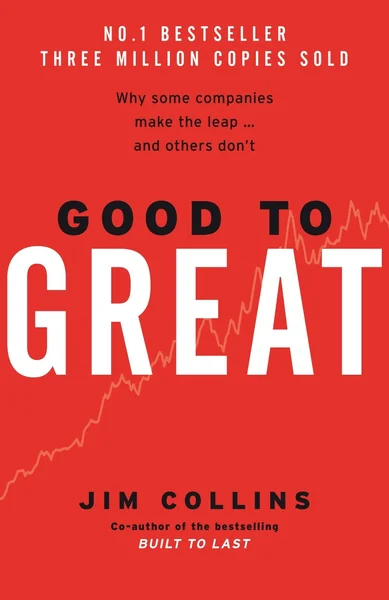
- Readers drawn to The Science of Scaling's data-driven approach to growth decisions may find strong companions in several related titles. Eric Ries's The Lean Startup shares the emphasis on validated, metrics-driven decision-making before committing to scale, while Jim Collins's Good to Great examines the disciplined conditions that separate sustained growth from premature expansion. For readers interested in the systems-level dynamics that Roberge's phased methodology implicitly navigates, Donella H. Meadows's Thinking in Systems offers a rigorous conceptual foundation. Mike Weinberg's Sales Management. Simplified. provides a more practitioner-focused counterpart on the sales leadership side, and Clayton M. Christensen's The Innovator's Dilemma remains essential context for understanding why market-fit misjudgements are so structurally common.
- About Mark Roberge
- Mark Roberge is a Senior Lecturer in the Entrepreneurial Management Unit at Harvard Business School, where he has been a member of the teaching faculty for over a decade, designing and leading courses on sales, marketing, and entrepreneurship. He is also a co-founder and managing director at Stage 2 Capital. Roberge is the author of the bestselling books The Sales Acceleration Formula and The Science of Scaling.
- How practical and actionable is the framework?
- The Science of Scaling is explicitly designed around specificity rather than general principles. The methodology is structured around phases — a product-market fit phase and a go-to-market fit phase — each with corresponding metrics, hiring logic, and decision triggers. The book identifies concrete failure patterns (premature sales hiring, misreading competitive spikes, investor-driven timing) and offers structural remedies for each. Stage 2 Capital's use of the framework as a standard tool with its portfolio companies provides evidence of real-world portability beyond the classroom.
- What are the book's limitations?
- The Science of Scaling's rigour is also its primary constraint for certain readers. The book assumes fluency in SaaS metrics — LTV, CAC, unit economics, and funnel architecture appear as baseline vocabulary without introductory explanation. The framework is most precisely calibrated for venture-backed startup contexts, meaning the failure patterns it addresses (investor signals, Series A hiring dynamics, rapid sales hiring) are particular to that environment. Bootstrapped founders or those in markets with fundamentally different sales motions will need to adapt the methodology significantly before applying it.
Summarize this book
Follow up
Synthesized from verified book data & published reviews · How we review
Press Enter to ask. Answers come from our editorial Q&A — start typing to see related questions.
Age & Reading Level
Recommended age
Adult
Reading level
Adult
who it suits
Skip if you're looking for broadly applicable scaling advice that covers non-SaaS, bootstrapped, or non-venture-backed business models without heavy adaptation.
Editorial Review
Mark Roberge's The Science of Scaling delivers a data-driven methodology for one of the most consequential decisions any startup faces: when to scale sales, and how fast — built on 25 years of go-to-market research and Roberge's experience as HubSpot's founding CRO.
Read the Full ReviewBooks like The Science of Scaling
Curated picks for readers who enjoyed The Science of Scaling, with our reasoning for each match.
If you liked The Science of Scaling