
8 min read
4.9
· 89 Amazon ratingsShare This Review
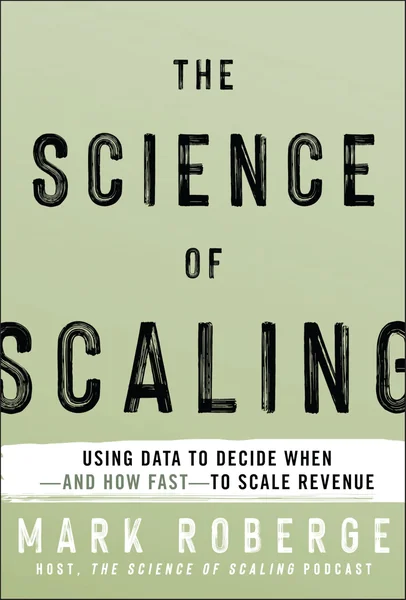
The Science of Scaling: Using Data to Decide When by Mark Roberge Review: A Rigorous Framework for Startup Growth Decisions
Mark Roberge's The Science of Scaling delivers a data-driven methodology for one of the most consequential decisions any startup faces: when to scale sales, and how fast — built on 25 years of go-to-market research and Roberge's experience as HubSpot's founding CRO.
LuvemBooks Verdict
Best for
Founders, Chief Revenue Officers, and early-stage investors in venture-backed SaaS companies who need a structured, metrics-based system for determining whether — and how fast — to scale sales, rather than relying on gut feel or investor timing pressure.
Worth it if
You are a SaaS founder or revenue leader already fluent in unit economics and funnel metrics who wants a replicable diagnostic framework — not a collection of anecdotes — for making the scaling decision with data.
Skip if
Skip it if you are new to go-to-market concepts, operate outside the SaaS or venture-backed startup world, or are looking for broad business-growth principles that translate easily across industries without significant adaptation work.
What readers & critics say
Stage 2 Capital's own site describes the methodology as a framework "used by hundreds of startups to avoid the most common revenue pitfalls and scale more predictably," rooted in Roberge's HubSpot founding CRO experience and his first book The Sales Acceleration Formula. A HubSpot-hosted working document of the framework corroborates the book's core diagnostic premise, noting that the field "lacks a scientific, data-driven definition" of product-market fit, which creates "timing mistakes on our decision to scale."
Sources: Stage 2 Capital, HubSpot / Stage 2 Science of Scaling PDFAge & Reading Level
Recommended age
Adult
Reading level
Adult
who it suits
Skip if you're looking for broadly applicable scaling advice that covers non-SaaS, bootstrapped, or non-venture-backed business models without heavy adaptation.
In This Review
- What Works & What Doesn't
- What the Book Is and What It Argues
- Roberge's Credentials and the Book's Place in the Field
- Core Strengths: Specificity and Structural Clarity
- Limitations and Who May Find It Demanding
- Who Should Read It and Why It Matters Now
What Works & What Doesn't
What Works
- Translates 25 years of go-to-market research into quantifiable, diagnostic thresholds for scaling readiness — replacing gut feel with defined metrics for product-market fit and go-to-market fit
- Directly addresses specific, documented failure patterns (premature sales hiring, misreading competitive spikes, investor-driven timing) with structural remedies rather than general principles
- Roberge's dual role as HubSpot's founding CRO and Harvard Business School lecturer gives the framework both practitioner credibility and academic grounding
- The methodology is actively used by Stage 2 Capital with portfolio founders, evidencing real-world application beyond the text
- Builds on and extends The Sales Acceleration Formula, making it a coherent next step for readers already engaged with Roberge's data-driven approach to revenue
What Doesn't
- Assumes fluency in SaaS and venture-backed startup metrics; readers without that foundation will face a steep baseline
- The framework is most precisely calibrated for venture-backed SaaS contexts — founders in other business models or industries will need to do meaningful translation work to apply it
What the Book Is and What It Argues
Roberge's Credentials and the Book's Place in the Field
Core Strengths: Specificity and Structural Clarity
Limitations and Who May Find It Demanding
Who Should Read It and Why It Matters Now
Frequently Asked Questions
Sources & Further Reading
The key facts and claims in this review are grounded in the retrieved, verified sources listed below.
- Cited in this review
- 1
f.hubspotusercontent10.net
- 2
stage2.capital
- Further reading
- 3
Related Reviews
Reviews of books we picked for readers who enjoyed The Science of Scaling.



Reader Comments
No comments yet
Be the first to share your thoughts!