7 min read
Share This Review
The Growth Multiplier by Jay Abraham & Villy Abraham Review: A Business Strategy Guide Worth Your Attention
The Growth Multiplier, co-authored by veteran business growth strategist Jay Abraham and marketing professor Dr. Villy Abraham, presents a framework for multiplying business results without proportionally increasing effort or resources — built around what the authors call the "perpetual growth flywheel."
LuvemBooks Verdict
Best for
Entrepreneurs, CEOs, and business leaders who want a substantive, framework-driven guide to scaling results through leverage, trust, and behavioral strategy — without simply working harder or spending more.
Worth it if
You're willing to engage with a full 382-page argument and want a coherent strategic framework — the perpetual growth flywheel — that bridges Jay Abraham's practitioner experience across 1,000+ industries with academic behavioral science research.
Skip if
You're looking for a quick-reference playbook, expect a radical departure from Jay Abraham's established philosophy, or rely on Kindle X-Ray to navigate dense business books non-linearly.
What readers & critics say
An Amazon UK reader already deeply familiar with Jay Abraham's full published catalog noted they "wasn't expecting to learn much more, but I was wrong," crediting the perpetual growth flywheel framework as genuinely additive material. Audible's author page reinforces Abraham's consistent through-line across his career: multiplying performance from what businesses already have, know, and do.
Sources: Amazon UK, AudibleAsk LuvemBooks
Was this helpful?
- Is it worth reading?
- For entrepreneurs, CEOs, and business leaders open to a substantive, framework-driven read, The Growth Multiplier offers a meaningfully structured treatment of business leverage — one that the review describes as genuinely additive even for readers already well-versed in Jay Abraham's earlier titles like Getting Everything You Can Out of All You've Got and The Sticking Point Solution. The perpetual growth flywheel concept provides the kind of organizing framework that distinguishes a cohesive strategic work from a collection of tactics. The key caveat is that readers expecting a radical reinvention of Abraham's strategic philosophy, or those looking for a short compressed playbook, are likely to be less satisfied.
- Similar books
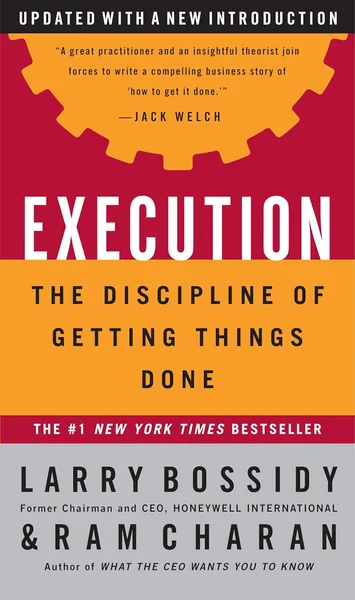
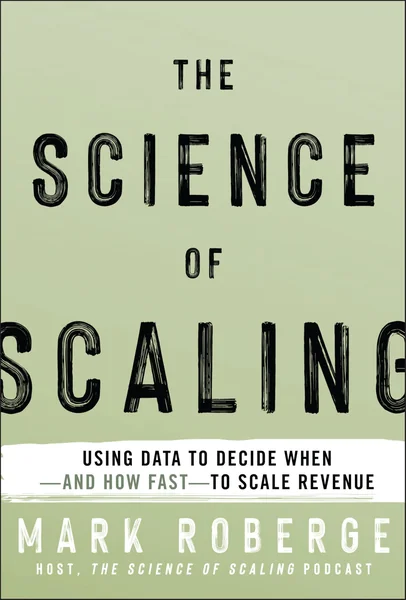
- Readers drawn to The Growth Multiplier's focus on compounding business performance and strategic leverage will find a natural companion in Jim Collins' Good to Great, which similarly examines how organizations move from adequate to exceptional through disciplined, systematic thinking. Donella H. Meadows' Thinking in Systems offers a rigorous framework perspective that pairs well with the flywheel concept. For those interested in the practitioner-meets-research dimension, Mark Roberge's The Science of Scaling and Larry Bossidy, Ram Charan, and Charles Burck's Execution both address disciplined growth with an emphasis on real-world application. Eric Ries' The Lean Startup rounds out the set for readers interested in resource-efficient growth principles.
- Who should read this?
- The Growth Multiplier is primarily aimed at entrepreneurs, CEOs, and business leaders looking to scale through leverage, trust, influence, and behavioral levers — the stated focus of Dr. Villy Abraham's consulting practice. The book's industry-agnostic framing, built on Jay Abraham's advisory experience across more than 1,000 industries, means its principles are intended to translate across sectors rather than being optimized for a narrow niche. It is particularly well-suited to readers already familiar with Jay Abraham's earlier work who want to engage with a synthesis and extension of his methodology, though the review also positions it as accessible to newcomers to his thinking.
- Where should I start with Jay Abraham?
- Jay Abraham's most widely cited earlier title is Getting Everything You Can Out of All You've Got, which the review identifies as a cornerstone of his published canon. The Sticking Point Solution is also mentioned as part of his established body of work. The Growth Multiplier is positioned as a continuation and extension of that canon — readers who want a grounding in Abraham's core philosophy before engaging with the flywheel framework may benefit from starting with one of those earlier titles, while readers already versed in his methodology are described as well-positioned to find the new book additive.
- What makes this book stand out?
- The book's most distinctive structural asset is the perpetual growth flywheel, which gives a 382-page work an organizing spine rather than leaving it as a loose collection of tactics. The co-authorship model is also a meaningful differentiator: Jay Abraham's practitioner credibility across more than 1,000 industries — with client results cited at over $75 billion — is paired with Dr. Villy Abraham's behavioral science research background, broadening the book's applicability and grounding its claims in more than anecdote alone. For readers already in Abraham's orbit, the review notes that the framework offers genuinely new material even for those who have read his full published output.
- What are the main drawbacks?
- Three caveats stand out from the review. First, readers expecting a radical departure from Jay Abraham's earlier strategic philosophy will find the book's core premise — multiplying results from existing resources — philosophically consistent with his established canon; the value lies in synthesis and extension, not reinvention. Second, at 382 pages, the book is a sustained commitment and is not structured as a quick-reference playbook for readers seeking compressed takeaways. Third, the Kindle edition does not have X-Ray enabled, which meaningfully reduces navigability for non-linear readers working through a dense business text.
Summarize this book
Follow up
Synthesized from verified book data & published reviews · How we review
Press Enter to ask. Answers come from our editorial Q&A — start typing to see related questions.
Age & Reading Level
Recommended age
Adult
Reading level
Adult
who it suits
Skip if you want a short, compressed business playbook or are expecting a radical strategic departure from Jay Abraham's earlier work.
Our Review
What the Book Is and What It Argues

The Authors and Their Respective Contributions
Significance and Place in the Genre
Strengths: Framework, Depth, and Cross-Disciplinary Reach
Limitations and Who It May Frustrate
Sources & Further Reading
The key facts and claims in this review are grounded in the retrieved, verified sources listed below.
- 1
Books like The Growth Multiplier
Curated picks for readers who enjoyed The Growth Multiplier, with our reasoning for each match.
If you liked The Growth Multiplier