

In This Article
- Who Is Taleb and What Is the Black Swan Theory?
- What Taleb Said — and the Debate It Has Joined
- Why the Framework Still Commands Attention
- What to Watch
Nassim Nicholas Taleb, the Lebanese-American risk theorist and author, has applied his signature "black swan" framework directly to the current U.S. presidency. In a recent interview with Nikkei Asia, Taleb argued that President Donald Trump's unpredictability makes the second Trump administration "a black swan — a rare, unexpected event that has a major effect." The remarks have drawn fresh attention to how Taleb's framework holds up against contemporary political developments.
Who Is Taleb and What Is the Black Swan Theory?
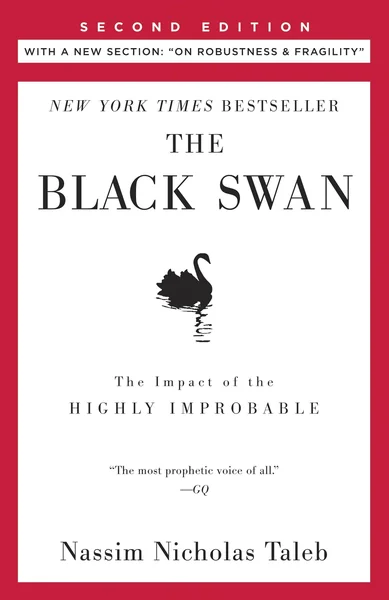
Taleb is a Distinguished Professor of Risk Engineering at the New York University Tandon School of Engineering, a former options trader, and a mathematical statistician whose work centres on randomness, probability, and uncertainty, according to his Wikipedia profile. His 2007 book, The Black Swan: The Impact of the Highly Improbable, defined the concept as an event with three characteristics: it is unpredictable, it carries a massive impact, and — after the fact — observers construct explanations that make it appear more foreseeable than it was. The book spent 36 weeks on the New York Times bestseller list and was translated into 50 languages, per Wikipedia's entry on the title. The Sunday Times named it one of the 12 most influential books since World War II.
The Black Swan is part of Taleb's five-volume Incerto series, which also includes Antifragile (2012) and Skin in the Game (2018). A central practical takeaway of the book is not to attempt to predict black swan events, but to build robustness against negative ones and the capacity to exploit positive ones, as Wikipedia summarises. For LuvemBooks' assessment of the book itself, see our full review.
What Taleb Said — and the Debate It Has Joined
In his Nikkei Asia interview, Taleb characterised Trump's second administration as meeting his own definition: rare, consequential, and resistant to standard predictive models. The comments arrive amid a broader live debate over whether Trump's policy moves — particularly on trade — qualify as genuine black swans or something closer to foreseeable shocks that markets chose to discount.
Writing in The Spectator, commentators have proposed a rival label — the "orange swan" — to describe Trump-induced market disruptions that are, paradoxically, both cataclysmic and widely telegraphed in advance. The piece notes that Trump had spoken publicly about tariffs for decades, making the eventual policy moves predictable in outline even if their scale proved jarring. This distinction — between events that are statistically rare and events that are psychologically discounted — sits at the heart of Taleb's original framework, which holds that a black swan is defined relative to the observer: what blindsides a turkey is no surprise to its butcher, as Taleb wrote in the book.
Why the Framework Still Commands Attention
Taleb's credibility on systemic risk rests partly on his track record. He had warned about the vulnerability of banks and trading firms to events their financial models failed to price, and he subsequently profited from the 1987 Black Monday crash and the 2008 financial crisis, according to his Wikipedia biography. Those outcomes gave the black swan concept traction well beyond academic risk theory.
The broader significance of Taleb's latest remarks is that they extend his framework from financial markets — its original domain — into electoral politics and executive governance. His argument, as reported by Nikkei Asia, is that Trump's unpredictability itself is the defining quality that earns the label, rather than any single policy decision.
What to Watch
The Nikkei Asia interview was published in April 2025, and the full text remains behind the outlet's subscription. The core question Taleb's framing raises — whether political institutions can be made "black swan robust," a standard he advocates for broader society per his Wikipedia biography — is one analysts and policymakers are likely to return to as the second Trump term develops. Whether markets and governments treat the administration as a one-off outlier or recalibrate their baseline assumptions entirely will be the practical test of how well the black swan label fits.
Frequently Asked Questions
Is The Black Swan: The Impact of the Highly Improbable worth buying in 2024?
Yes, particularly for readers interested in risk analysis, economics, or understanding unpredictability. The core concepts remain highly relevant, though be prepared for Taleb's confrontational writing style.
What is the main message of The Black Swan: The Impact of the Highly Improbable?
The book argues that rare, unpredictable events with massive consequences (black swans) shape our world more than gradual changes, and that humans systematically underestimate these events due to overconfidence in prediction.
Who should read The Black Swan: The Impact of the Highly Improbable?
Ideal for investors, business strategists, economists, and anyone interested in risk management or decision-making under uncertainty. Less suitable for readers seeking practical step-by-step guidance.
Should I read The Black Swan or just learn the theory online?
Reading the full book provides deeper context and examples that online summaries miss, though Taleb's dense writing style and philosophical tangents may challenge casual readers.


Reader Discussion
No comments yet
Be the first to share your thoughts!