

8 min read
4.6
· 6,294 Amazon ratingsShare This Review
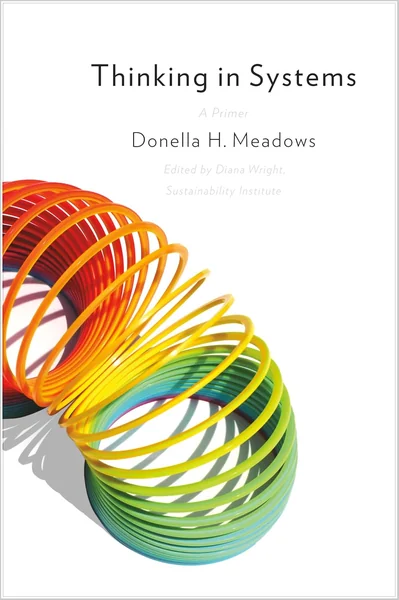
Thinking in Systems by Donella H. Meadows Review: An Enduring Classic of Interdisciplinary Thinking
Donella H. Meadows' Thinking in Systems is a landmark nontechnical primer on systems thinking — originally drafted in 1993, published posthumously in 2008, and now widely regarded as the definitive introduction to a discipline that cuts across ecology, management, computer science, and global policy.
LuvemBooks Verdict
Best for
Curious non-specialists — whether in ecology, management, programming, or policy — who want a rigorous yet mathematically light conceptual framework for understanding why complex systems behave the way they do.
Worth it if
You want a single, cross-disciplinary gateway to systems thinking that consolidates core concepts, real-world examples, and the influential 'Leverage Points' framework in one accessible volume.
Skip if
You are already well-versed in Jay Forrester's MIT Systems Dynamics tradition, or you need mathematical modeling and quantitative methods rather than conceptual grounding.
What readers & critics say
Wikipedia notes that Thinking in Systems is frequently cited as a key influence by programmers, computer scientists, and practitioners across multiple disciplines — an unusual breadth for a book rooted in environmental science. Books.google.com records blurbs calling it "a fabulous book" (Forbes) and "a modern classic" (critical coverage), alongside the milestone of more than half a million copies sold worldwide.
Sources: Wikipedia, books.google.comAge & Reading Level
Recommended age
Adult
Reading level
Adult
who it suits
Skip if you're looking for quantitative modeling tools or mathematical systems dynamics methods rather than a conceptual introduction.
In This Review
- What Works & What Doesn't
- What the Book Is and What It Argues
- Publication History and Its Significance
- Breadth of Examples and Cross-Disciplinary Reach
- Strengths: Accessibility Without Sacrifice of Depth
- Considerations for Prospective Readers
What Works & What Doesn't
What Works
- Foundational cross-disciplinary framework — cited as a key influence by programmers, computer scientists, ecologists, and management thinkers, among others
- Deliberately nontechnical design makes rigorous systems concepts accessible to readers without a mathematics or computer science background
- Draws on a strikingly wide range of real-world examples spanning ecology, management, farming, demographics, and current events
- Consolidates Meadows' influential 1997 'Leverage Points' essay alongside core systems concepts in a single volume
- More than half a million copies sold worldwide, with major-outlet endorsements from Forbes and The New Yorker attesting to its broad reception
What Doesn't
- Readers seeking mathematical modeling or quantitative systems methods will find the book intentionally out of scope
- Those already steeped in Jay Forrester's MIT Systems Dynamics tradition may find significant conceptual overlap with material they know
- The posthumous editing process means Meadows did not personally finalize the manuscript for publication
What the Book Is and What It Argues
Publication History and Its Significance
Breadth of Examples and Cross-Disciplinary Reach
Strengths: Accessibility Without Sacrifice of Depth
Considerations for Prospective Readers
Frequently Asked Questions
Sources & Further Reading
The key facts and claims in this review are grounded in the retrieved, verified sources listed below.
- Cited in this review
- 1
- 2
- 3
- Further reading
- 4
Donella H. Meadows, Wikipedia
- 5
en.wikipedia.org
- 6
- 7
chelseagreen.com
- 8
Related Reviews
Reviews of books we picked for readers who enjoyed Thinking in Systems.


Reader Comments
No comments yet
Be the first to share your thoughts!