BOOKS
Published

Read Time

9 min read

Reader rating

4.7

· 2,559 Amazon ratings
reader ratings, not a LuvemBooks score
Curated & edited by

LuvemBooks Editorial

How we create our reviews →
Share This Review

The Passage of Power by Robert A. Caro Review: A Masterwork of American Political Biography

The Passage of Power, the fourth volume in Robert A. Caro's monumental The Years of Lyndon Johnson series, is a prize-winning work of narrative nonfiction that carries Lyndon Johnson from his frustrated bid for the 1960 presidential nomination through the opening weeks of his presidency — a span covering both the lowest and most triumphant passages of his political life. This review draws on the book's documented critical reception and published sources, not hands-on use or a personal read.

LuvemBooks Verdict

Best for

Readers with a serious appetite for granular American political biography who want the most intimate, deeply sourced account available of Lyndon Johnson's fall into powerlessness and his dramatic ascent to the presidency in the wake of Kennedy's assassination.

Worth it if

You are invested in the mechanics of American legislative power, the psychology of political ambition, or the circumstances surrounding the Civil Rights Act of 1964 — especially if you have already read earlier volumes in the series and are ready to see the full arc pay off.

Skip if

You are new to Caro's Johnson series and looking for a concise entry point, or if a 32-hour-plus unabridged commitment feels prohibitive — this volume is designed to reward, not rush, readers already immersed in the project.

Bookmarks Reviews synthesises critical consensus by describing the volume as "detailed and riveting" — much like its prize-winning predecessors — and notes that "The Passage of Power quite possibly will stand as Robert Caro's finest moment as well," while also acknowledging Caro's fondness for emphatic repetition and frequent digressions. The Los Angeles Times concurs, calling LBJ's first months as president "perhaps his finest moment — not only masterful, but, in its way, heroic," and praising Caro's "habitual clear-eyed assessment of a very flawed human being."

Vietnam was merely a cloud on the horizon during LBJ's first months as president, a critical time Caro judges 'perhaps his finest moment — not only masterful, but, in its way, heroic.'

Los Angeles Times
Sources: Bookmarks Reviews, Los Angeles Times, Kirkus Reviews, Washington Independent Review of Books, Patrick T. Reardon, Claremont Review of Books
4.7from 2,559 Amazon ratings— reader ratings, not a LuvemBooks score

Ask LuvemBooks

Was this helpful?

The Passage of Power, the fourth volume in Robert A. Caro's monumental The Years of Lyndon Johnson series, traces Lyndon Johnson from his frustrated pursuit of the 1960 Democratic presidential nomination through his assumption of the presidency following the Kennedy assassination and his first civil rights legislative triumph — a dramatic arc rendered with peerless, granular research that earned the National Book Critics Circle Award, the Los Angeles Times Book Prize, and a place on the New York Times's 100 Best Books of the 21st Century. The book is essential reading for anyone serious about American political history, the mechanics of legislative power, or the circumstances surrounding the Civil Rights Act of 1964, but rewards investment: at over 700 pages and 32 hours and 45 minutes in its unabridged audiobook form, it is not a casual undertaking. Readers new to the series or seeking a concise overview of the Johnson presidency will find it demanding — this volume is the payoff for those who have built their foundation with the earlier installments.
Is it worth reading?
For readers prepared to invest in sustained, granular political biography, the answer from the critical record is unambiguous: The Passage of Power is a landmark work. It earned the National Book Critics Circle Award, the Los Angeles Times Book Prize, the Mark Lynton History Prize, and the American History Book Prize, and was named one of the New York Times's 100 Best Books of the 21st Century. The Times of London called the series 'one of the truly great political biographies of the modern age — a masterpiece.' The main caveat is scope: the audiobook runs 32 hours and 45 minutes unabridged, and the volume is best appreciated by readers already familiar with the earlier installments in the series.
Similar books
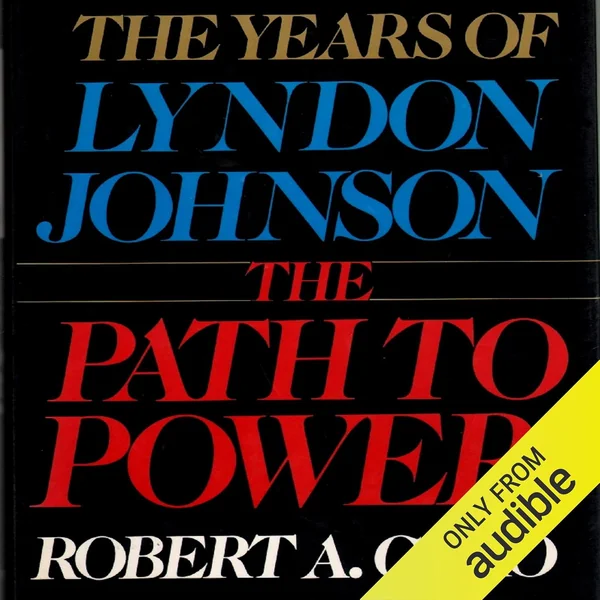
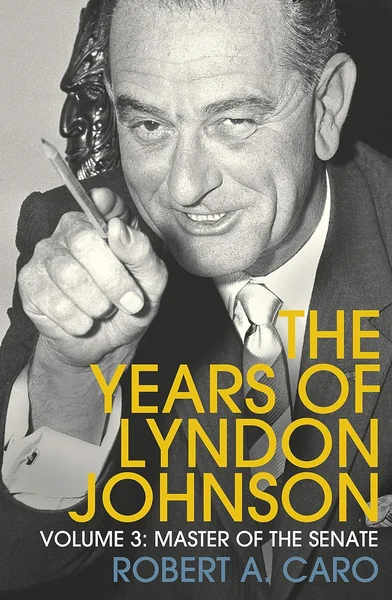
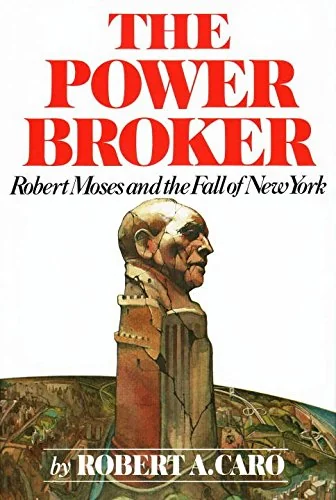
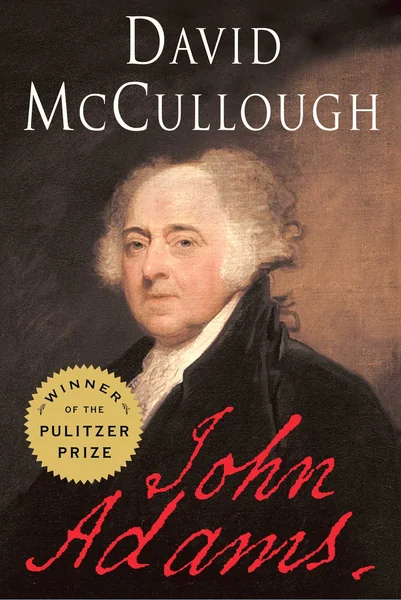
Readers drawn to The Passage of Power will find natural companions in the rest of Caro's own Johnson series: The Path to Power: The Years of Lyndon Johnson is the essential starting point, and Master of the Senate: The Years of Lyndon Johnson won the National Book Award and covers Johnson's rise as the Senate's dominant force. Caro's The Power Broker: Robert Moses and the Fall of New York applies the same peerless-research methodology to a different wielder of American power. For those drawn to the grand presidential biography form, David McCullough's John Adams and Martin Gilbert's Churchill: A Life offer similarly sweeping, deeply sourced portraits of consequential leaders. Readers interested in the human texture of White House life may also find J. B. West and Mary Lynn Kotz's Upstairs at the White House: My Life with the First Ladies a revealing companion perspective on the same era.
Who should read this?
The Passage of Power is essential for readers seriously interested in American political history, the mechanics of legislative power, the psychology of political ambition and humiliation, or the circumstances surrounding the Civil Rights Act of 1964. It will also reward anyone fascinated by the Kennedy assassination who wants to experience that event from Lyndon Johnson's own perspective — a vantage point Caro provides in more intimate detail than any other account. Readers already committed to the Johnson series will recognize it as the payoff for which the earlier volumes built the foundation; those new to Caro who want a standalone entry point may be better served starting with The Path to Power.
About Robert A. Caro
Robert Allan Caro is an American journalist and author known for his biographies of United States political figures Robert Moses and Lyndon Johnson.
Where should I start with Caro?
For readers new to Robert A. Caro, the choice depends on their interest. Those drawn specifically to the Johnson saga should begin with The Path to Power (1982), the first volume in The Years of Lyndon Johnson series, which establishes the biographical and political foundation that makes subsequent volumes — including The Passage of Power — fully resonate. Readers who want a self-contained introduction to Caro's method and scope without committing to a multi-volume series often start with The Power Broker: Robert Moses and the Fall of New York, which LuvemBooks has also reviewed.
How is the audiobook?
The unabridged audiobook of The Passage of Power is narrated by Grover Gardner and published by Brilliance Audio, running 32 hours and 45 minutes — a commitment that reflects the book's considerable scope and density. Gardner is a well-regarded narrator of nonfiction, and the production is the standard audio edition for the series. Listeners should be prepared for a sustained engagement: this is not a title suited to casual listening, but for those invested in the material, the audio format offers an immersive way into Caro's lyrical and authoritative prose.
Summarize this book

Summarize this book

The Passage of Power follows Lyndon Johnson across one of the most dramatic arcs in American political life: from his ambivalent, insecurity-driven campaign for the 1960 Democratic presidential nomination, through his surprising acceptance of the vice presidency under John F. Kennedy, and into years of humiliation and political isolation — compounded by Robert Kennedy's open contempt — before the Kennedy assassination abruptly repositioned him as president. The final roughly 300 pages center on Johnson's assumption of the presidency and his early legislative maneuvering to pass the first civil rights legislation since 1875. Caro reconstructs the psychological and political texture of this period from Johnson's own perspective, giving readers what critics describe as the most intimate account yet of that transition.

Follow up

What does it reveal about Johnson's vice presidential years?
How does the book cover the Civil Rights Act?
How does the book handle the Kennedy assassination?

Synthesized from verified book data & published reviews · How we review

Press Enter to ask. Answers come from our editorial Q&A — start typing to see related questions.

Age & Reading Level

Recommended age

Adult

Reading level

Adult

Content to know about

political violence and assassination
depictions of racial segregation and systemic racism

Skip if you're looking for a concise, fast-paced overview of the Johnson presidency or are new to the series.

Our Review
A landmark of American political biography, The Passage of Power earned the National Book Critics Circle Award, the Los Angeles Times Book Prize, the Mark Lynton History Prize, and the American History Book Prize, and has been named one of the New York Times's 100 Best Books of the 21st Century.
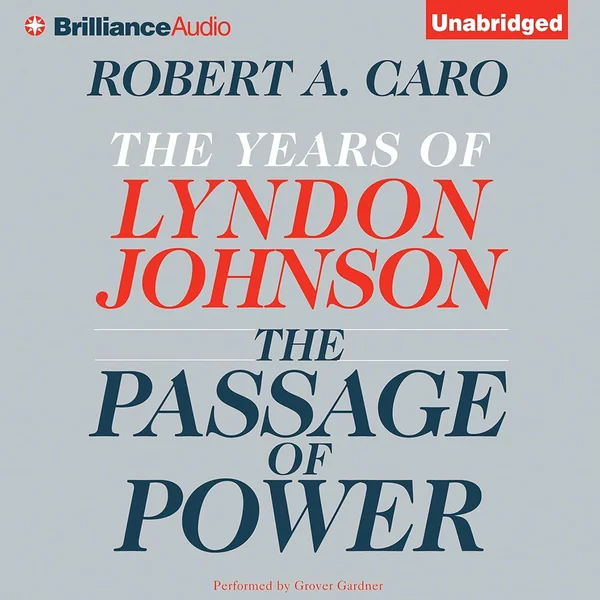
The Passage of Power: The Years of Lyndon Johnson, Book 4 by Robert A. Caro front cover

What the Book Covers: 1958 to 1964

The Passage of Power traces Lyndon Johnson across one of the most dramatic arcs any American politician has lived. The book opens on Johnson's ambivalent pursuit of the 1960 Democratic presidential nomination — a campaign driven as much by insecurity as by ambition — and his surprising decision to accept the vice presidency under John F. Kennedy. Caro then follows Johnson's attempts, much as William Seward had once tried with Abraham Lincoln, to negotiate a greater share of executive power within the new Kennedy administration. What he received instead was years of humiliation and political isolation, compounded by Robert Kennedy's open contempt for him. The final roughly 300 pages pivot to the Kennedy assassination and its immediate aftermath, giving readers their most intimate account of Johnson assuming the presidency — a transition Caro renders from Johnson's own perspective for the first time. From that moment, the narrative becomes one of unlikely triumph, culminating in Johnson's legislative maneuvering to pass the first civil rights legislation since 1875.

The Significance of the Volume Within the Series

This is the fourth installment in a biographical project that the Times of London called "one of the truly great political biographies of the modern age. A masterpiece." Earlier volumes — The Path to Power (1982) and The Passage of Power (2012) were National Book Award finalists; Master of the Senate (2002) won the National Book Award outright. The series has drawn admiration well beyond the academy. Beau Willimon, creator of the American television drama House of Cards, has cited The Years of Lyndon Johnson as a direct inspiration for that series; in the final episode of House of Cards' first season, a copy of The Passage of Power is visible on protagonist Frank Underwood's desk — a pointed piece of set dressing that speaks to the series' cultural reach. The National Book Foundation has described Caro's storytelling as "lyrical and vivid" and his voice as "exquisitely intimate and at the same time as authoritative and imposing as his subjects," calling his portrait of Johnson "the great American story."

Research Depth and Narrative Craft

What distinguishes Caro's approach across the entire series — and is especially evident here — is the density and intimacy of his sourcing. The publisher's description credits "peerless research" and "an abundance of rich detail" as the foundation for Caro's reconstruction of scenes and motivations that other historians have treated at arm's length. The portrait of Johnson's vice presidential years is built from specific reporting on the psychological texture of powerlessness: what it meant for a man of volcanic legislative force to be rendered essentially ceremonial. The transition passages — Johnson's first days as president, his handling of a grief-stricken nation, and his early civil rights push — are structured as a narrative climax, not merely a historical summary.

Scope, Limitation, and Reader Expectations

Because this review is based on published sources and documented reception rather than hands-on engagement with the text, specific claims about how any given passage reads in practice belong to the sourced critical record rather than to this assessment. What the record does establish clearly is that The Passage of Power is a long, deeply researched work designed for readers prepared to invest in sustained, granular political biography. The audiobook edition, narrated by Grover Gardner and published by Brilliance Audio, runs 32 hours and 45 minutes unabridged — a commitment that reflects the book's scope. Readers seeking a concise overview of the Johnson presidency, or who are new to the series, may find the depth and length demanding; the volume rewards, but does not rush, those who come to it.

Who This Is For and How It Stands Today

The Passage of Power sits at the intersection of biography, political history, and narrative nonfiction, and its awards record confirms that specialists and general readers alike have found it essential. Its coverage of the Kennedy assassination as witnessed and experienced by Johnson — a perspective rarely centered — gives it a distinctive historical value beyond what any single-volume Johnson biography offers. Readers interested in the mechanics of American legislative power, the psychology of political ambition and humiliation, or the circumstances surrounding the Civil Rights Act of 1964 will find the volume directly relevant. Those already committed to the series will recognize it as the payoff for which the earlier volumes built the foundation.

Sources & Further Reading

The key facts and claims in this review are grounded in the retrieved, verified sources listed below.

  1. Cited in this review
  2. 1
  3. 2
  4. 3
  5. Further reading
  6. 4

    Robert A Caro, Wikipedia

  7. 5
  8. 6
  9. 7
  10. 8
  11. 9
  12. 10
  13. 11
  14. 12
  15. 13
  16. 14

Books like The Passage of Power

Curated picks for readers who enjoyed The Passage of Power, with our reasoning for each match.