

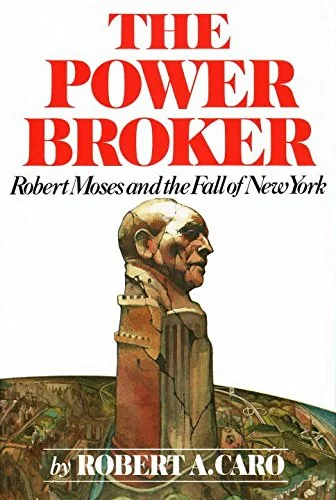
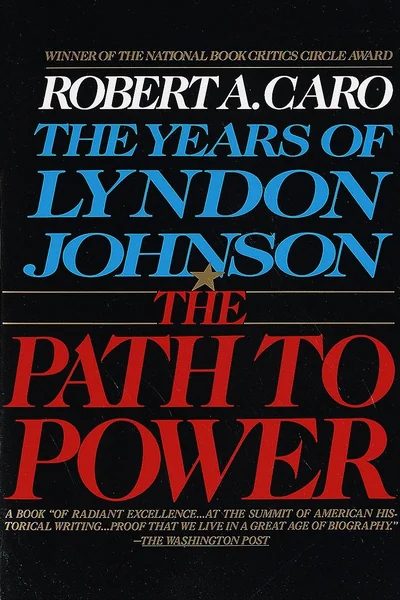
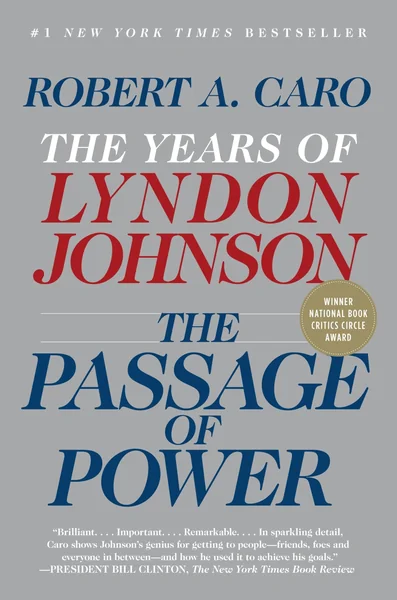
Robert Caro, the Pulitzer Prize-winning biographer behind The Power Broker: Robert Moses and the Fall of New York and the monumental Years of Lyndon Johnson series, has offered his most encouraging progress report yet on the long-awaited fifth and final volume. According to The Years of Lyndon Johnson Wikipedia article, updated recently to reflect a September 2026 Instagram post, Caro announced he had completed 1,100 manuscript pages on the untitled book — and hinted at a long-delayed research trip to Vietnam, a development that signals the project may finally be approaching its end.
The September announcement represents a meaningful jump from where Caro stood just months earlier. A May 2026 C-SPAN interview, reported by Kirkus Reviews, captured Caro gesturing toward a thick manuscript and telling host Peter Slen: "I have written 983 pages. That is this, OK? This is the rest of the book." In that same interview, Caro described a detailed corkboard outline covering the entire remaining volume — characteristic of his famously methodical process — while declining to give Slen any timeline for publication. "Fair question," Caro said after a pause, and left it there.
The Power Broker Author and the Biography That Has Spanned Decades
For readers who came to Caro through The Power Broker: Robert Moses and the Fall of New York — his landmark 1974 study of how one unelected bureaucrat accumulated and wielded power over an entire city — the LBJ series represents the full flowering of the same obsession with political power that defined his career. The Years of Lyndon Johnson began with The Path to Power in 1982, continued through Means of Ascent (1990) and the Pulitzer Prize-winning Master of the Senate (2002), and reached its fourth installment with The Passage of Power in 2012. Between them, the four published volumes run to more than 3,000 pages and have earned a Pulitzer Prize, a National Book Award, and two National Book Critics Circle Awards. The fifth volume, currently untitled, will cover Johnson's presidency from his 1964 landslide election victory over Barry Goldwater through his death in 1973 — encompassing the Great Society legislation, the escalation of the Vietnam War, and his ultimate political unraveling.
Caro is 90, and the question of whether he will complete the book has shadowed coverage of the project for years. His Instagram update — a medium that would have seemed unimaginable for the famously secretive author who still composes on a typewriter — carries additional weight precisely because Caro rarely discloses anything publicly. As he told C-SPAN, "Nobody sees anything until it is all done." The sole exception he cited was an early draft shown to his publisher under financial duress during the Johnson research years. That the Vietnam trip appears back on the agenda is particularly significant: the war represents perhaps the gravitational center of Johnson's presidency, and its coverage will likely determine the book's final shape and length.
Why the Page Count Matters — and What Still Stands Between Caro and the Finish Line
Political Wire noted as far back as early 2025 that Caro himself acknowledged the manuscript was already in danger of running too long, a problem familiar to readers of the 1,167-page Master of the Senate. Reaching 1,100 pages on a draft that still requires a Vietnam research component suggests the finished book could rival or exceed any of its predecessors in length — a prospect that will delight Caro's devoted readership and present familiar logistical challenges for his publisher, Alfred A. Knopf. As Literary Hub observed, Caro pointed across a table to those 1,100 double-spaced, pencil-marked pages as pages written "so far" — underscoring that, in his accounting, the project is not yet complete. For a biographer whose method requires knowing "the beginning to the end" before he considers a manuscript finished, the Vietnam hint may be less an addendum than a structural necessity. The scope of what remains — morally, historically, and narratively — is enormous.
For those who have not yet encountered the biographer's earlier work, The Power Broker: Robert Moses and the Fall of New York remains the essential starting point: a Pulitzer Prize-winning study of power, ambition, and urban transformation that established Caro as one of the great nonfiction writers of his generation. Want the full verdict? Read our review of The Power Broker — and for those already deep in the Johnson saga, our coverage of The Path to Power and The Passage of Power traces the series from its beginning to its most recent volume.
Dark
Tense
Slow-burn
Power & politics
Justice
Ambition
Frequently Asked Questions
How many pages has Robert Caro written of the fifth LBJ volume?
As of a September 2026 Instagram post cited in the Years of Lyndon Johnson Wikipedia article, Caro had completed 1,100 manuscript pages of the untitled fifth volume. This was up from 983 pages confirmed in a May 2026 C-SPAN interview. The book is still unfinished, with a Vietnam research trip apparently still on Caro's agenda.
What will the fifth Years of Lyndon Johnson book cover?
The untitled fifth volume will cover Johnson's life from his 1964 landslide election victory over Barry Goldwater through his death in 1973, encompassing the Great Society programs, the escalation of the Vietnam War, and his decision not to seek re-election in 1968. It will complete a biography series that has spanned more than four decades.
Is The Power Broker: Robert Moses and the Fall of New York worth reading in 2026?
The Power Broker: Robert Moses and the Fall of New York is widely regarded as one of the greatest biographies of the twentieth century and won the Pulitzer Prize in 1975. It remains essential reading for anyone interested in cities, political power, and American public life — and serves as the foundation for understanding what Caro went on to accomplish with the LBJ series. Our full review breaks down what makes it so enduring.
Who should read The Power Broker: Robert Moses and the Fall of New York?
The Power Broker is essential for readers interested in biography, urban history, American political power, and New York City. It is also the ideal starting point for anyone curious about Robert Caro's work before diving into the multi-volume Years of Lyndon Johnson series. Its scale can be daunting, but readers consistently describe it as one of the most rewarding books they have encountered.
Will Robert Caro finish the final LBJ book?
Caro, who is 90, has not given a publication timeline, and the question has been a persistent concern among readers and critics. However, his recent progress — 1,100 manuscript pages as of September 2026, plus a hinted Vietnam research trip — represents the most concrete signals of momentum in years. His publisher, Alfred A. Knopf, has not made any public announcement about a release date.
What awards has the Years of Lyndon Johnson series won?
The four published volumes of the Years of Lyndon Johnson series have collectively won a Pulitzer Prize, a National Book Award, and two National Book Critics Circle Awards. Master of the Senate, the third volume, is among the most decorated, while The Path to Power won the National Book Critics Circle Award upon its publication in 1982.


No Discussion Yet
Be the first to share your thoughts on this news article.