9 min read
4.5
· 1,362 Amazon ratingsShare This Review

The Call of the Last Frontier by Melissa L. Cook Review: A Gripping, Gritty Alaska Memoir
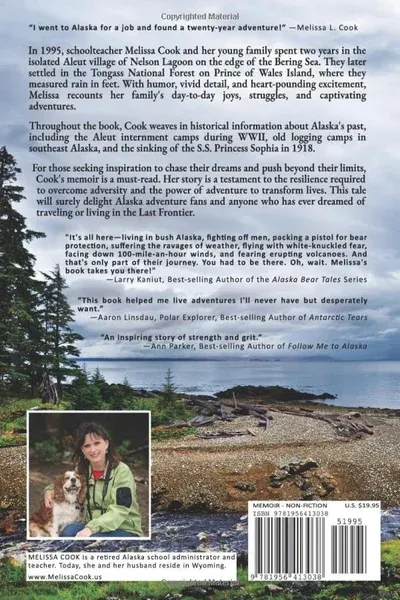
Melissa L. Cook's memoir chronicles the twenty years she and her family spent living and teaching in Alaska's remote bush communities, beginning in 1995 — a candid account of wilderness adventure, personal adversity including multiple sclerosis, and the singular demands of life far beyond the reach of ordinary conveniences.
 Tap to enlarge
LuvemBooks Verdict
Best for
Readers hungry for immersive narrative nonfiction set in extreme environments — particularly those drawn to Alaska's remote bush communities, the culture of its seaplane-dependent schools, and the intersection of wilderness life with chronic illness.
Worth it if
Worth seeking out if you want twenty years of genuine bush Alaska life rendered in specific places and startling anecdotes, with enough historical context and tonal humor to keep the stakes from becoming oppressive.
Skip if
Skip it if you prefer tightly focused memoirs with a single narrative arc — the sheer scope of two decades compressed into one volume may feel more like an expedition log than a shaped literary journey.
What readers & critics say
The Billings Gazette called the book "entertaining with anecdotes gleaned from personal experience, many terrifying," with its reviewer — who had personal Alaska experience — noting that Cook's stories "provoked memories of how raw Alaska is," and confirmed its status as a High Plains Book Awards finalist in the Woman Writer category. The book's own retail page at shop.thealaskafrontier.com quotes polar explorer and bestselling author Aaron Linsdau saying the book "helped me live adventures I'll never have but desperately want."
Sources: Billings Gazette, The Alaska Frontier ShopAsk LuvemBooks
Was this helpful?
- Is it worth reading?
- LuvemBooks considers The Call of the Last Frontier a strong entry in the Alaska memoir canon and one that earns its place on the shelf of essential Alaska literature. Its particular strength is specificity — Cook grounds readers in distinct places like Prince of Wales Island and the bush school system, and in concrete, often startling anecdotes, rather than offering a generalized portrait of wilderness life. The book was named a finalist for the High Plains Book Awards in the Woman Writer category, and drew praise from polar explorer Aaron Linsdau and bestselling author Ann Parker for its accuracy and emotional authenticity. Readers who prefer a tighter narrative arc may find twenty years of material compressed into one volume to be a lot of ground to cover, but for those seeking genuine immersion, the depth is a feature rather than a flaw.
- Similar books
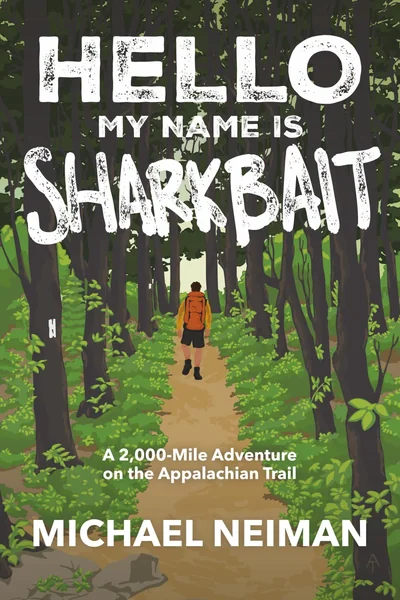
- Readers who connect with The Call of the Last Frontier may enjoy other memoirs of life in extraordinary natural environments. Two in the Far North by Margaret E. Murie is a foundational Alaska wilderness memoir; Tisha: The Story of a Young Teacher in the Alaska Wilderness by Robert Specht offers a closely parallel premise of a young educator navigating remote Alaskan communities. For broader adventure memoir, Wander: A Memoir of Letting Go by Ryan Benz and Hello My Name Is Sharkbait: A 2,000-Mile Adventure on the Appalachian Trail by Michael Neiman share the spirit of long-haul immersive journeys into wild places. Gerald Durrell's My Family and Other Animals — a family's unconventional relocation to a remote natural environment — also echoes Cook's blend of humor, community observation, and vivid natural detail.
- Who should read this?
- The Call of the Last Frontier is best suited to adult readers drawn to narrative nonfiction in extreme environments — particularly those with an interest in Alaska, its history, and its remote communities. It will also resonate with readers who appreciate memoirs that balance multiple registers: wilderness adventure, community life, and chronic illness, all within a single cohesive narrative. Fans of authors like Aaron Linsdau (Antarctic Tears) or Ann Parker (Follow Me to Alaska), both of whom praised the book, represent a natural audience. Readers who prefer tightly focused, linear memoirs may find the breadth of twenty years and multiple themes ambitious.
- About Melissa L. Cook
- The verified author biography available to LuvemBooks does not contain confirmed biographical details for Melissa L. Cook specifically. What the review does confirm is that Cook is the author of this memoir, published through Hoodoo Books, LLC, the independent press she and her husband Elgin Cook founded together. Elgin Cook served as a teacher and technology director in Alaska's bush schools and produced the print, eBook, and audiobook editions of the title.
- What are the main themes?
- The memoir operates across three interwoven registers: wilderness adventure and survival in one of North America's most remote environments; the realities of teaching and community life in Alaska's bush school system; and living with multiple sclerosis far from conventional medical resources. Resilience — both physical and personal — runs through all three threads. Cook also engages with Alaska's history and culture throughout, giving the book a documentary dimension alongside its personal narrative. A tonal commitment to humor, even in perilous situations, keeps the book from becoming purely a test-of-endurance account.
- Has this book won any awards?
- The Call of the Last Frontier was named a finalist for the High Plains Book Awards in the Woman Writer category — a recognition that signals standing within regional and independent literary circles beyond the self-publishing sphere. The book has also attracted endorsements from notable voices in adventure and Alaska literature: polar explorer and bestselling author Aaron Linsdau wrote that it 'helped me live adventures I'll never have but desperately want,' and Ann Parker, bestselling author of Follow Me to Alaska, called it 'an inspiring story of strength and grit.' A review in the Billings Gazette further praised its authenticity for readers with direct Alaska experience.
Summarize this book
Follow up
Synthesized from verified book data & published reviews · How we review
Press Enter to ask. Answers come from our editorial Q&A — start typing to see related questions.
Age & Reading Level
Recommended age
Adult
Reading level
Adult
2 content notes · who it suits
Content to know about
Skip if you prefer a tightly focused, single-thread memoir rather than a wide-ranging account spanning twenty years and multiple subjects.
Our Review
What the Book Actually Is

The Central Stakes: Adventure, Adversity, and Multiple Sclerosis
Recognition and Reader Reception
Strengths: Specificity, Humor, and Historical Texture
Who This Book Is For — and Where It Asks the Most
Sources & Further Reading
The key facts and claims in this review are grounded in the retrieved, verified sources listed below.
- Cited in this review
- 1
- Further reading
- 2
shop.thealaskafrontier.com
- 3
Books like The Call of the Last Frontier
Curated picks for readers who enjoyed The Call of the Last Frontier, with our reasoning for each match.
If you liked The Call of the Last Frontier