At a glance
LuvemBooks Verdict
Best for: General readers encountering the Beatles' full story at length for the first time, who want a narrative-driven, extensively researched single-volume biography with genuine primary source credentials.
Worth it? Skip it? Read the full verdict →Ask LuvemBooks
Was this helpful?
- Is it worth reading?
- For general readers encountering the Beatles' story in depth for the first time, The Beatles: The Biography delivers scale, narrative momentum, and contextual richness that shorter accounts cannot match. The Boston Globe credited Spitz with humanizing the figures behind the myth and contextualizing the band's story within its era — genuine strengths for an uninitiated reader. However, those approaching the book as a reliable scholarly source should note the well-documented factual errors and Spitz's editorialized bias against John Lennon's relationship with Yoko Ono; supplementing it with more rigorously vetted accounts — Beatles historian Erin Torkelson Weber points to Jonathan Gould's 2007 Can't Buy Me Love as the more rigorous alternative — is advisable.
- Similar books
- Readers drawn to deeply researched, large-scale biographies of cultural icons will find strong company in the related titles curated below. Walter Isaacson's Steve Jobs offers the same sweeping single-volume treatment of a transformative cultural figure, built on extensive interviews including with its subject. Robert A. Caro's The Power Broker: Robert Moses and the Fall of New York is the gold standard of exhaustively researched narrative biography — essential reading for anyone who wants to understand what the genre can achieve at its most rigorous. For music-world memoir and biography, Tom Piazza's Living in the Present with John Prine and Lisa-Marie Presley and Riley Keough's From Here to the Great Unknown offer intimate looks at legendary figures from inside the story. Matthew Perry's Friends, Lovers and the Big Terrible Thing rounds out the group with a candid celebrity memoir that, like Spitz's biography, refuses to traffic in a sanitized legend.
- Who should read this?
- The Beatles: The Biography is best suited to general readers encountering the Beatles' full story in depth for the first time — those who want narrative momentum, contextual breadth, and a humanizing portrait of John Lennon, Paul McCartney, George Harrison, and Ringo Starr without requiring scholarly precision. Fans of large-scale popular biography in the tradition of Walter Isaacson's work will find Spitz's approach familiar and accessible. Hardcore Beatles fans and scholars should approach with caution given the documented factual errors and editorial bias, and would benefit from pairing it with Jonathan Gould's Can't Buy Me Love.
- About Bob Spitz
- Bob Spitz is an American journalist and author best known for biographies of major cultural figures. His works include Reagan: An American Journey, the New York Times bestsellers The Beatles: The Biography and Dearie: The Remarkable Life of Julia Child, as well as books about Bob Dylan and the Woodstock festival.
- Why does this biography matter?
- Published in November 2005, The Beatles: The Biography arrived at a historically significant moment: it was among the first major Beatles biographies to follow the band's own Anthology multimedia project and authorized book, and — as Wikipedia's overview of the book notes — the first major Beatles biography published after the rise of internet forums, fan sites, and online publications. That environment meant the scrutiny it received was both more widespread and more lasting than earlier biographies had faced. Its ambition to move beyond the Beatles' 'manicured' legend, drawing on 650 interviews and previously unheard Lennon tapes, made it a landmark even as its errors became a defining part of its legacy.
- How did Spitz respond to critics?
- Spitz's public response to criticism has itself become part of the book's reception history. When confronted by a fan over factual errors, he reportedly replied: 'You need an enema. Really! Do something useful with your life.' Beatles historian Erin Torkelson Weber notes that this response — alongside the documented errors and editorial bias against Yoko Ono — damaged Spitz's standing with specialist audiences and reinforced the view that the biography is best treated as a vivid popular narrative rather than a rigorously vetted historical source.
Summarize this book
Follow up
Synthesized from verified book data & published reviews · How we review
Press Enter to ask. Answers come from our editorial Q&A — start typing to see related questions.
Age & Reading Level
Recommended age
Adult
Reading level
Adult
who it suits
Skip if you want a rigorously fact-checked, editorially neutral scholarly biography of the Beatles.
Editorial Review
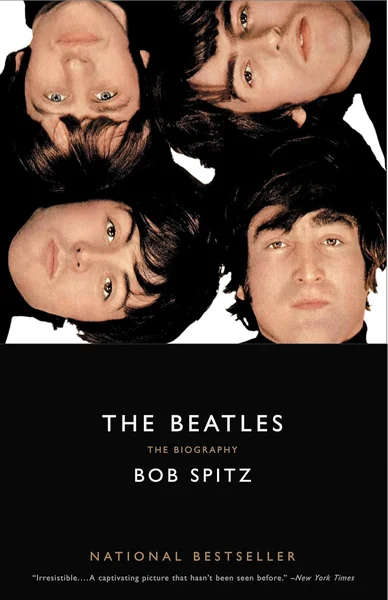
Bob Spitz's The Beatles: The Biography, first published by Little, Brown and Company in November 2005 and reissued in paperback in 2006, is a sweeping, 992-page account of John Lennon, Paul McCartney, George Harrison, and Ringo Starr — built on six years of research, 650 interviews, and access to previously unheard private material. It drew generally favorable reviews from major outlets including The New York Times and The Washington Post, yet also attracted persistent criticism for factual errors and editorial bias, making it an essential but imperfect entry point into Beatles history.
Read the Full ReviewBooks like The Beatles
Curated picks for readers who enjoyed The Beatles, with our reasoning for each match.
If you liked The Beatles