Reviewed

Read Time

10 min read

Age & reading levelAdult
Reader rating

4.7

· 1,768 Amazon ratings
reader ratings, not a LuvemBooks score
Curated & edited by

LuvemBooks Editorial

How we create our reviews →
Share This Review
Front cover of The Path to Power

Our review

The Path to Power by Robert A. Caro

The Path to Power by Robert A. Caro Review: A Landmark of American Political Biography

The Path to Power is the first volume of Robert A. Caro's The Years of Lyndon Johnson, tracing LBJ from his impoverished Texas Hill Country boyhood through his congressional debut in New Deal Washington and his first, failed Senate run. Caro's exhaustive research and narrative command earned the book front-page praise from critics as proof "we live in a great age of biography."

LuvemBooks Verdict

Best for

Readers with a serious interest in American political history and the mechanics of power who are prepared to commit to an exhaustive, deeply researched account of how Lyndon Johnson's extraordinary — and often ruthless — drive for dominance was shaped by poverty, place, and relentless ambition.

Worth it if

Worth reading if you want to understand not just who Lyndon Johnson was but how political power in mid-twentieth-century America was actually built, vote by vote, relationship by relationship, and dollar by dollar.

Skip if

Skip it if you are looking for a concise or balanced introduction to LBJ or the New Deal era, since at nearly a thousand pages this is a sustained, demanding immersion rather than an overview, and Kirkus Reviews notes that Caro's framing can tip into interpretive overstatement.

Kirkus Reviews calls it a great biography not because it exposes Johnson's ruthlessness but because it reveals "Johnson's mastery of detail, his impact on other lives, his genius as a hands-on politician," singling out "depth of research and depth of feeling" as what make it exceptional. Robertcaro.org cites critical opinion placing Caro's evocation of the Texas Hill Country and his grasp of political process "at the summit of American historical writing."

“Depth of research and depth of feeling make the difference — this is a great biography not because Caro exposes Johnson's ruthlessness, but because he reveals Johnson's mastery of detail.”

— Kirkus Reviews

“Caro's ascription of Johnson's rise to the financial backing of Brown & Root does not ring wholly true — for at each stage, he demonstrates, Johnson created his own opportunities.”

— Kirkus Reviews
Sources: Kirkus Reviews, robertcaro.org
4.7from 1,768 Amazon ratings— reader ratings, not a LuvemBooks score

Ask LuvemBooks

Was this helpful?

The Path to Power is the first volume of Robert A. Caro's monumental The Years of Lyndon Johnson, tracing LBJ from his impoverished Texas Hill Country boyhood through his congressional debut in New Deal Washington and his first, failed Senate race. Caro's exhaustive firsthand research and command of narrative earn the book praise from historian David Herbert Donald as "the fullest account we have — and are ever likely to have — of the early years of LBJ," with the Washington Post placing it "at the summit of American historical writing." At nearly a thousand pages, the book demands sustained commitment, but readers willing to invest will find an unrivaled portrait of American political ambition, best suited to those who want depth, not brevity.
Is it worth reading?
For readers with a genuine appetite for deeply researched political biography, The Path to Power is an essential work. Historian David Herbert Donald called it 'fascinating, immensely long and highly readable,' and Barbara Tuchman described it as 'a superb and unique biography… meticulous in research, grand in scale… a major work that will remain a tower of its kind.' The principal caveat, flagged by Kirkus Reviews, is an interpretive tension: Caro's insistence on Brown & Root's financial backing as the central engine of Johnson's rise sits uneasily against the book's own evidence that Johnson repeatedly manufactured his own opportunities. At nearly a thousand pages, it also demands genuine commitment — but those who invest are rewarded with what the publisher describes as an examination of American political life 'so intensively and sharply conducted' that it has no peer in the genre.
Similar books
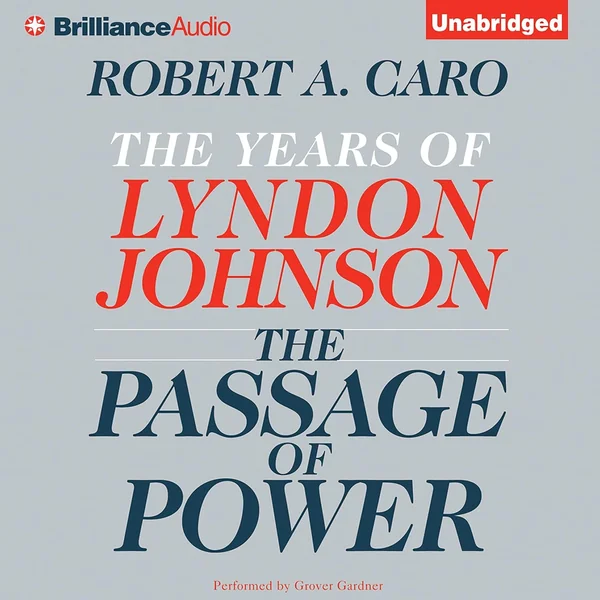
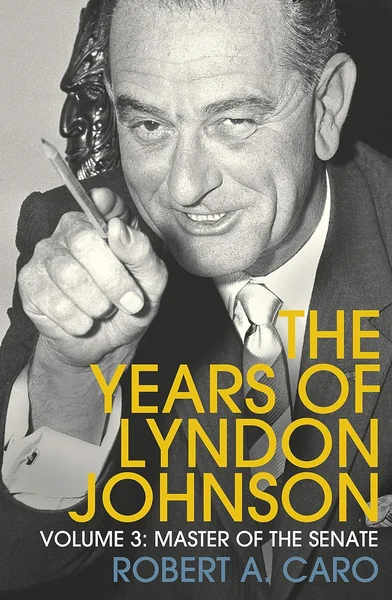
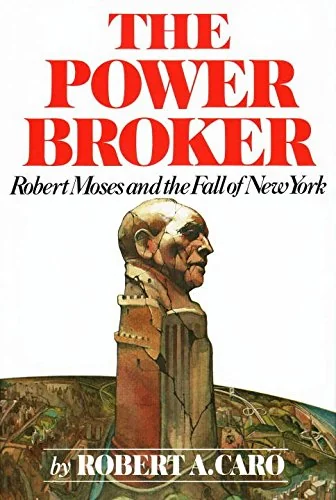
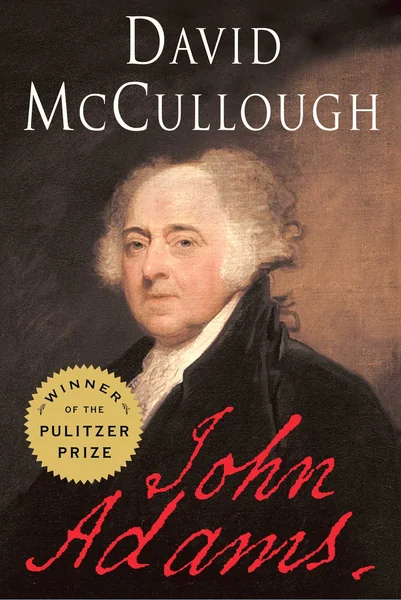
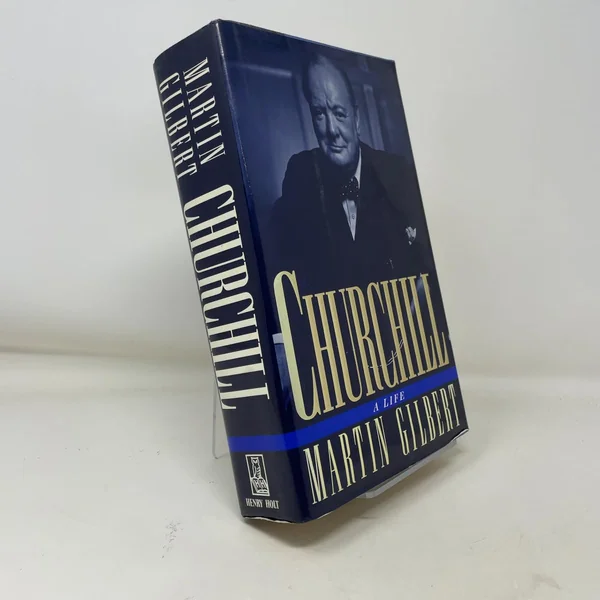
Readers drawn to The Path to Power will find natural companions in Caro's own subsequent volumes — The Passage of Power and Master of the Senate continue the LBJ story with the same depth of research, while The Power Broker: Robert Moses and the Fall of New York applies Caro's method to the man who reshaped New York City. Beyond Caro, Ron Chernow's Alexander Hamilton offers a similarly exhaustive, psychologically penetrating portrait of political genius forged in adversity, and David McCullough's John Adams provides another model of major American political biography grounded in rigorous primary research. Martin Gilbert's Churchill: A Life rounds out the shelf for readers interested in the full arc of a world-altering political career rendered in authoritative detail.
Who should read this?
The Path to Power is ideal for readers with a serious interest in American political history, the mechanics of political power, and the psychology of ambition. It is essential reading for anyone studying the New Deal era, mid-twentieth-century Texas politics, or the presidency of Lyndon Johnson. It will equally reward readers who admire narrative nonfiction that operates, as critical sources note, simultaneously across historical, political, psychological, and novelistic registers. Readers seeking a concise or introductory portrait of LBJ, or those daunted by a commitment of nearly a thousand pages, are better served by shorter treatments.
About Robert A. Caro
Robert Allan Caro is an American journalist and author known for his biographies of United States political figures Robert Moses and Lyndon Johnson.
What are the main themes?
The Path to Power is built around the psychology and mechanics of political ambition — Caro argues that Johnson was possessed by an almost superhuman, unquenchable necessity to be first, to win, and to dominate, rooted in the grinding poverty and isolation of his Texas Hill Country boyhood. Closely linked themes include the nature of political betrayal (Johnson misrepresented his father and betrayed surrogate fathers Sam Rayburn and FDR), the role of money and patronage in American politics (particularly through the Brown & Root alliance), and the way political power is assembled from detail: constituent mail, congressional staff organizations, and the relentless cultivation of older, more powerful men. Caro also weaves throughout a study of place — the Hill Country sections ground Johnson's insecurities in documented, lived conditions rather than psychological speculation.
How does this compare to other Caro LBJ volumes?
As the opening volume of The Years of Lyndon Johnson, The Path to Power does work that the later volumes — Means of Ascent, Master of the Senate, and The Passage of Power — build upon but do not replicate: it establishes the psychological and socioeconomic roots of Johnson's ambition in the Texas Hill Country and follows him through the early, scrappy stages of political apprenticeship. Master of the Senate, which earned Caro a Pulitzer Prize, covers Johnson's legendary command of the Senate, while The Passage of Power addresses his path to the presidency following JFK's assassination. All volumes share the same exhaustive research methodology, but The Path to Power is uniquely foundational for understanding why Johnson became the kind of man he was.
Summarize this book

Summarize this book

The Path to Power opens in the desperately poor and isolated Texas Hill Country where Lyndon Johnson grew up, shadowed by his father's financial ruin, and follows him through his ruthless cultivation of powerful older men as a college student, his transformation of constituent mail into a political art as secretary to congressman Richard Kleberg, his takeover of the congressional aides' organization known as the 'Little Congress,' his tenure as Texas director of the National Youth Administration, and his winning of a congressional seat vote by vote. The book traces Johnson's early alliance with the Texas contractor Brown & Root and his complex, betrayal-tinged relationships with House Speaker Sam Rayburn and FDR himself, ending with his heartbreaking defeat in his first Senate race. Caro's central thesis is that Johnson was possessed by an almost superhuman, unquenchable need to be first — a drive rooted in the grinding poverty and isolation of his Hill Country boyhood and fueled by a limitless capacity for hard, unceasing labor.

Follow up

What are the main themes?
Is this part of a series?
How important is the Texas Hill Country setting?

Synthesized from verified book data & published reviews · How we review

​

Press Enter to ask. Answers come from our editorial Q&A — start typing to see related questions.

Our Review

A towering work of political biography, The Path to Power sets the standard against which subsequent American political life-writing is measured.

What the Book Actually Covers

The Path to Power is the opening volume of Robert A. Caro's multi-part biography The Years of Lyndon Johnson, first published in 1982 and later reissued by Vintage. Its chronological span begins in the desperately poor and isolated Texas Hill Country where Lyndon Johnson grew up — his father's slide into failure and financial ruin a constant, stinging presence — and ends with Johnson's heartbreaking defeat in his first Senate race and his acquisition, nonetheless, of significant national power. Along the way, Caro documents Johnson's time as a college student ruthlessly cultivating older men and, by the publisher's account, effectively stealing his first campus election; his years as secretary to playboy congressman Richard Kleberg, during which he transformed the mundane task of answering constituent mail into a science and an art; his development of the "Little Congress" — the congressional aides' organization — into a personal power base; his tenure as Texas director of the National Youth Administration; and his winning of a congressional seat, literally vote by vote, on what Kirkus Reviews describes as "the forks of the creeks." The book also traces Johnson's early alliance with the Texas contractor Brown & Root and his complex, ultimately betrayal-tinged relationships with House Speaker Sam Rayburn and with FDR himself.

The Central Argument: Ambition as Driving Force

Caro's thesis is not simply that Johnson was ambitious — it is that he was possessed by an almost superhuman, unquenchable necessity to be first, to win, and to dominate, present from earliest childhood and fuelled by a limitless capacity for hard, unceasing labor in the service of his own goals. Penguin Random House's description of the series frames this as the revelation of "the genesis of the almost superhuman drive, energy, and urge to power that set LBJ apart." Caro shows a young man lunging for success from a position of profound disadvantage, moving toward a presidential goal he announces to himself years before anyone around him suspects it. A key tension runs through the book: Johnson's rise depended on his extraordinary ability to mesmerize and manipulate powerful older men — and on tapping the money and influence of new Texas oil men and contractors — yet at every stage, as Kirkus Reviews notes, "Johnson created his own opportunities." Caro is also, throughout, a chronicler of betrayal: Johnson misrepresented his own father, and would go on to betray the surrogate fathers Rayburn and FDR who championed him.

Depth of Research and Critical Acclaim

The critical reception of The Path to Power is, by any measure, exceptional. Historian David Herbert Donald called it "the fullest account we have — and are ever likely to have — of the early years of LBJ," and described it as "fascinating, immensely long and highly readable." Historian Barbara Tuchman is quoted in Penguin Random House's materials calling it "a superb and unique biography… meticulous in research, grand in scale… a major work that will remain a tower of its kind." critics cited the book as "proof that we live in a great age of biography… of radiant excellence," singling out Caro's evocation of the Texas Hill Country and his understanding of how politics actually works as being "at the summit of American historical writing." Kirkus Reviews, whose deep review of the book is available in full, put the book's greatness plainly: "Depth of research and depth of feeling make the difference." Robert A. Caro has twice won the Pulitzer Prize for Biography and three times won the National Book Critics Circle Award for his biographies of Robert Moses and Lyndon Johnson; in 2010, President Barack Obama awarded him the National Humanities Medal.

What Caro Does Exceptionally Well

Beyond the sheer scale of the research, what critics consistently identify as Caro's achievement is his ability to operate simultaneously across multiple registers. As one assessment from Penguin Random House's materials puts it, the book "combines the social scientist's interest in power with the historian's concern with theme and context, the political scientist's interest in system, and the novelist's passion to reveal the inner workings of the personality." Kirkus Reviews draws the same distinction: the book is great not because it exposes Johnson's ruthlessness and duplicity, but because it reveals "Johnson's mastery of detail, his impact on other lives, his genius as a hands-on politician." The Hill Country sections — documenting the grinding poverty and isolation of the region and Johnson's boyhood there — are specifically cited in multiple sources as among the most vivid passages, grounding Johnson's towering insecurity and his lifelong need for respect and fear in lived, documented conditions rather than in psychological speculation.

Genuine Limitations and Who This Book Challenges

Kirkus Reviews raises one substantive interpretive reservation: Caro's insistence on framing Brown & Root's financial backing as the central engine of Johnson's rise does not "ring wholly true" in light of the book's own evidence, which repeatedly shows Johnson manufacturing his opportunities independently at each stage. Kirkus also notes that Caro's emphasis on Johnson's early announced ambition for the presidency may be a case of reading the end back into the beginning — what it calls an "ex post facto" overstatement. Separately, at nearly a thousand pages in its Vintage paperback edition, the sheer length of The Path to Power demands genuine commitment; readers seeking a brisk introduction to Johnson or to the New Deal era will find this a demanding entry point. Those who do invest, however, are rewarded with what the publisher describes as an examination of American political life "so intensively and sharply" conducted that it has no peer in the genre.

Sources & Further Reading

The key facts and claims in this review are grounded in the retrieved, verified sources listed below.

  1. Cited in this review
  2. 1
  3. 2
  4. Further reading
  5. 3

    Robert A Caro, Wikipedia

  6. 4
  7. 5
  8. 6
  9. 7
  10. 8

Age & Reading Level

Recommended age

Adult

Reading level

Adult

Content to know about

political corruption and manipulation
poverty and economic hardship
election fraud

Skip if you're looking for a concise or fast-paced introduction to Lyndon Johnson or the New Deal era.

From our readers

Reader reviews

Be one of the first readers to answer.

Read it? Was it right for you?

Books like The Path to Power

Curated picks for readers who enjoyed The Path to Power, with our reasoning for each match.