BOOKS
Published
Read Time
6 min read
Our Rating
4
A practical, well-written guide that effectively translates military discipline principles for civilian readers, though it could benefit from deeper exploration of complex topics.
Reviewed by
LuvemBooks
Share This Review
Make Your Bed by Admiral William H. McRaven - Book Review
Our Rating
4
A practical, well-written guide that effectively translates military discipline principles for civilian readers, though it could benefit from deeper exploration of complex topics.
In This Review
- What Works & What Doesn't
- Small Habits, Big Philosophy
- Ten Principles from the Battlefield
- Command Presence on the Page
- Beyond Individual Achievement
- A Foundation, Not a Complete System
What Works & What Doesn't
What Works
- Clear, actionable principles that readers can implement immediately
- Authentic voice backed by genuine leadership experience
- Concise format that respects readers' time
- Balances personal discipline with service to others
- Strong emphasis on character development over quick fixes
What Doesn't
- Brief treatment of complex topics that deserve deeper exploration
- Occasionally preachy tone that may alienate some readers
- Limited acknowledgment of civilian-military context differences
- Some principles may feel oversimplified for experienced leaders
Small Habits, Big Philosophy
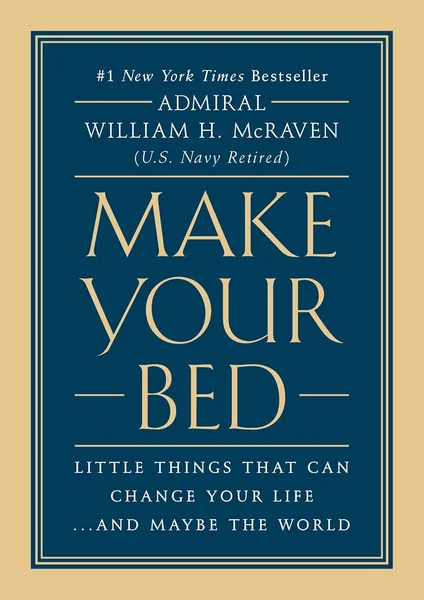
Is Make Your Bed worth reading if you're skeptical of military-inspired self-help? Solid wisdom from someone with genuine authority to teach it — McRaven earns his lessons rather than simply asserting them. Admiral William H. McRaven's compact guide transforms a simple daily routine into a framework for personal discipline, drawing from his decades as a Navy SEAL and military commander. The book's central premise—that making your bed each morning sets the tone for achievement—might sound oversimplified, but McRaven builds a compelling case for how small disciplines create cascading effects throughout life.
The author's credibility stems from his distinguished military career, including overseeing the operation that killed Osama bin Laden. Rather than leveraging this experience for dramatic storytelling, McRaven focuses on distilling practical wisdom from extreme circumstances. Unlike most leadership books that rely on corporate anecdotes, this draws from life-or-death situations where discipline and teamwork weren't optional luxuries but survival necessities.
Readers familiar with Atomic Habits will recognize similar themes about the compounding power of small actions, though McRaven approaches habit formation through the lens of military precision rather than behavioral psychology.
Ten Principles from the Battlefield
McRaven structures his philosophy around ten core lessons, each rooted in Navy SEAL training experiences. The titular bed-making principle serves as the foundation: completing one task perfectly before moving to the next creates momentum and establishes standards. The practical applications extend far beyond military contexts, addressing how civilians can apply systematic thinking to personal and professional challenges.
The author's approach balances philosophical depth with actionable specificity. Rather than abstract motivational platitudes, he provides concrete behaviors that readers can implement immediately. His discussion of perseverance draws from grueling SEAL training scenarios, but the lessons translate effectively to everyday struggles with failure, setbacks, and discouragement.
Where it falls short is in acknowledging that military discipline doesn't always transfer seamlessly to civilian contexts. McRaven occasionally underestimates how different incentive structures and social pressures affect behavior change outside regimented institutional settings.
Command Presence on the Page
McRaven writes with the crisp authority of someone accustomed to clear communication under pressure. His prose style reflects military briefing culture—direct, economical, and purposeful. This stripped-down approach serves the content well, avoiding the verbose philosophizing that weakens many leadership books.
The author demonstrates emotional intelligence in balancing toughness with vulnerability. He shares failures and moments of doubt alongside triumphant achievements, creating authenticity without undermining his authoritative voice. His storytelling focuses on universal human experiences—fear, uncertainty, the desire for meaning—rather than glorifying combat itself.
However, some readers may find the tone occasionally preachy. McRaven's conviction in his principles sometimes edges toward inflexibility, particularly when addressing complex personal situations that don't respond well to military-style solutions.
Beyond Individual Achievement
While the book positions itself as personal development guidance, McRaven consistently emphasizes service to others and collective responsibility. His discussion of leadership focuses on empowering teammates rather than personal advancement, a perspective that distinguishes this from typical self-help approaches.
The author's treatment of failure deserves particular attention. Rather than the standard resilience rhetoric, he explores how setbacks can strengthen character and improve judgment. His insights about learning from mistakes feel earned rather than theoretical, grounded in experiences where poor decisions carried serious consequences.
The main weakness appears in the book's brevity—at roughly 130 pages, some concepts would benefit from deeper exploration. McRaven introduces compelling ideas about courage and integrity that deserve more thorough development.
A Foundation, Not a Complete System
Make Your Bed works best as an entry point for readers beginning to think seriously about personal discipline and leadership. Its strength lies in accessibility and practical starting points — not comprehensive coverage of complex topics.
Readers who feel overwhelmed by lengthy self-improvement books will find McRaven's concise approach gives them immediate actions without analysis paralysis. Military veterans and current service members will find familiar concepts presented with fresh civilian applications. Business leaders seeking authentic leadership principles will appreciate the focus on character over tactics.
The bottom line: This isn't revolutionary thinking, but it's solid wisdom presented clearly by someone with genuine authority to discuss discipline and leadership. The book succeeds as a motivational reset button—a reminder that excellence begins with basic standards consistently maintained.
Related Reviews
Reviews of books we picked for readers who enjoyed Make Your Bed.