BOOKS
Published

Read Time

3 min read

Curated & edited by

LuvemBooks Editorial

How we create our reviews →
Share This Review

Daring Greatly by Brené Brown Review: A Research-Backed Case for Vulnerability

Daring Greatly is a New York Times bestseller self-help book by Brené Brown, PhD, MSW, built on twelve years of research, that reframes vulnerability not as weakness but as the foundation of courage, connection, and meaningful living across the arenas of relationships, leadership, parenting, and work.

LuvemBooks Verdict

Best for

Readers who feel held back by shame, self-doubt, or a fear of being seen — and who want a research-grounded framework, rather than pure anecdote, for understanding why vulnerability matters across relationships, parenting, leadership, and everyday life.

Worth it if

You're drawn to big conceptual reframes over step-by-step programmes — and you want a credentialled scholar's case for why opening yourself up to risk and emotional exposure is an act of courage, not weakness.

Skip if

You're looking for a tightly structured, prescriptive intervention with discrete exercises and empirical data tables — the book's strength is perspective-shifting and definitional clarity, not granular methodology, and its breadth across multiple life domains means no single area (leadership, parenting, romance) gets deep specialist treatment.

What readers & critics say

Kirkus Reviews called it "a straightforward approach to revamping one's life from an expert on vulnerability," noting Brown's more than a decade of research and her challenge to common myths about shame and weakness. The book is a confirmed New York Times bestseller with over two million copies sold, per Penguin Random House, reflecting sustained mainstream cultural traction since its 2012 publication.

A straightforward approach to revamping one's life from an expert on vulnerability.

kirkusreviews.com
Sources: Kirkus Reviews, Penguin Random House

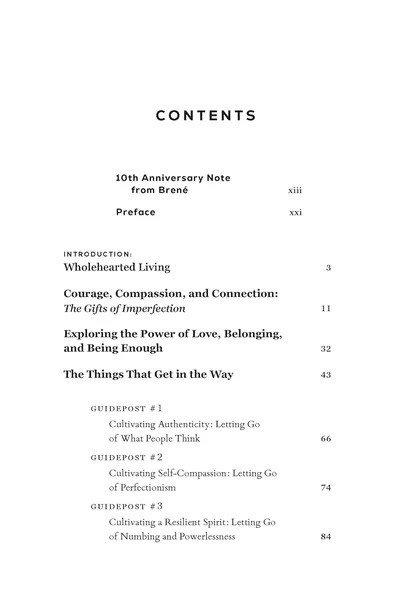
Look inside the book

Preview the actual pages, via Google Books
In This Review
  • What Works & What Doesn't
  • What the Book Actually Is and Argues
  • The Title and Its Intellectual Anchor
  • Strengths: Research Base and Scope of Application
  • Limitations and Who May Struggle With It
  • Commercial Reception and Enduring Relevance

What Works & What Doesn't

What Works
  • Grounded in twelve years of academic research by a credentialed scholar (PhD, MSW), lending it more empirical foundation than most self-help titles
  • Critics praised it as a straightforward approach to life-change from a genuine expert on vulnerability
  • Extends its vulnerability framework across multiple domains — relationships, parenting, leadership, and education — giving it broad applicability
  • A New York Times bestseller with more than two million copies sold, reflecting wide and sustained readership
  • The Roosevelt 'arena' metaphor gives the central argument a concrete and memorable anchor throughout
What Doesn't
  • Readers seeking granular, step-by-step methodology may find the book more conceptual and reframing-oriented than prescriptive
  • The breadth of domains covered — parenting, leadership, romance, workplace — means no single area receives deep specialist treatment
Brown's argument cuts against one of the most persistent cultural assumptions of modern life — and the results have resonated with millions of readers.

What the Book Actually Is and Argues

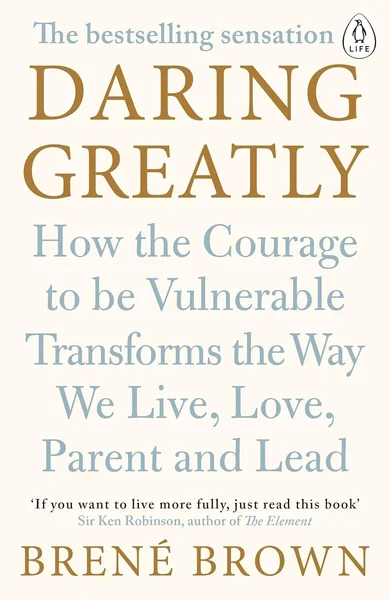
Daring greatly by brené brown (Paperback) by Brené Brown front cover
Published in 2012, Daring Greatly is a self-help book in which Brené Brown, PhD, MSW, draws on twelve years of research to challenge the cultural myth that vulnerability is a form of weakness. Brown's central argument is that vulnerability is, instead, the most accurate measure of courage — and that shutting it down comes at a steep personal cost. As the Penguin Random House synopsis puts it, "When we shut ourselves off from vulnerability, we distance ourselves from the experiences that bring purpose and meaning to our lives." The book frames vulnerability as both the core of difficult emotions — fear, grief, disappointment — and simultaneously the birthplace of love, belonging, joy, empathy, innovation, and creativity. Brown structures her inquiry around four guiding questions she poses at the outset: what drives our fear of being vulnerable; how we protect ourselves from it; what price we pay when we disengage; and how we can own vulnerability so as to transform the way we live, love, lead, and parent. That four-part architecture gives the book a clear through-line from diagnosis to application.

The Title and Its Intellectual Anchor

The book's title is drawn from Theodore Roosevelt's speech "Citizenship in a Republic," which contains the famous passage about the person "in the arena, whose face is marred by dust and sweat and blood… who at the worst, if he fails, at least fails while daring greatly." Brown's use of this speech does more than supply a memorable name — it positions vulnerability within a tradition of active, courageous engagement with life rather than passive endurance of it. The Roosevelt passage runs as the book's epigraph and animating metaphor: the arena stands for any high-stakes context where being seen and risking failure is unavoidable. This framing gives Daring Greatly an unusually concrete conceptual spine for the self-help genre.

Strengths: Research Base and Scope of Application

A distinguishing feature noted across sources is the combination of academic grounding and broad practical application. Brown holds a PhD and an MSW and spent twelve years conducting the research that underpins the book's claims — a credential base that sets Daring Greatly apart from many popular self-help titles that rest primarily on anecdote. Critics described the book as "a straightforward approach to revamping one's life from an expert on vulnerability," while critical coverage identified its central message as "understanding the difference between guilt and shame" — a distinction Brown treats as foundational rather than semantic. The book extends its framework across multiple life domains — parenting, leadership, education, and intimate relationships — which accounts for much of its crossover appeal. Daniel Pink, quoted in the Penguin Random House materials, praised Brown's role as a guide "to the real reward of vulnerability: greater courage," and noted the book offers a valuable map for that journey.

Limitations and Who May Struggle With It

Readers who come to Daring Greatly expecting a clinical framework or a tightly structured intervention plan may find the approach more narrative and conceptual than prescriptive. Publishers Weekly's framing of the book's core as a distinction between guilt and shame signals that some of its most important work is definitional — establishing how these concepts differ — before turning to practice. Some readers oriented toward empirical detail or step-by-step methodology may find that the book's strength lies more in reframing perspective than in delivering discrete, sequenced exercises. Additionally, the book's breadth — spanning parenting, leadership, romance, and workplace culture — means no single domain receives exhaustive treatment, which can leave specialists in any one field wanting more depth.

Commercial Reception and Enduring Relevance

Daring Greatly became a New York Times bestseller and, according to Penguin Random House, has sold more than two million copies. That commercial record reflects genuine cultural traction: the book arrived at a moment when conversations about authenticity, shame resilience, and emotional courage were entering mainstream discourse, and it has remained a touchstone in those conversations. Brown has since built a wider body of work — including subsequent books and podcasts — that extends Daring Greatly's ideas, which means the book now also functions as an entry point into a larger intellectual project. For readers new to Brown's research on shame and vulnerability, Daring Greatly remains the work where her core thesis is most fully laid out, making it a natural starting place.

Sources & Further Reading

The key facts and claims in this review are grounded in the retrieved, verified sources listed below.

  1. Cited in this review
  2. 1
  3. 2
  4. Further reading
  5. 3
    Brené Brown — author profileHigh-authority source

    Brené Brown, Wikipedia

  6. 4
  7. 5
  8. 6
  9. 7
  10. 8
  11. 9
  12. 10
  13. 11