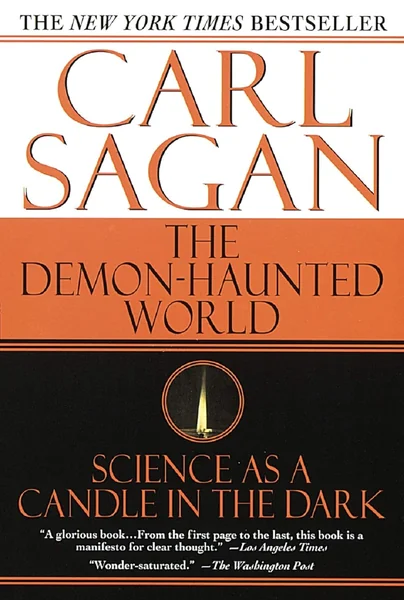
Sagan's Approach to Scientific Literacy
Sagan structures his arguments around what he calls the "baloney detection kit"—a set of intellectual tools for evaluating claims and evidence. Rather than dismissing non-scientific thinking entirely, he demonstrates how scientific methodology can enhance our daily decision-making. The book methodically builds from basic principles of skepticism to more sophisticated analysis techniques.
The author's background as both researcher and educator shines through in his pedagogical approach. He doesn't simply assert that science is superior; he shows readers how to apply scientific principles to evaluate everything from advertising claims to political promises. This practical framework for critical thinking makes the book valuable beyond its scientific content.
What sets this work apart from other science communication is Sagan's willingness to examine science's own limitations and historical mistakes. He acknowledges how scientific institutions can become dogmatic, making his advocacy for scientific thinking more nuanced and credible.
The Case Studies and Examples
Sagan draws from an impressive range of examples to illustrate his points about pseudoscience and flawed reasoning. He examines everything from UFO claims to alternative medicine, using these cases to demonstrate specific logical fallacies and evidential problems. These examples feel remarkably current despite the book's age—the same patterns of wishful thinking and confirmation bias persist across decades.
The book's treatment of alien abduction phenomena particularly showcases Sagan's balanced approach. Rather than dismissing believers as foolish, he explores the psychological and social factors that make such experiences compelling while systematically examining the evidence. This empathetic yet rigorous analysis models how to engage with controversial topics constructively.
Some readers may find certain examples dated, particularly references to 1990s media and political figures. However, the underlying patterns Sagan identifies—from false memory to statistical manipulation—remain depressingly relevant in our current information environment.
Where Scientific Skepticism Meets Human Nature
The book's greatest strength lies in its psychological sophistication. Sagan recognizes that humans aren't naturally scientific thinkers—we evolved with cognitive shortcuts that often lead us astray in complex modern contexts. He explores how our pattern-seeking brains can create false connections and how our social nature makes us vulnerable to groupthink.
This research-backed understanding of human psychology elevates the book beyond simple science advocacy. Sagan demonstrates genuine insight into why people embrace pseudoscientific beliefs, making his counter-arguments more persuasive. He doesn't lecture from an ivory tower but acknowledges his own susceptibility to the biases he describes.
The discussion of democratic decision-making in a scientifically illiterate society feels particularly urgent. Sagan argues that effective democracy requires citizens capable of evaluating evidence and reasoning about complex issues—a challenging premise in any era.
The Prose That Illuminates Complex Ideas
Sagan writes with the lyrical precision that made him one of the most effective science communicators of the twentieth century. His prose combines intellectual rigor with emotional warmth, making sophisticated concepts accessible without oversimplification. The famous metaphor of science as "a candle in the dark" captures both the vulnerability and power of rational thinking.
The book's pacing allows readers to absorb complex ideas gradually. Sagan builds his arguments systematically, returning to key concepts with new examples and applications. This pedagogically sound structure makes the book work well for both casual readers and those seeking deeper understanding of scientific methodology.
Occasionally, Sagan's passion for his subject leads to slightly preachy passages, particularly when discussing the dangers of scientific illiteracy. These moments, while understandable given his concerns, can feel heavy-handed compared to his more measured analytical sections.
Limitations and Blind Spots
Despite its many strengths, The Demon-Haunted World shows some limitations characteristic of its era and author's perspective. Sagan's vision of scientific education sometimes feels overly optimistic about reason's power to overcome deeply held beliefs and cultural commitments. His faith in education as a solution to pseudoscientific thinking may underestimate the role of social identity and tribal belonging in belief formation.
The book also reflects certain biases of academic science culture, occasionally dismissing non-Western ways of knowing too quickly. While Sagan advocates for evidence-based thinking, he sometimes conflates scientific methodology with scientific institutions, not fully accounting for how institutional pressures can distort the scientific process itself.
The main weakness lies in the book's limited engagement with the social and economic factors that make pseudoscience appealing. Sagan focuses primarily on individual cognitive errors rather than examining how systemic inequalities and institutional failures create fertile ground for alternative belief systems.
Essential Reading for Our Post-Truth Era
Is The Demon-Haunted World worth reading for science education? Absolutely. This book provides essential intellectual tools for navigating our current information landscape, where the ability to evaluate sources and reasoning has become crucial for informed citizenship. Sagan's insights about the fragility of scientific knowledge and the persistence of magical thinking feel remarkably contemporary.
The book works best for readers who want practical skills for evaluating claims and evidence, rather than those seeking pure scientific entertainment. High school students and adults without scientific backgrounds will find it particularly valuable, though the concepts require active engagement rather than passive consumption.
While some examples feel dated, the underlying framework remains robust and applicable. The bottom line: This is essential reading for anyone concerned about critical thinking in democratic society, offering both inspiration and practical tools for intellectual self-defense.