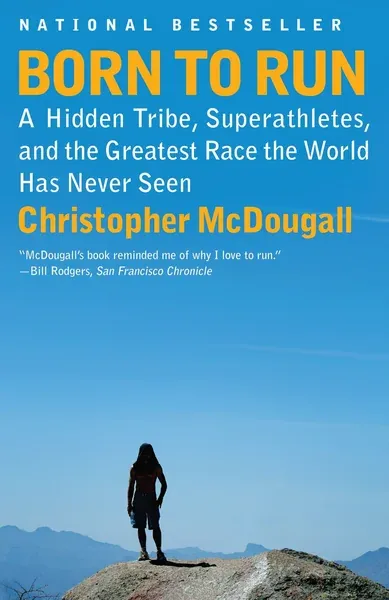
A Journey That Changed How We Think About Running
Is Born to Run by Christopher McDougall worth reading over a decade after its initial publication? The answer depends on whether you're ready to question everything you thought you knew about running, shoes, and human endurance. This isn't just another fitness book—it's an adventure story that weaves together evolutionary biology, sports science, and the remarkable discovery of Mexico's Tarahumara Indians, a tribe that can run hundreds of miles with apparent ease.
McDougall's quest began with a simple question: why does his foot hurt? This personal injury led him down a rabbit hole that would challenge the entire running shoe industry and reveal secrets hidden in the remote Copper Canyons of Mexico. What emerges is part detective story, part anthropological expedition, and part sports science revelation that has influenced countless runners to reconsider their approach to the sport.
Readers familiar with Malcolm Gladwell's narrative non-fiction or Bill Bryson's adventure writing will recognize the engaging blend of storytelling and information. However, McDougall brings a journalist's investigative rigor to questions that the running establishment preferred to leave unexamined.
The Quest for Answers in Mexico's Copper Canyons
McDougall structures his investigation around the mysterious Tarahumara people, who live in the remote Copper Canyons and possess seemingly superhuman running abilities. The author's journey to find and understand this "hidden tribe" forms the narrative backbone of the book, taking readers from corporate boardrooms to dusty Mexican villages.
The writing captures the genuine excitement of discovery as McDougall uncovers layer after layer of conventional wisdom that may be fundamentally wrong. His prose moves at the pace of a thriller when describing the underground ultrarunning community, then slows to examine the biomechanics of natural running form. This varied pacing keeps readers engaged through potentially dry scientific material.
Christopher McDougall's background as a war correspondent serves him well here—he approaches the subject with both skepticism and genuine curiosity, never afraid to challenge authority figures or question profitable industries. The result is writing that feels honest rather than promotional, even when advocating for dramatic changes in how we approach running.
The Unlikely Heroes of Ultrarunning
The book introduces readers to a fascinating cast of characters from the ultrarunning world—eccentric athletes who regularly complete distances that would seem impossible to most people. These include the legendary Caballo Blanco (Micah True), an enigmatic American who became the bridge between the Tarahumara world and modern ultrarunning culture.
McDougall also profiles Ann Trason, one of the greatest female ultrarunners of all time, and Scott Jurek, the vegetarian ultrarunner whose dominance in 100-mile races helped establish American credibility in the sport. Each profile reveals different aspects of what drives people to push their bodies to extremes, while also demonstrating that successful ultrarunners come in all shapes, sizes, and approaches.
The Tarahumara themselves emerge not as mystical beings but as real people whose culture has preserved running techniques and attitudes that the modern world has largely abandoned. McDougall treats them with respect while avoiding the noble savage stereotype that often plagues such accounts.
The Science Behind Natural Running
Perhaps the book's most controversial contribution involves its challenge to the modern running shoe industry. McDougall presents research suggesting that expensive, heavily cushioned running shoes may actually increase injury rates rather than prevent them. He explores the work of Harvard professor Daniel Lieberman and other researchers who argue that humans evolved as persistence hunters, designed to run long distances efficiently.
The biomechanical analysis can get technical, but McDougall makes it accessible through real-world examples and clear explanations. He demonstrates how barefoot or minimally shod runners typically develop a forefoot strike that may reduce impact forces compared to the heel striking that modern shoes encourage.
However, the book's treatment of running shoe science, while compelling, represents the perspective available in 2009. Subsequent research has complicated some of McDougall's claims, and the minimalist running boom that followed the book's publication led to its own set of injury problems for runners who transitioned too quickly.
Where the Narrative Stumbles
Despite its many strengths, the book occasionally suffers from the author's enthusiasm for his thesis. McDougall sometimes presents correlations as causations and can oversell the certainty of emerging research. His critique of the running shoe industry, while raising valid questions, occasionally veers toward conspiracy thinking that undermines his otherwise careful journalism.
The book's structure also creates some pacing issues. The buildup to the climactic race between American ultrarunners and the Tarahumara takes considerable time, and some readers may find the extensive background material tests their patience. Additionally, McDougall's personal journey sometimes feels less compelling than the larger story he's telling.
The scientific claims, while intriguing, deserve the skeptical evaluation that McDougall himself brings to other topics. The book works best when read as an exploration of possibilities rather than a definitive guide to optimal running.
A Cultural Phenomenon Worth Examining
Born to Run became more than a book—it launched a movement that influenced everything from running shoe design to training philosophies. Understanding its arguments helps explain major shifts in running culture over the past decade, from the rise of barefoot running to the popularity of ultramarathons.
The Christopher McDougall book succeeds in making a compelling case that modern runners have lost touch with fundamental aspects of human locomotion. Whether or not you accept all of McDougall's conclusions, his investigation raises important questions about how commercial interests shape our understanding of natural human capabilities.
For readers interested in evolutionary biology, sports science, or simply a well-told adventure story, this book review reveals substantial rewards. It works equally well for serious runners seeking to understand different approaches to their sport and for general readers curious about human potential and cultural differences.
You can find Born to Run at Amazon, your local bookstore, or directly from Vintage Books.