A Treatise That Launched a Thousand Debates
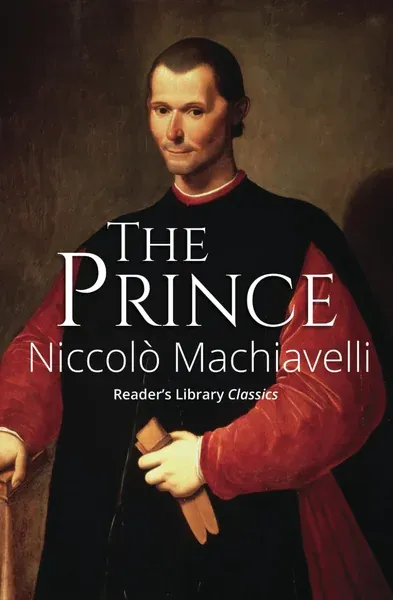
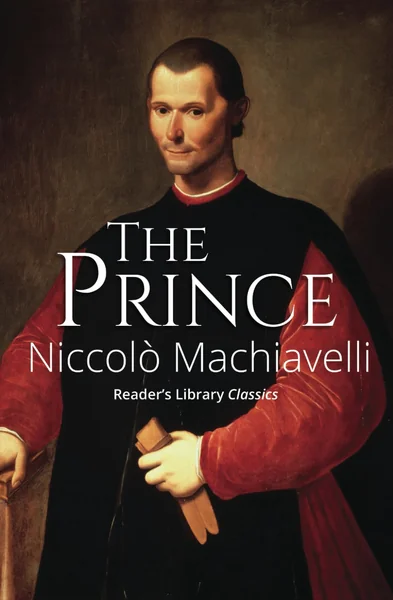
Is The Prince still relevant today? Five centuries after Niccolò Machiavelli penned his controversial masterpiece, this slim volume continues to provoke heated discussions in boardrooms, political science classrooms, and leadership seminars worldwide. The Reader's Library Classics edition presents Machiavelli's infamous political treatise in an accessible format, complete with the striking cover portrait that captures the calculating gaze of Renaissance political thought.
Machiavelli wrote this work during his political exile when the Medici family returned to power in Florence. This context matters crucially—Machiavelli wrote not as an abstract philosopher but as a practitioner who had witnessed power's brutal realities firsthand. The work reads like a manual written by someone who understood that political survival often demands moral compromise.
Readers familiar with Sun Tzu's The Art of War will recognize similar unflinching pragmatism, though Machiavelli focuses specifically on statecraft rather than military strategy.
The Florentine's Unvarnished Wisdom
Machiavelli's prose cuts through political romanticism with surgical precision. His writing style—direct, analytical, and mercilessly practical—reflects his background as a diplomatic secretary who had observed rulers across Renaissance Italy. Rather than flowery rhetoric, he employs the methodical approach of a political scientist, building arguments through historical examples and logical deduction.
The author structures his analysis around concrete scenarios: how to maintain power in conquered territories, when to use force versus persuasion, why feared leaders often outlast beloved ones. This isn't philosophy for philosophy's sake—it's a handbook written by someone who had seen promising leaders destroyed by naive idealism and watched cunning survivors navigate impossible circumstances.
His famous assertion that "it is better to be feared than loved" doesn't emerge from cruelty but from cold political calculation. Machiavelli observed that love depends on others' whims, while fear remains under the ruler's control.
Machiavelli draws extensively on contemporary examples, with Cesare Borgia serving as his primary case study of effective (if ruthless) leadership. Borgia's rapid conquest of the Romagna region demonstrates Machiavelli's central thesis—that successful rulers must be willing to act decisively, even brutally, when circumstances demand it.
Lorenzo de' Medici, the work's dedicatee, represents Machiavelli's hope for Italian unification under strong leadership. The author presents various Renaissance rulers as cautionary tales or success stories, analyzing their methods with the detachment of a political scientist studying specimens.
These aren't abstract philosophical constructs but real people whose successes and failures Machiavelli witnessed or studied closely. This grounding in historical reality gives The Prince its enduring practical relevance.
The Separation of Ethics and Effectiveness
The book's central argument remains as controversial today as it was centuries ago: effective leadership sometimes requires actions that would be immoral in private life. Machiavelli doesn't celebrate this reality—he simply acknowledges it as a fundamental tension in political leadership.
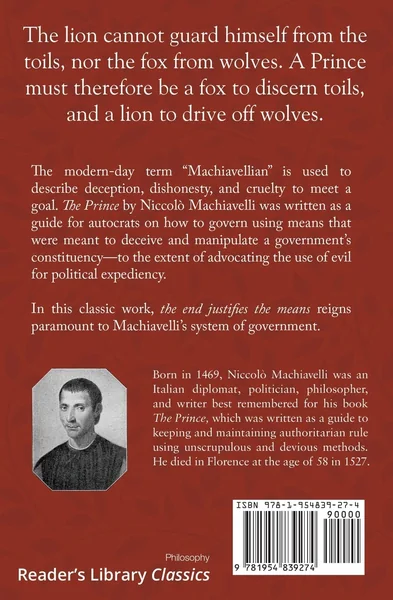
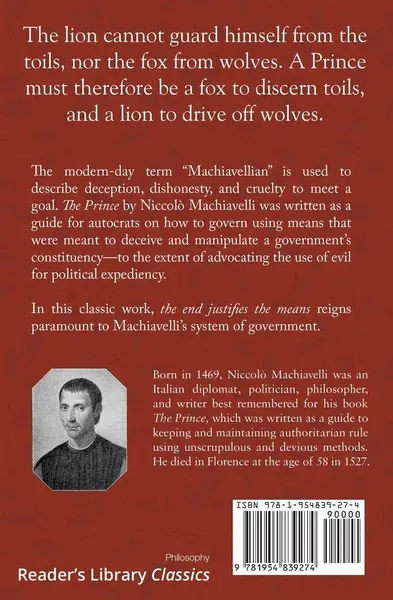
His concept of virtù (often translated as "virtue" but meaning something closer to "effectiveness" or "adaptability") suggests that rulers must be willing to be both lion and fox—forceful when strength is needed, cunning when subtlety serves better. This pragmatic flexibility scandalized readers expecting traditional moral guidance from political treatises.
Modern readers will recognize these dilemmas in contemporary political and business leadership, where decision-makers regularly face conflicts between ethical ideals and practical necessities.
Where Machiavelli's Analysis Shows Its Age
While The Prince's core insights about power dynamics remain relevant, some aspects reflect its Renaissance origins. Machiavelli's focus on individual rulers feels less applicable in democratic systems where power is distributed and constrained by institutions. His military advice, while historically fascinating, has limited modern relevance given changes in warfare technology.
The work also reflects the gender assumptions and social hierarchies of its era. Machiavelli writes exclusively about male rulers and rarely considers how different social structures might affect his conclusions.
Additionally, his examples draw heavily from Italian city-states and European monarchies, which may limit the universal applicability of specific tactics, even as broader principles about power remain relevant.
A Classic That Rewards Careful Reading
The Prince demands thoughtful engagement rather than casual reading. At roughly 100 pages, it's deceptively brief—each section packs dense political analysis that benefits from reflection and discussion. The Reader's Library Classics edition makes this analysis accessible to modern readers without dumbing down Machiavelli's sophisticated arguments.
This isn't entertainment reading but intellectual exercise. Political science students, business leaders, and anyone interested in understanding power dynamics will find Machiavelli's unflinching analysis both enlightening and disturbing. The book forces readers to confront uncomfortable questions about leadership that more sanitized treatments avoid.
For readers seeking similar explorations of power and strategy, Robert Greene's The 48 Laws of Power offers a modern interpretation of Machiavellian themes, though with less historical grounding.