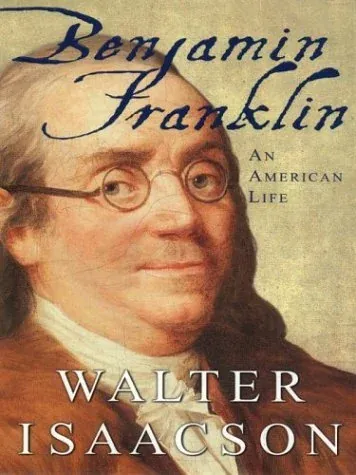
The Biographer's Craft: Isaacson's Storytelling Approach
Isaacson brings his journalist's eye for compelling narrative to Franklin's sprawling life story. Rather than chronologically plodding through dates and achievements, the author weaves thematic threads throughout—Franklin as pragmatist, diplomat, scientist, and social climber. This approach prevents the biography from becoming a mere catalog of accomplishments.
The writing maintains Isaacson's signature clarity without sacrificing intellectual depth. He has a particular gift for making 18th-century political machinations feel immediate and relevant. Complex diplomatic negotiations during the Revolutionary War, for instance, read with the tension of contemporary political thrillers rather than dry historical recounting.
What distinguishes this biography from others is Isaacson's willingness to present Franklin's contradictions without trying to resolve them artificially. The man who preached virtue while maintaining mistresses, who championed liberty while owning slaves—Isaacson lets these paradoxes stand as essential to understanding Franklin's humanity.
Beyond Franklin himself, Isaacson populates the biography with a rich cast of 18th-century figures who shaped and were shaped by the polymath's influence. The author pays particular attention to Franklin's complex relationships with contemporaries like John Adams, with whom he maintained a fascinatingly competitive friendship despite fundamental personality differences.
Franklin's family relationships receive nuanced treatment, especially his troubled dynamic with his illegitimate son William, who remained loyal to Britain during the Revolution. Isaacson doesn't shy away from Franklin's failures as a father and husband, presenting a man whose public virtues sometimes masked private shortcomings.
The diplomatic sections bring alive the salons of Paris, where Franklin's carefully cultivated persona as the simple American philosopher charmed French aristocrats into supporting the colonial cause. These scenes demonstrate Isaacson's skill at making historical figures feel like real people with recognizable motivations and flaws.
Making the 18th Century Accessible
One of the biography's greatest strengths lies in Isaacson's ability to contextualize Franklin's scientific and philosophical achievements for modern readers. Rather than simply listing Franklin's inventions or civic improvements, the author explains their revolutionary nature within their historical moment.
The famous electricity experiments, for instance, aren't presented as isolated scientific breakthroughs but as part of Franklin's broader philosophy about understanding and improving the natural world. Isaacson demonstrates how Franklin's scientific method influenced his approach to politics and diplomacy—everything was a problem to be analyzed and solved through practical experimentation.
The author also excels at showing how Franklin's rise from candle-maker's son to international celebrity embodied the possibilities and contradictions of the emerging American identity. This theme resonates throughout without becoming heavy-handed or anachronistic.
Historical Accuracy and Source Material
Isaacson's research draws extensively from Franklin's own prolific correspondence and writings, including the famous but incomplete Autobiography. The author makes clear when he's interpreting versus reporting, and acknowledges gaps in the historical record rather than filling them with speculation.
The bibliography reveals deep engagement with Franklin scholarship, though Isaacson wears this learning lightly in the narrative itself. He's particularly effective at incorporating recent historical research about slavery, Native American relations, and women's roles in the 18th century without making the biography feel like a modern political tract.
Some Franklin scholars have criticized certain interpretations, particularly regarding Franklin's religious beliefs and his role in specific diplomatic negotiations. However, these debates reflect the richness of Franklin's legacy rather than fundamental flaws in Isaacson's approach.
Where It Stumbles and Soars
The biography's length occasionally works against it. Certain middle sections, particularly detailed accounts of colonial political disputes, can feel overly comprehensive for general readers. Isaacson's thoroughness sometimes overwhelms the narrative momentum he works so carefully to maintain.
The book also reflects its 2003 publication date in some ways. Discussions of Franklin's relationship with slavery, while present, don't engage as deeply with recent scholarship on this topic as current readers might expect. Similarly, the treatment of women in Franklin's life, while respectful, sometimes feels limited by the sources available rather than actively seeking diverse perspectives.
However, these limitations pale beside the biography's considerable achievements. Isaacson succeeds brilliantly at his primary goal: making Franklin feel like a real, complex human being rather than a marble statue. The Franklin who emerges is simultaneously more flawed and more admirable than the textbook version.
A Biography That Endures
Over twenty years after publication, Benjamin Franklin: An American Life remains the most readable comprehensive Franklin biography available. It lacks the specialized focus of more recent academic studies but offers something those works often miss—a sense of Franklin as a living, breathing person whose curiosity and pragmatism shaped not just his own remarkable life but the emerging American character.
For readers seeking to understand both Franklin specifically and the American founding more broadly, this Walter Isaacson book review demonstrates why the biography provides an ideal starting point. The 700 pages pass more quickly than their number suggests, carried along by Isaacson's narrative skill and Franklin's endlessly fascinating personality. Whether you're drawn to Franklin the scientist, diplomat, writer, or entrepreneur, this biography offers insights into all these facets while never losing sight of the whole person.