8 min read
4.8
· 4,094 Amazon ratingsShare This Review

Our review
Stillness Speaks
Stillness Speaks by Eckhart Tolle Review: A Sutra-Style Guide to Inner Quiet
Stillness Speaks is a compact spiritual reference book by Eckhart Tolle, structured as ten short chapters of aphoristic teachings modeled on the ancient Indian sutra tradition, designed to guide readers toward silence, present-moment awareness, and inner stillness rather than engage the analytical mind.
LuvemBooks Verdict
Best for
Readers already familiar with Tolle's presence-based philosophy from The Power of Now who want a contemplative companion text built for slow, non-linear, meditative engagement rather than cover-to-cover reading.
Worth it if
You're drawn to aphoristic, sutra-style spiritual writing and are willing to bring your own receptivity to the page, letting the brevity orient rather than instruct you.
Skip if
You're new to Tolle's worldview or are looking for a step-by-step methodology with extended explanations and a conventional chapter-by-chapter argument — the deliberate lack of conceptual scaffolding will likely feel more opaque than illuminating.
What readers & critics say
Publishers Weekly acknowledged the book's "familiar if no less ominous note in contemporary spiritual life," recognising both the accessibility of Tolle's teaching and the gravity of his civilizational claim about humanity's need for transformation. Spirituality & Practice engaged it as a substantive spiritual text, highlighting Tolle's sutra-format approach as a deliberate revival of ancient Indian teaching forms and noting his freedom from any single doctrinal tradition as a meaningful asset.
“Repeating what has become a familiar if no less ominous note in contemporary spiritual life — the urgent need for humanity to wake up if we are not to destroy ourselves.”
— Publishers WeeklyAsk LuvemBooks
Was this helpful?
- Is it worth reading?
- Stillness Speaks is a worthwhile read for those already sympathetic to Tolle's approach in The Power of Now — readers comfortable with non-dual or presence-based spirituality who are drawn to contemplative rather than analytical engagement. Critics noted that Tolle "describes stillness with eloquent economy," and Spirituality & Practice highlighted his independence from any single tradition as a meaningful asset, allowing him to draw freely from multiple wisdom lineages. However, the sutra-format brevity and deliberate lack of conceptual elaboration will frustrate readers seeking a step-by-step methodology or a conventional chapter-by-chapter argument. Readers new to Tolle's worldview may also find the book's indirection more opaque than illuminating without prior grounding in its core concepts.
- Similar books
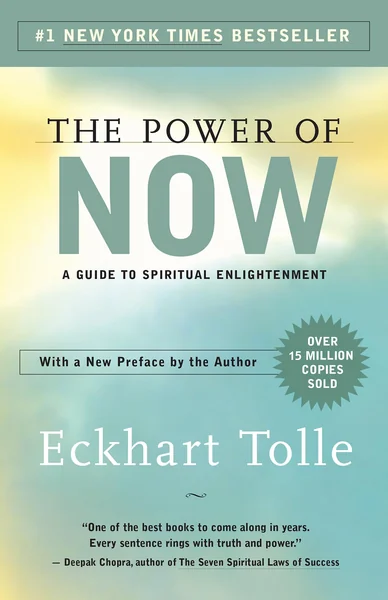
- Readers drawn to Stillness Speaks will find natural companions in several titles. Tolle's own The Power of Now is the most direct counterpart — a more discursive and scaffolded introduction to the same presence-based philosophy that Stillness Speaks distills into aphoristic form. For another tradition of aphoristic wisdom, Marcus Aurelius's Meditations offers a similar experience of short, contemplative fragments meant for slow, repeated reading rather than linear consumption. Beyond the LuvemBooks catalogue, A New Earth by Eckhart Tolle extends his ideas into the terrain of collective ego and human awakening, while Michael A. Singer's The Untethered Soul and Jon Kabat-Zinn's Wherever You Go, There You Are both explore present-moment awareness from adjacent but distinct perspectives. The Tao Te Ching by Lao Tzu and Ram Dass's Be Here Now share Stillness Speaks' aphoristic, non-didactic register.
- Who should read this?
- Stillness Speaks is most clearly designed for readers already sympathetic to Tolle's approach in The Power of Now — those comfortable with non-dual or presence-based spirituality and drawn to contemplative rather than analytical reading. Its multi-tradition approach, noted by Spirituality & Practice, also makes it broadly accessible across different spiritual backgrounds without requiring allegiance to any single doctrine. Readers seeking a step-by-step methodology, extended explanations, or a conventional chapter-by-chapter argument are likely to find the sutra format frustrating, as are those new to Tolle's worldview who lack familiarity with concepts like "the now" or the ego-mind distinction.
- About Eckhart Tolle
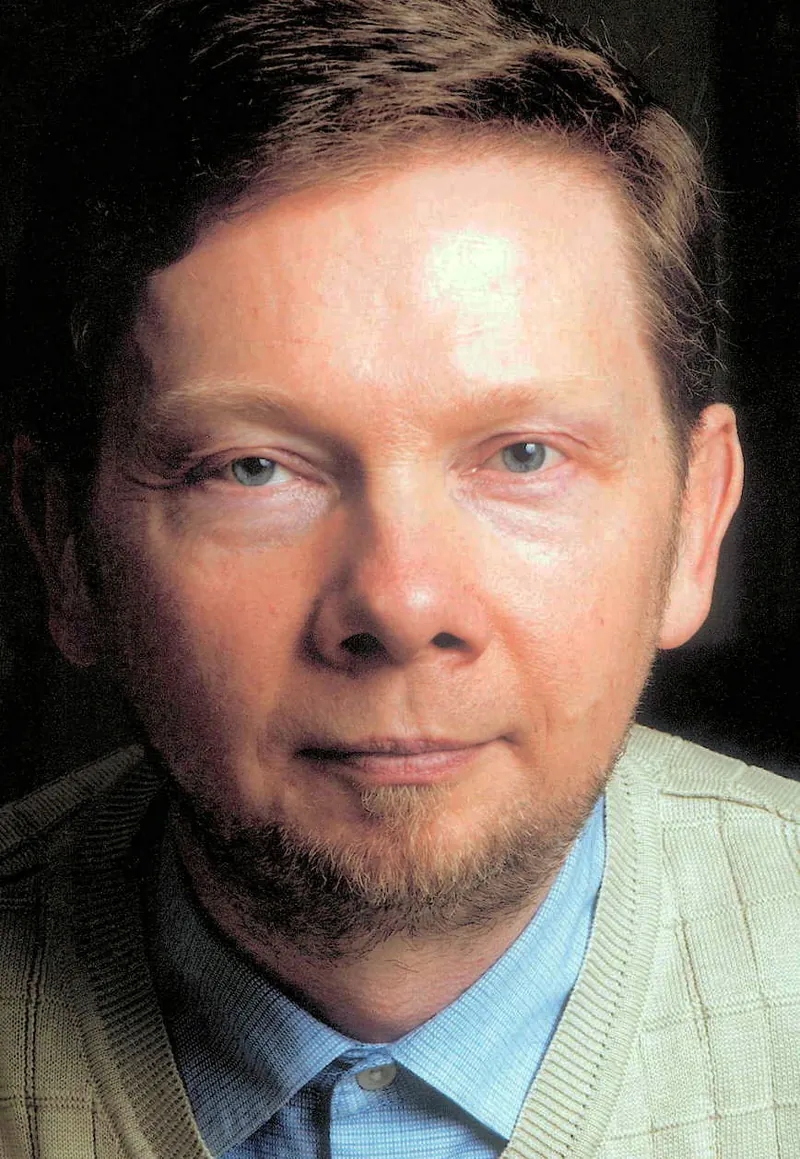
- Eckhart Tolle is a German spiritual teacher and self-help author.
- How does this compare to The Power of Now?
- Where The Power of Now builds a sustained, discursive case for present-moment awareness with extended explanation and conceptual scaffolding, Stillness Speaks strips that same teaching down to its most elemental form — ten short chapters of aphoristic sutras with, as Tolle puts it, "little conceptual elaboration." The Power of Now is widely recognized as a bestseller and provides the foundational grounding in concepts like "the now" and the ego-mind distinction that Stillness Speaks assumes the reader already has. Critics and Tolle himself position Stillness Speaks as a companion or deepening text rather than an independent introduction, making The Power of Now the recommended starting point for those new to his work.
- How should I read this book?
- Tolle explicitly states in the book's introduction that Stillness Speaks is "not a book to be read from cover to cover" in a single sitting — it is designed for slow, non-linear, meditative engagement. Spirituality & Practice observed that the book functions less as a system of propositions to be analyzed than as a set of prompts designed to move the reader beyond conceptual thought entirely, mirroring the "indirection" characteristic of Eastern teachers. The introduction itself notes that "what it doesn't say — but only points to — is more important than what it says," signaling that the right posture is receptive rather than analytical. Readers who approach it looking for a structured argument or step-by-step methodology are likely to find the format frustrating.
Summarize this book
Follow up
Synthesized from verified book data & published reviews · How we review
Press Enter to ask. Answers come from our editorial Q&A — start typing to see related questions.
Our Review
What the Book Actually Is
The Central Argument and Its Stakes
Structure, Form, and Intended Use
Reception and Place in Tolle's Work
Who This Book Is For — and Where It May Fall Short
Sources & Further Reading
The key facts and claims in this review are grounded in the retrieved, verified sources listed below.
- Cited in this review
- 1
en.wikipedia.org
- Further reading
- 2
Eckhart Tolle, Wikipedia
Age & Reading Level
Recommended age
Adult
Reading level
Adult
who it suits
Skip if you're looking for a structured, step-by-step spiritual methodology with extended conceptual explanation.
Reader reviews
Be one of the first readers to answer.
Read it? Was it right for you?
Books like Stillness Speaks
Curated picks for readers who enjoyed Stillness Speaks, with our reasoning for each match.
More by Eckhart Tolle

If you liked Stillness Speaks