Published

Read Time

8 min read

Age & reading levelAdult
Reader rating

4.7

· 142 Amazon ratings
reader ratings, not a LuvemBooks score
Curated & edited by

LuvemBooks Editorial

How we create our reviews →
Share This Review
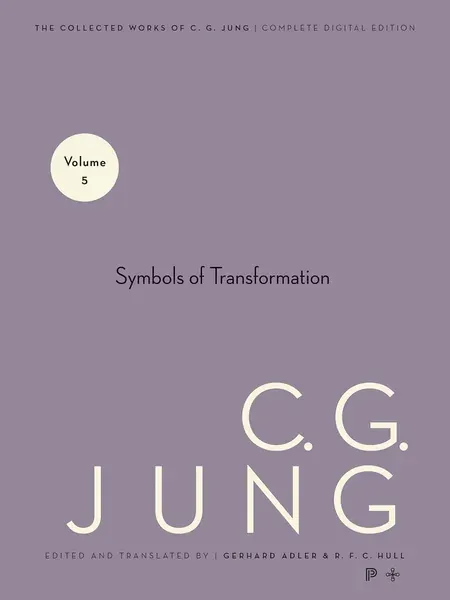
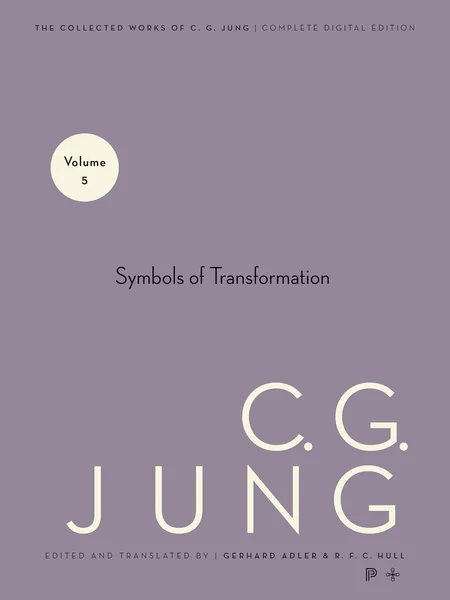
Symbols of Transformation (Collected Works of C.G. Jung Vol.5) by C. G. Jung front cover

Our review

Symbols of Transformation by C. G. Jung Review: A Landmark, Demanding Work of Analytical Psychology

Symbols of Transformation (Vol. 5 of the Collected Works of C. G. Jung) is Jung's thoroughgoing revision of his 1911–12 work Psychology of the Unconscious, translated by R. F. C. Hull and Gerhard Adler and published by Princeton University Press. It marks Jung's first sustained declaration of his independent position from Freudian psychology, and remains essential reading for anyone serious about analytical psychology's foundations.

LuvemBooks Verdict

Best for

Depth psychologists, Jungian analysts and trainees, scholars of mythology and comparative religion, and advanced students of the history of psychology who need a primary scholarly text documenting the theoretical and personal conditions of analytical psychology's break from Freudian orthodoxy.

Worth it if

Worth reading if you already have grounding in psychoanalytic history, classical mythology, or comparative religion and want to engage with the primary document in which Jung first articulated his independent theoretical position — sustained across 590 pages in the authoritative Hull and Adler translation.

Skip if

Skip it if you are new to Jung and looking for an accessible entry point into his thought, as the book's referential density, extended symbolic exegesis, and assumption of specialist familiarity make it an unsuitable first encounter with Jungian psychology.

The JSTOR page for Volume 5 quotes Jung's own foreword to the 1956 revised edition, in which he frames the original text as "the explosion of all those psychic contents which could find no room, no breathing space, in the constricting atmosphere of Freudian psychology," underscoring the book's foundational status in analytical psychology. A reader review retrieved via TheStoryGraph notes that Jung felt rushed when he first wrote the book and that the later revision allowed him to expand ideas and link chapters more satisfyingly, while also observing that the work argues for universal symbolic patterns that Jung would go on to call the Collective Unconscious.

Sources: JSTOR, TheStoryGraph
4.7from 142 Amazon ratings— reader ratings, not a LuvemBooks score
Buy on Amazon
In This Review
  • What Works & What Doesn't
  • What the Book Is and Where It Comes From
  • The Intellectual Pivot It Represents
  • Strengths of the Revised Edition
  • Demands the Book Places on the Reader
  • Who This Edition Is For

What Works & What Doesn't

What Works
  • Marks Jung's first definitive statement of independence from Freudian psychology, making it a primary document in the history of depth psychology
  • The R. F. C. Hull and Gerhard Adler translation is the standard scholarly English rendering of Jung's work in this authoritative Collected Works series
  • Jung's own revised foreword and the updated bibliographical apparatus add scholarly value over the original 1911–12 text
  • Builds a sustained, unified argument across 590 pages, tracing symbolic transformation through myth, dream, and comparative religion
What Doesn't
  • Presupposes familiarity with classical mythology, comparative religion, and psychoanalytic history — not a text for readers new to Jung
  • The method of extended symbolic exegesis built around a single set of fantasies demands sustained, specialist engagement and offers little orientation for general readers
This review covers the book's contents and published reception; it does not reflect hands-on application of the work's theoretical framework.
Symbols of Transformation (Collected Works of C.G. Jung Vol.5) by C. G. Jung front cover

What the Book Is and Where It Comes From

Volume 5 of the Collected Works of C. G. Jung is a complete revision of Psychology of the Unconscious, originally written in 1911–12. That earlier text was, in Jung's own words in the foreword to the revised edition (which first appeared in 1956), "the explosion of all those psychic contents which could find no room, no breathing space, in the constricting atmosphere of Freudian psychology." The revision represents Jung's mature reconsideration of that foundational rupture. Jung himself, in the preface quoted by sources at jstor.org, acknowledged that the original was "written at top speed, amid the rush and press of my medical practice," and that he never felt "happy about this book, much less satisfied with it" — making the later revision both a scholarly and a personal act of reckoning. The text's core argument is that dream-images, and more broadly the fantasies of the unconscious, must be understood symbolically rather than literally, a principle Jung describes as central to analytical psychology.

The Intellectual Pivot It Represents

The book's historical significance lies precisely in its role as the first major public statement of Jung's independent theoretical position. Its analytical framework is built around a close reading of a set of fantasies recorded by an American woman identified in the text, whose unconscious productions Jung uses to trace the workings of myth, symbol, and what he would develop into the theory of the collective unconscious. The argument moves across dream symbolism, libido theory, and the transformation of psychic energy, drawing on comparative mythology and religion to map recurring symbolic patterns. A chapter titled "The Transformation of Libido" signals the breadth of this reach: Jung redefines libido not narrowly as sexual energy in the Freudian sense but as generalized psychic energy undergoing symbolic transformation. This conceptual expansion was at the heart of Jung's break with Freud, and the book documents that divergence in scholarly, annotated detail.

Strengths of the Revised Edition

The Princeton University Press edition, translated by R. F. C. Hull and Gerhard Adler as part of the authoritative Collected Works, brings scholarly apparatus — revised bibliographical citations and entries updated in the light of subsequent publications — to what had been a more provisional text. Hull's translation of the Collected Works is widely recognized in the field as the standard English rendering of Jung's German writings. Jung himself, writing in the foreword quoted across multiple source excerpts, confirms that the substance and principles of the original remain intact in revision: "The views and opinions I expressed in the book I would still maintain, in substance and in principle, today." For students of depth psychology, this continuity between the younger and older Jung — preserved and critically annotated — is precisely what makes the volume valuable as a primary source.

Demands the Book Places on the Reader

This is not an introductory text. The argument proceeds through extended engagement with classical mythology, comparative religion, and early psychoanalytic literature, and the reader who lacks grounding in any of these areas will find the referential density considerable. The volume runs to 590 pages and, as its source material and structure make plain, was designed for scholarly and clinical audiences already conversant with psychoanalytic discourse. Jung's method of building theory through extended symbolic exegesis — working carefully through one set of fantasies across the full length of the book — rewards patient, close reading but offers little by way of orientation for a general audience coming to Jung for the first time. Those seeking an accessible entry into Jungian thought would do better to begin elsewhere in the Collected Works before arriving here.

Who This Edition Is For

The Princeton University Press paperback edition, now in its second printing, belongs on the shelves of depth psychologists, Jungian analysts and trainees, scholars of mythology and religion, and advanced students of the history of psychology. It functions as a primary text in the history of psychoanalytic thought, documenting the theoretical and personal conditions under which analytical psychology separated itself from Freudian orthodoxy. For that readership, the Hull and Adler translation in the Collected Works format — editorially overseen by Gerhard Adler, Michael Fordham, and Sir Herbert Read — represents the standard scholarly resource. For the general reader curious about Jung, this volume's depth and density make it best approached after building foundational familiarity with his core concepts.

Age & Reading Level

Recommended age

Adult

Reading level

Adult

Skip if you are new to Jung or lack grounding in classical mythology, comparative religion, and psychoanalytic history — the referential density makes this inaccessible as an entry-level text.

Sources & Further Reading

The key facts and claims in this review are grounded in the retrieved, verified sources listed below.

  1. Cited in this review
  2. 1
  3. 2
  4. Further reading
  5. 3
  6. 4
  7. 5