
9 min read
4.4
· 899 Amazon ratingsShare This Review
Our review
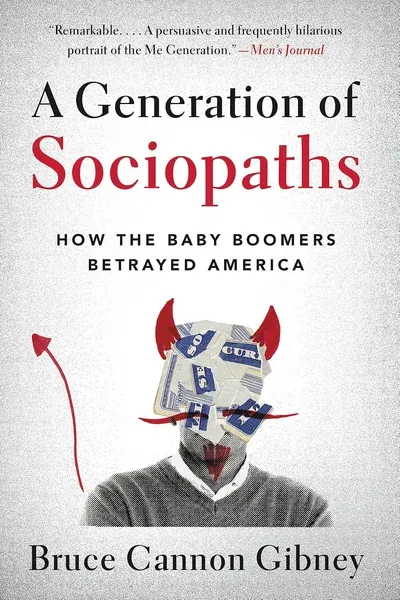
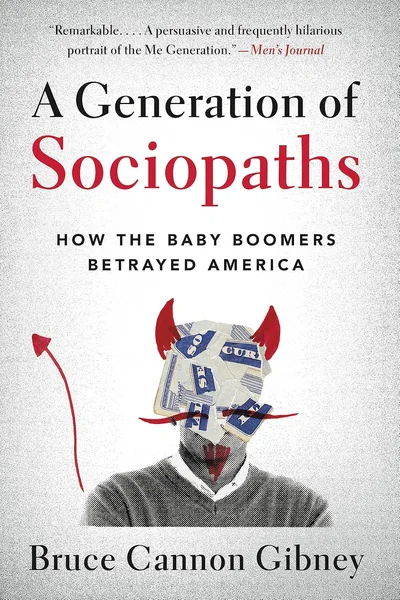
A Generation of Sociopaths by Bruce Cannon Gibney Review: A Provocative Generational Indictment
A Generation of Sociopaths: How the Baby Boomers Betrayed America is a work of social and economic analysis by venture capitalist Bruce Cannon Gibney, arguing that the Baby Boomer generation systematically enriched itself at the expense of future Americans through self-serving policy choices. Called "remarkable" by Men's Journal and "controversial" by Fortune, it is among the more combative generational critiques in recent American political writing.
LuvemBooks Verdict
Best for
Readers — particularly younger generations — who want a data-driven, fiscally grounded polemic that names and quantifies how Boomer-era voting patterns shaped tax policy, entitlement structures, and public debt, and who are open to a cross-disciplinary argument that blends venture-capital quantitative thinking with social criticism.
Worth it if
Worth reading if you want a serious, numbers-anchored case — written with wit — for why the 2030s represent a narrow and urgent window to reverse decades of intergenerational fiscal damage before it becomes irreversible.
Skip if
Skip it if you need analytical precision over rhetorical force, or if you expect the generational frame to meaningfully account for the race, class, and regional distinctions that determined who actually benefited from Boomer-era policies — because the book's broad brush largely sidesteps those distinctions.
What readers & critics say
Kirkus Reviews offered a qualified but serious engagement, noting that "a certain negativity may be what's required" while framing the book as a cri de coeur against a generation that "unraveled the social fabric woven by previous generations in the interests of sheer selfishness." Activisthistory.com raised the sharpest structural critique, arguing that what Gibney labels sociopathic maps more precisely onto white privilege and a general unawareness of others' experiences — a dynamic neither unique to Boomers nor fully captured by a generational label.
“A cri de coeur against baby boomers, who 'unraveled the social fabric woven by previous generations in the interests of sheer selfishness.'”
— Kirkus ReviewsAge & Reading Level
Recommended age
Adult
Reading level
Adult
2 content notes · who it suits
Content to know about
Skip if you want a nuanced, academically rigorous analysis of race, class, and regional differences within the Boomer generation rather than a broad-brush generational indictment.
In This Review
- What Works & What Doesn't
- What the Book Actually Argues
- Gibney's Credentials and the Analytical Framework
- Reception and the "Controversial" Label
- Strengths: Scope, Data, and Urgency
- Limitations and Who May Struggle With It
What Works & What Doesn't
What Works
- Builds its case with fiscal and policy data rather than cultural nostalgia or anecdote
- Men's Journal called it 'remarkable' — draws serious critical attention for its ambition
- Argues a genuinely urgent timeline (the 2030s crisis point) that gives the critique concrete stakes
- Written in what critics described as a 'wry, amusing style,' making dense material accessible to general readers
- Cross-disciplinary approach — blending venture-capital quantitative thinking with social criticism — sets it apart from conventional generational commentary
What Doesn't
- Applying a clinical psychiatric diagnosis to an entire birth cohort is reductive and will frustrate readers expecting analytical precision
- The generation-wide frame largely sidesteps race and class distinctions that shaped who actually benefited from Boomer-era policies — a limitation noted in published criticism
What the Book Actually Argues
Gibney's Credentials and the Analytical Framework
Reception and the "Controversial" Label
Strengths: Scope, Data, and Urgency
Limitations and Who May Struggle With It
Frequently Asked Questions
Sources & Further Reading
The key facts and claims in this review are grounded in the retrieved, verified sources listed below.
- Cited in this review
- 1
- 2
- 3
- 4
activisthistory.com
- Further reading
- 5
- 6
- 7
ruinedchapel.com
- 8
- 9
classicalantiquitypod.com
- 10
Related Reviews
Reviews of books we picked for readers who enjoyed A Generation of Sociopaths.

Reader Comments
No comments yet
Be the first to share your thoughts!