
BOOKS
Published
Read Time
5 min read
Our Rating
4.2
An engaging philosophical novel that successfully makes complex Western philosophy accessible to teenage readers through mystery and compelling characters, despite some pacing issues and superficial treatment of non-Western traditions.
Reviewed by
LuvemBooks
Share This Review
Sophie's World by J. Gaarder: Philosophy Novel Review
Our Rating
4.2
An engaging philosophical novel that successfully makes complex Western philosophy accessible to teenage readers through mystery and compelling characters, despite some pacing issues and superficial treatment of non-Western traditions.
In This Review
- What Works & What Doesn't
- A Mystery Novel Disguised as Philosophy Class
- Complex Ideas in Digestible Form
- Sophie and Her Philosophical Awakening
- Where Ancient Wisdom Meets Modern Confusion
- Not Without Its Philosophical Limitations
- Essential Reading for Curious Minds
What Works & What Doesn't
What Works
- Makes complex philosophical concepts accessible without dumbing them down
- Engaging dual narrative structure that maintains reader interest
- Strong character development that parallels philosophical growth
- Comprehensive coverage of Western philosophical tradition
- Perfect balance of education and entertainment for teenage readers
What Doesn't
- Superficial treatment of Eastern philosophical traditions
- Occasional pacing issues when prioritizing coverage over narrative flow
- Meta-fictional ending may frustrate readers seeking conventional closure
A Mystery Novel Disguised as Philosophy Class
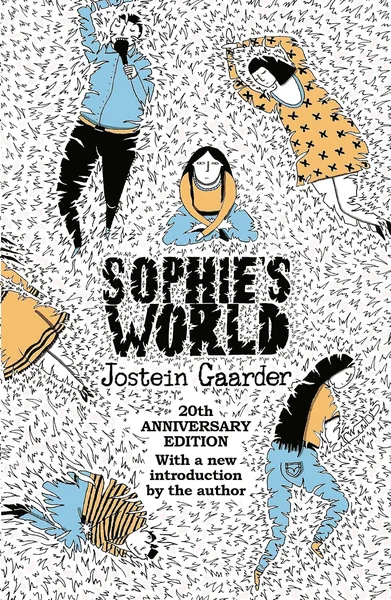
Gaarder's genius lies in his dual narrative structure. Sophie's contemporary story unfolds alongside her correspondence with the enigmatic philosopher Alberto Knox, who becomes her guide through philosophical history. What begins as intellectual curiosity evolves into something far stranger—a metaphysical mystery that questions the nature of reality itself.
The philosophical education unfolds chronologically, from pre-Socratic thinkers to modern existentialists. Sophie encounters Plato's cave allegory through practical demonstrations, grapples with medieval scholasticism, and wrestles with Descartes' method of doubt. Each lesson builds naturally on the previous one, creating a coherent framework that makes intimidating concepts accessible to teenage minds.
Complex Ideas in Digestible Form
The novel's philosophical content never feels overwhelming because Gaarder presents ideas through dialogue, examples, and Sophie's genuine reactions. When exploring Berkeley's idealism—the notion that material objects exist only in our minds—Alberto doesn't lecture. Instead, he demonstrates through thought experiments that resonate with a curious teenager.
The writing remains engaging without sacrificing intellectual rigor. Readers don't need prior philosophical knowledge to follow Sophie's journey, yet the content satisfies those already familiar with these thinkers. Gaarder strikes this balance by focusing on core insights rather than academic minutiae, making philosophers like Spinoza and Hume feel like discoverable treasures rather than intimidating authorities.
Sophie and Her Philosophical Awakening
Sophie Amundsen emerges as more than a passive student—she becomes philosophy's ideal practitioner. Her genuine wonder at fundamental questions drives the narrative forward, while her occasional frustration mirrors what many readers experience when confronting challenging ideas. Sophie's character development parallels her philosophical growth, transforming from a typical teenager into someone who questions assumptions about existence, knowledge, and meaning.
Alberto Knox serves as the perfect philosophical mentor, patient yet provocative. His teaching method emphasizes critical thinking over memorization, encouraging Sophie to engage actively with ideas rather than simply absorb them. The dynamic between teacher and student creates authentic moments of discovery that make abstract concepts concrete.
Where Ancient Wisdom Meets Modern Confusion
The novel's thematic richness extends beyond philosophical education. Gaarder explores how philosophical thinking remains vital in our media-saturated age, where superficial entertainment often replaces deep reflection. Sophie's journey suggests that philosophy isn't academic luxury but essential equipment for navigating modern life's complexities.
The mystery elements serve philosophy rather than overshadowing it. As Sophie discovers unsettling truths about her own existence, readers confront fundamental questions about reality, consciousness, and identity. These revelations feel earned rather than gimmicky because they emerge organically from the philosophical groundwork Gaarder establishes.
Not Without Its Philosophical Limitations
The novel's ambitious scope creates inevitable weaknesses. Some philosophical traditions receive superficial treatment, particularly Eastern philosophy, which feels tokenistic compared to the thorough Western coverage. The pacing occasionally suffers when Gaarder prioritizes comprehensive coverage over narrative momentum, creating sections that feel more like disguised lectures than story.
The mystery plot's resolution, while clever, may frustrate readers seeking conventional closure. Gaarder's meta-fictional elements work better as philosophical demonstration than satisfying storytelling, leaving some narrative threads feeling incomplete rather than purposefully ambiguous.
Essential Reading for Curious Minds
Sophie's World succeeds brilliantly at its primary mission: making philosophy accessible to general readers, especially teenagers. Perfect for readers aged 14 and up, the novel provides solid foundation in Western philosophical thought while encouraging critical thinking about fundamental questions.
Parents considering this book for teens should know it handles mature themes thoughtfully without inappropriate content. The philosophical discussions of God, existence, and morality invite family conversations rather than controversial positions. The reading level suits advanced middle school through adult readers, though younger teens may need occasional guidance with complex passages.
For readers who enjoyed The Midnight Library or Siddhartha, Sophie's World offers similar existential exploration with more systematic philosophical grounding. It remains uniquely valuable in young adult literature—a novel that trusts teenage readers with serious ideas while never forgetting they're reading for enjoyment, not just education.