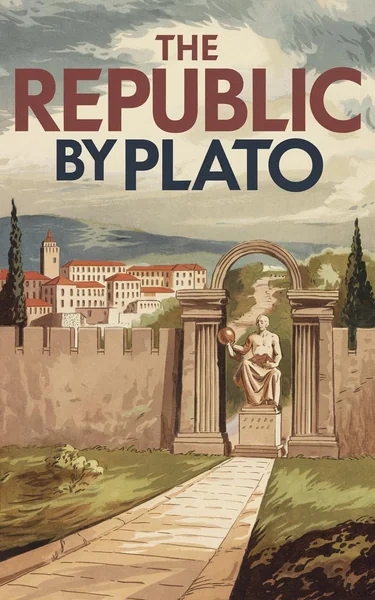
Is The Republic by Plato worth reading in our modern world? This ancient philosophical dialogue continues to challenge readers with questions about justice, government, and human nature that feel remarkably current. Plato's masterwork remains one of the most influential texts in Western philosophy, though its density and style can intimidate contemporary readers.
The Republic presents Plato's vision through conversations between Socrates and various Athenians, exploring what constitutes a just society and a just individual. While the philosophical arguments can be demanding, the core questions about power, morality, and governance resonate deeply in today's political climate. Readers approaching this text should prepare for rigorous intellectual engagement rather than light entertainment.
A Dialogue on Justice and Power
Plato structures his work as a series of conversations, with Socrates leading discussions about the nature of justice. The philosopher begins by examining justice in the individual soul, then expands to consider justice in the state. This approach allows Plato to explore fundamental questions about human nature, morality, and political organization through reasoned argument rather than abstract theorizing.
The famous allegory of the cave emerges from these discussions, illustrating Plato's theory of knowledge and reality. This powerful metaphor about prisoners chained in darkness, mistaking shadows for reality, has influenced countless thinkers and remains relevant for understanding media manipulation and political propaganda. The allegory demonstrates Plato's skill at making complex philosophical concepts accessible through vivid imagery.
The Philosopher-King Ideal
Central to The Republic is Plato's controversial proposal that philosopher-kings should rule society. He argues that only those who understand truth and justice can govern effectively, leading to his detailed description of an ideal state. This vision includes the famous three-class system of rulers, guardians, and producers, each fulfilling their natural role for societal harmony.
Modern readers often struggle with Plato's elitist implications and his dismissal of democracy as mob rule. His ideal state restricts individual freedoms in ways that feel authoritarian by contemporary standards. The proposal to separate children from parents and abolish private property among the ruling class strikes many as dystopian rather than utopian. These aspects make The Republic a challenging read that demands critical engagement rather than passive acceptance.
Enduring Philosophical Foundations
Despite its controversial elements, The Republic established philosophical frameworks that continue shaping Western thought. Plato's exploration of the relationship between knowledge and virtue, his theory of Forms, and his psychological insights about human motivation remain influential. The text's examination of how societies decline and transform offers valuable perspectives on political change and corruption.
The work's treatment of education, art, and censorship raises questions that persist in contemporary debates. Plato's arguments about the corrupting influence of certain forms of art and literature anticipate modern concerns about media influence and cultural values. His emphasis on education as the foundation of a just society resonates with ongoing discussions about educational policy and social reform.
Accessing Ancient Wisdom
Reading The Republic requires patience and active engagement. The dialogue format can feel repetitive, and Plato's arguments sometimes rely on assumptions that modern readers may not share. However, this challenge rewards careful readers with insights into fundamental questions about human nature and social organization that remain relevant across centuries.
The text works best when readers approach it as an intellectual exercise rather than a practical blueprint. Plato's proposals may seem impractical or objectionable, but his method of systematic questioning and logical analysis provides valuable tools for examining contemporary issues. The philosopher's willingness to follow arguments wherever they lead, even to uncomfortable conclusions, models intellectual honesty that benefits any serious thinker.
Who Should Tackle This Classic
The Republic appeals most to readers interested in foundational philosophical texts and those curious about the intellectual roots of Western political thought. Students of philosophy, political science, and classical studies will find essential concepts that appear throughout their fields of study. General readers seeking to understand references to Plato's cave or philosopher-kings in contemporary discussions will gain valuable context.
However, casual readers looking for light philosophical entertainment may find the text demanding. The Republic requires sustained attention and willingness to grapple with abstract concepts. Readers benefit from approaching it slowly, perhaps with study guides or supplementary materials that explain historical context and philosophical terminology. Those interested in ancient philosophy might also explore Meditations by Marcus Aurelius for a more accessible entry point to classical thought.
Where to Buy
You can find The Republic by Plato at Amazon, your local bookstore, or through various online retailers offering different translations and editions to suit your reading preferences.