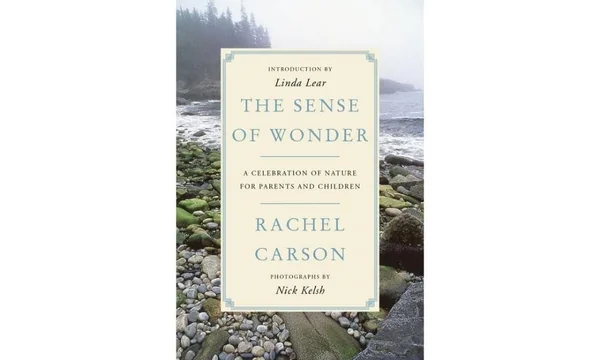
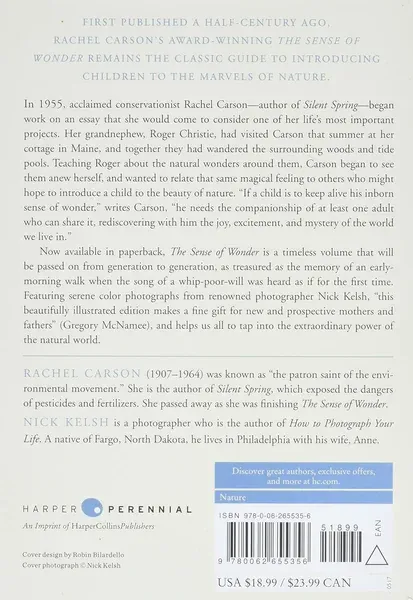
A Naturalist's Heart on Every Page
Carson's prose carries the same lyrical quality that made Silent Spring so compelling, but here she adopts a more intimate tone. Her writing moves between scientific observation and poetic reflection, creating passages that work equally well when read aloud to children or contemplated by adults during quiet moments.
The author's background as a marine biologist enriches every observation, yet she never lectures. Instead, she invites readers to see through a child's eyes—to find fascination in tide pools, wonder in weather patterns, and mystery in the simplest natural phenomena. Her narrative voice feels like a trusted friend sharing discoveries rather than an expert delivering instruction.
Carson structures her thoughts around seasonal experiences and different environments, from seashores to forests to night skies. Each section builds naturally on the previous one, creating a sense of deepening awareness rather than scattered observations.
Cultivating Wonder Without Overwhelming Facts
The book's central argument challenges conventional environmental education. Carson believes that developing emotional connections to nature comes before learning scientific names or ecological processes. She writes for parents who feel inadequate about their own nature knowledge, reassuring them that enthusiasm matters more than expertise.
This philosophy translates into practical suggestions that feel manageable for busy families. Carson recommends focusing on one small area—a single tree, a patch of yard, a nearby creek—rather than attempting comprehensive nature study. She emphasizes patience and observation over identification and categorization.
The environmental themes resonate differently now than when first published. Carson's call for wonder feels urgent in an era of climate anxiety and nature deficit disorder. Her gentle approach offers an alternative to overwhelming children with environmental problems before they've developed a love for what needs protecting.
Where Wonder Meets Reality
Carson's idealized vision of childhood nature experiences occasionally feels disconnected from contemporary family life. Her examples assume access to pristine natural settings and extended periods of unstructured outdoor time—luxuries not available to all families. Urban families, in particular, may struggle to apply her suggestions directly.
The book's brevity, while making it accessible, sometimes leaves readers wanting more concrete guidance. Parents seeking specific activities or age-appropriate explanations might find themselves needing additional resources. Carson paints beautiful pictures of wonder-filled moments but provides limited scaffolding for creating them.
Her focus on young children (roughly ages 4-10) may leave parents of older kids uncertain about adaptation. The book doesn't address how wonder-cultivation changes as children develop more analytical thinking or face peer pressure about "childish" nature interests.
Perfect for Thoughtful Families
The Sense of Wonder works best for parents who appreciate philosophical approaches to child-rearing and environmental stewardship. It suits families with some access to natural spaces, whether suburban yards, local parks, or weekend getaway destinations. The reading level makes it accessible to most adults, though the concepts work better with children who still embrace imagination and wonder naturally.
The book serves multiple audiences simultaneously. Parents find validation for slower-paced, observation-based outdoor time. Educators discover a framework for nature-based learning that prioritizes emotional engagement. Environmental advocates gain insights into fostering the next generation of nature lovers.
Carson's message feels especially valuable for families overwhelmed by competitive academic pressure or excessive scheduling. Her gentle reminder that wonder cannot be rushed offers permission to embrace slower, more contemplative approaches to both parenting and environmental education.
The bottom line: The Sense of Wonder succeeds as inspiration more than instruction manual. Carson's vision of childhood filled with natural discovery feels both timeless and increasingly necessary, even if modern families must adapt her ideas to contemporary constraints.