8 min read
4.8
· 20,265 Amazon ratingsShare This Review
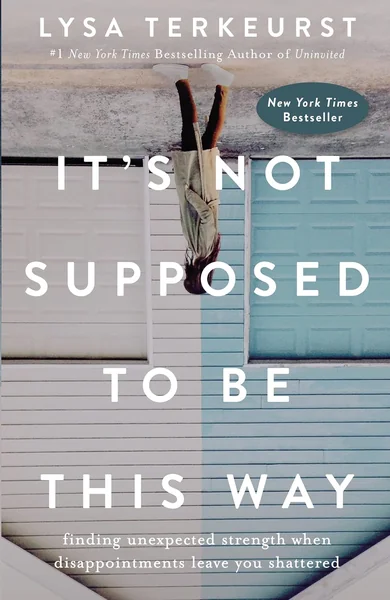
It's Not Supposed to Be This Way by Lysa TerKeurst Review: Raw, Scripture-Grounded Faith for the Shattered
Lysa TerKeurst's It's Not Supposed to Be This Way is a Christian nonfiction book published by Thomas Nelson in November 2018 that draws on TerKeurst's own experiences of her husband's infidelity and her battle with breast cancer to help readers reframe disappointment as a path toward deeper faith. A New York Times bestseller, the book is structured around Scripture, personal narrative, and chapter-ending reflection sections designed for both individual and group use.
 Tap to enlarge
LuvemBooks Verdict
Best for
Christian women — particularly those in the middle of acute crisis such as betrayal, illness, or unanswered prayer — who want a blend of raw personal memoir, Scripture-grounded guidance, and small-group-ready structure rather than a detached theological study.
Worth it if
You are a faith-rooted reader seeking not a tidy resolution to suffering but a reorientation within it, and you value an author who draws on her own still-unfolding wounds — infidelity and breast cancer — rather than polished hindsight.
Skip if
Readers outside a Christian framework, or those wanting a secular grief-and-resilience guide or a more systematically theological treatment, will find the book's entire architecture — its arguments, comfort, and calls to action — too foundationally Scripture-rooted to translate.
What readers & critics say
Publishers Weekly praised TerKeurst's "transparency, wit, and spiritual insight," calling the result a "skillfully crafted volume" that reads like "time spent in honest conversation with a trusted friend," and noted that her "breezy style allows for easy summations of her core points" despite the book's Scripture-heavy content. The book reached New York Times bestseller status, as confirmed across multiple sources including the publisher's own site and Wikipedia's entry on TerKeurst.
“TerKeurst's transparency, wit, and spiritual insight make this a skillfully crafted volume — like honest conversation with a trusted friend.”
— Publishers WeeklyAsk LuvemBooks
Was this helpful?
- Is it worth reading?
- For its intended audience — Christian readers, particularly women, navigating betrayal, illness, grief, or prayers that seem to go unanswered — It's Not Supposed to Be This Way offers something genuinely distinctive: TerKeurst's willingness to write from inside unresolved, ongoing pain rather than polished retrospection. Publishers Weekly praised her 'transparency, wit, and spiritual insight' and called it a 'skillfully crafted volume,' and its blend of memoir, Bible study, and discussion guide format gives it practical utility beyond a single read. Readers outside the Christian faith tradition, however, will find the book's framework — its arguments, its comfort, and its calls to action — entirely rooted in biblical Scripture in ways that are foundational, not incidental.
- Similar books
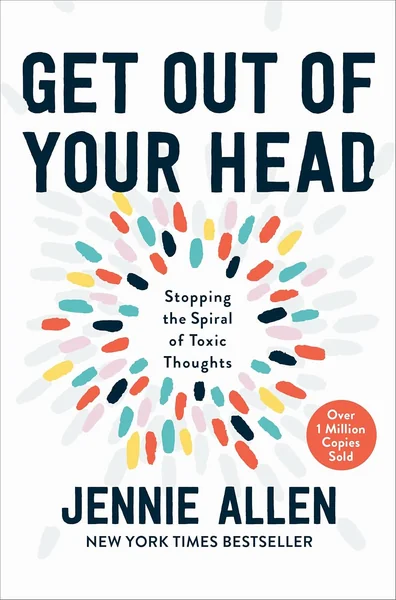
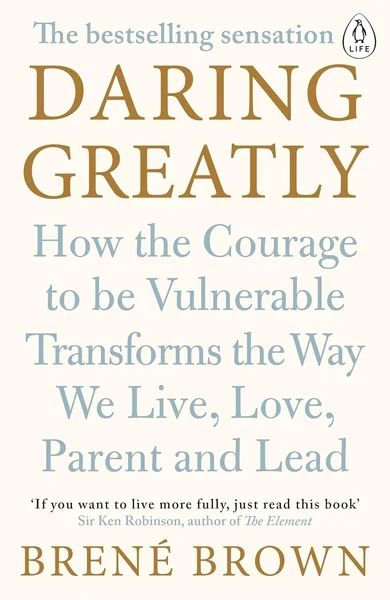
- Readers drawn to It's Not Supposed to Be This Way may also find value in Jennie Allen's Get Out of Your Head: Stopping the Spiral of Toxic Thoughts, which addresses the inner battle with destructive thought patterns from a similarly faith-grounded perspective. Brené Brown's Daring Greatly explores vulnerability and shame with the same unflinching personal honesty, though from a secular research basis rather than a Christian one. For readers drawn to the intersection of mindfulness and emotional struggle, The Mindful Way through Depression by Mark Williams, John Teasdale, Zindel Segal, and Jon Kabat-Zinn offers a clinically grounded companion. Lysa TerKeurst's own earlier book Uninvited addresses related themes of rejection and loneliness, and readers who know that work will find a consistent voice and deepened vulnerability here. Sue Monk Kidd's When the Heart Waits: Spiritual Direction for Life's Ordinary and Extraordinary Struggles is another spiritually oriented companion for readers navigating crisis and personal transformation.
- Who should read this?
- It's Not Supposed to Be This Way is designed primarily for Christian readers — particularly women — who are in the middle of circumstances that feel irreparable: betrayal, illness, grief, or the particular anguish of prayers that seem to go unanswered. Readers already familiar with TerKeurst's earlier work, especially Uninvited, will find a consistent voice and an expanded vulnerability. Its small-group-ready format also makes it well suited to church Bible study settings. It is not recommended for readers outside the Christian tradition or those seeking a systematic theological treatment rather than a narrative-driven, memoir-style approach.
- About Lysa TerKeurst
- Lysa TerKeurst is an American speaker and author of Christian non-fiction.
- How does this compare to Uninvited?
- Both It's Not Supposed to Be This Way and Uninvited share TerKeurst's accessible, Scripture-grounded voice and speak directly to women navigating painful emotional experiences. However, It's Not Supposed to Be This Way goes further in personal disclosure — at the time of writing, TerKeurst was actively recovering from a double mastectomy and working through her husband's infidelity, giving this book a rawer, more unresolved quality than a retrospective account might carry. Readers familiar with Uninvited will find a consistent voice here alongside what LuvemBooks describes as an expanded vulnerability.
- What are the main themes?
- The book's central themes are disappointment, suffering, and the crisis of faith that arises when life looks nothing like what was hoped or prayed for. TerKeurst tackles the tension between faith and feelings head-on, arguing that unanswered prayers and betrayal by people one depends on are not evidence of God's absence but can be seasons that draw a person closer to Him. Secondary themes include the experience of illness and bodily vulnerability (TerKeurst's own breast cancer and double mastectomy), marital betrayal, and the particular anguish of feeling that God is distant or silent.
- Where should I start with Lysa TerKeurst?
- Of the two TerKeurst books LuvemBooks has reviewed, the best starting point depends on what a reader is looking for. It's Not Supposed to Be This Way is the more emotionally raw and theologically focused of the two, tackling suffering, betrayal, and crisis of faith directly. I'll Start Again Monday addresses a different subject area entirely. Readers drawn to TerKeurst's voice around personal pain and spiritual reorientation will find It's Not Supposed to Be This Way the more directly relevant entry point.
Summarize this book
Follow up
Synthesized from verified book data & published reviews · How we review
Press Enter to ask. Answers come from our editorial Q&A — start typing to see related questions.
Age & Reading Level
Recommended age
Adult
Reading level
Adult
2 content notes · who it suits
Content to know about
Skip if you're looking for a secular grief or resilience guide with no religious framework
Our Review
What the Book Is and What It Argues

Significance and Place in the Genre
Strengths: Voice, Structure, and Pastoral Design
Limitations and Who May Struggle With It
Who This Book Is For
Sources & Further Reading
The key facts and claims in this review are grounded in the retrieved, verified sources listed below.
- Cited in this review
- 1
itsnotsupposedtobethisway.com
- 2
- 3
p31bookstore.com
- Further reading
- 4
Lysa TerKeurst, Wikipedia
- 5
- 6
- 7
- 8
- 9
thebookielooker.com
- 10
newbookrecommendation.com
- 11
Books like It's Not Supposed to Be This Way
Curated picks for readers who enjoyed It's Not Supposed to Be This Way, with our reasoning for each match.
If you liked It's Not Supposed to Be This Way