
BOOKS
Published
Read Time
6 min read
Our Rating
4.2
A foundational philosophical masterwork that revolutionized epistemology, but extremely challenging for beginners and requiring advanced philosophical background to fully appreciate.
Reviewed by
LuvemBooks
Share This Review
Critique of Pure Reason by Immanuel Kant Review
Our Rating
4.2
A foundational philosophical masterwork that revolutionized epistemology, but extremely challenging for beginners and requiring advanced philosophical background to fully appreciate.
In This Review
- What Works & What Doesn't
- Critique of Pure Reason by Immanuel Kant
- The Philosophical Revolution Inside
- Prose That Punishes
- Wrestling With Abstract Concepts
- Where Brilliance Meets Brutality
- Our Take
What Works & What Doesn't
What Works
- Revolutionizes understanding of knowledge and reality
- Systematic and thorough philosophical methodology
- Profound influence on subsequent philosophy and science
- Penguin Classics edition provides helpful scholarly apparatus
- Addresses fundamental questions about human cognition
What Doesn't
- Extremely difficult prose style with complex sentence structure
- Heavy use of technical terminology without clear definitions
- Nearly impenetrable for readers without philosophical background
- Abstract concepts lack concrete illustrations
- Requires enormous time commitment for comprehension
Critique of Pure Reason by Immanuel Kant
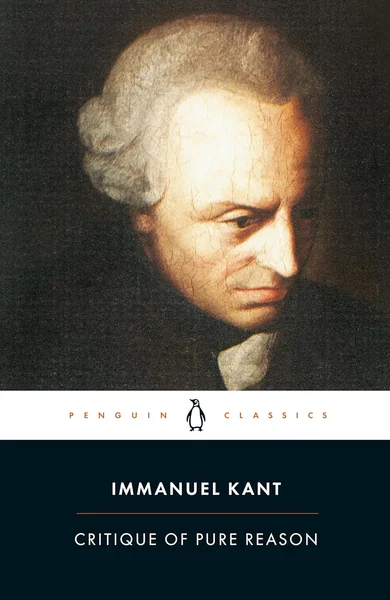
Kant's Critique of Pure Reason stands as one of philosophy's most formidable mountains. Is Critique of Pure Reason worth reading for beginners? The honest answer requires examining what you're signing up for. This isn't merely a challenging book—it's a systematic dismantling and reconstruction of how we understand knowledge itself. The Penguin Classics edition, with its scholarly apparatus, doesn't make Kant's dense prose any more digestible, but it does provide essential context for navigating his revolutionary ideas.
Unlike accessible philosophy works such as Sophie's World or The Philosophy Book, Kant's first Critique demands sustained intellectual effort that can overwhelm even dedicated readers. The German philosopher spent over a decade developing his transcendental idealism, and he expects readers to follow his methodical reasoning through every twist.
The Philosophical Revolution Inside
Kant's central project involves nothing less than determining the limits and scope of human reason. He argues that our minds actively structure experience rather than passively receiving it. This groundbreaking insight emerged from Kant's attempt to resolve the debate between rationalists like Descartes and empiricists like Hume.
The work divides into two main sections: the Transcendental Aesthetic examines space and time as pure forms of intuition, while the Transcendental Logic investigates concepts and principles of understanding. Kant introduces synthetic a priori judgments—knowledge that is both informative about the world and knowable independently of experience. Mathematics serves as his prime example: geometric truths tell us about spatial relationships yet don't depend on empirical observation.
The revolutionary claim that we can never know things as they exist independently of our cognitive apparatus (things-in-themselves) fundamentally changed philosophy's trajectory. This limitation of knowledge paradoxically establishes secure foundations for scientific knowledge within the bounds of possible experience.
Prose That Punishes
Kant's writing style presents the book's greatest barrier. His sentences stretch across multiple clauses, packed with technical terminology he introduces without always defining clearly. The philosopher acknowledged his prose difficulties, noting in the preface that he prioritized systematic completeness over literary elegance.
The density reaches punishing levels when Kant explores the relationship between intuitions, concepts, and judgments. He creates elaborate architectural metaphors—transcendental logic as a "building," pure concepts as "ground floor"—that can confuse rather than clarify. The infamous "Transcendental Deduction" section, where Kant explains how pure concepts of understanding apply to objects of experience, has challenged readers for over two centuries.
This Penguin Classics edition includes helpful footnotes and a substantial introduction, but these aids cannot transform Kant's systematic methodology into casual reading. Each paragraph builds on previous arguments in ways that make skipping ahead counterproductive.
Wrestling With Abstract Concepts
The Critique demands engagement with concepts that have no direct empirical referents. Transcendental unity of apperception, schematism of pure concepts, and antinomies of pure reason aren't just difficult terms—they represent Kant's attempts to map the mind's fundamental structures.
For readers accustomed to concrete examples, Kant's abstract approach proves frustrating. He rarely provides extended illustrations of his points, instead building arguments through logical analysis. When he does offer examples—his famous "7 + 5 = 12" discussion or the "all bodies are extended" analysis—they serve primarily to demonstrate logical relationships rather than make concepts intuitive.
The four antinomies section, where Kant shows how pure reason falls into contradictions when applied beyond experience, showcases both his systematic genius and the work's intimidating scope. These demonstrations of reason's limits require following complex arguments about infinity, causation, and necessity that span dozens of pages.
Where Brilliance Meets Brutality
The Critique's intellectual achievements are undeniable, but its accessibility problems are equally real. Kant successfully demonstrates that human knowledge has both greater security and stricter limits than previous philosophers recognized. His solution to skeptical challenges about causation and scientific knowledge remains influential across disciplines.
However, the learning curve approaches vertical for most readers. Philosophy professors often spend entire semesters working through sections that dedicated amateurs might struggle with for months. The work's systematic nature means that confusion in early sections compounds throughout, making recovery difficult without backtracking.
The translation quality in this Penguin edition, while scholarly, cannot eliminate the fundamental challenge that Kant's German philosophical vocabulary often lacks direct English equivalents. Terms like Anschauung (intuition) and Vorstellung (representation) carry conceptual weight that no translation fully captures.
Our Take
The Critique of Pure Reason is not recommended for philosophy beginners seeking an accessible introduction to Kant's thought. Readers interested in Kant would benefit more from starting with Groundwork for the Metaphysics of Morals or secondary sources like Kant: A Very Short Introduction before attempting this masterwork.
For advanced students and serious philosophers, the Critique remains essential reading that rewards careful study with profound insights into knowledge, reality, and human cognition. The intellectual satisfaction of understanding Kant's arguments justifies the considerable effort required, but only for readers committed to sustained philosophical work.
The bottom line: This is a book for advanced philosophy students, not curious beginners. Its historical importance and philosophical insights are matched by its formidable difficulty.