BOOKS
Published

Read Time

3 min read

Reader rating

4.7

· 441 Amazon ratings
reader ratings, not a LuvemBooks score
Curated & edited by

LuvemBooks Editorial

How we create our reviews →
Share This Review

A Founding Mother by Stephanie Dray & Laura Kamoie Review: Sweeping, Intimate Revolutionary-Era Historical Fiction

A Founding Mother is a sweeping historical fiction novel by Stephanie Dray and Laura Kamoie, published by William Morrow in 2026, that traces Abigail Adams's extraordinary life from her 1765 marriage to John Adams through five decades of revolution, nation-building, and personal sacrifice. Timed to the 250th anniversary of American independence, it is designed for readers who want an intimate, meticulously researched portrait of one of the republic's most consequential women — told from Abigail's own perspective, alongside the famous men who shaped the age.

LuvemBooks Verdict

Best for

Readers who love immersive, woman-centred biographical fiction set in the Revolutionary era — especially fans of Dray and Kamoie's earlier founding-era novels or comparable titles such as Becoming Lady Washington and The Hamilton Affair — who want a scholarly yet novelistic portrait of Abigail Adams across fifty years of American history.

Worth it if

Worth reading if you want a richly researched, first-person account of Abigail Adams that places her intellect and agency at the centre of the founding story, timed meaningfully to the 250th anniversary of American independence.

Skip if

Skip it if you prefer a tightly scoped narrative or a conventional biographical/political account of Abigail Adams rather than a sweeping, interior novelistic retelling spanning five decades and a vast cast of historical figures.

The Historical Novel Society named it an Editors' Choice, calling it "a stunning historical novel with modern-day implications," and praised how matching Abigail's character to the tumultuous years 1765–1818 yields a page-turning story full of famous names that "goes places many readers won't expect" (historicalnovelsociety.org). Crossroad Reviews described it as "a rich and vivid story with so much heart," highlighting Abigail as "sharp, fierce, and way ahead of her time," while The Gloss Book Club noted that the authors "deftly touch on" marriage, politics, slavery, and feminist themes in a novel that reads like "an exciting fictional tale of a colonial woman's strife in a changing world" (crossroadreviews.com; theglossbookclub.com).

Sources: Historical Novel Society, Crossroad Reviews, The Gloss Book Club, History Woman Perspective, Grateful Reader
4.7from 441 Amazon ratings— reader ratings, not a LuvemBooks score
In This Review
  • What Works & What Doesn't
  • What the Novel Is and What It Covers
  • Historical Context and Significance
  • Narrative Strengths and Craft
  • Who This Book Is For — and Where It Challenges
  • The Authors and Their Approach

What Works & What Doesn't

What Works
  • Co-author Laura Kamoie holds a doctorate in early American history from the College of William and Mary, lending the novel an unusually rigorous research foundation
  • Madeline Martin, a New York Times bestselling author, praised it as 'historical fiction at its absolute finest' for its vivid, meticulously researched portrait of Abigail Adams
  • Covers fifty years of American history — from colonial Massachusetts in 1765 through the early republic — with Abigail's perspective woven through both domestic life and major political events
  • Timed to the 250th anniversary of American independence, offering readers a woman-centered lens on the founding that complements the era's commemorative moment
  • Positioned as a companion to the authors' earlier founding-era biographical fiction, making it a natural next read for established fans of the genre
What Doesn't
  • The novel's fifty-year scope and large cast of historical figures — Hamilton, Jefferson, Franklin, and more — may be dense for readers less familiar with the founding era
  • Readers seeking a traditional political or biographical account of Abigail Adams rather than an interior, novelistic retelling may find the fictional framing at odds with their expectations
A sweeping work of historical fiction that places Abigail Adams at the center of the American founding, this novel arrives as a major entry in the genre of biographical Revolutionary-era fiction.

What the Novel Is and What It Covers

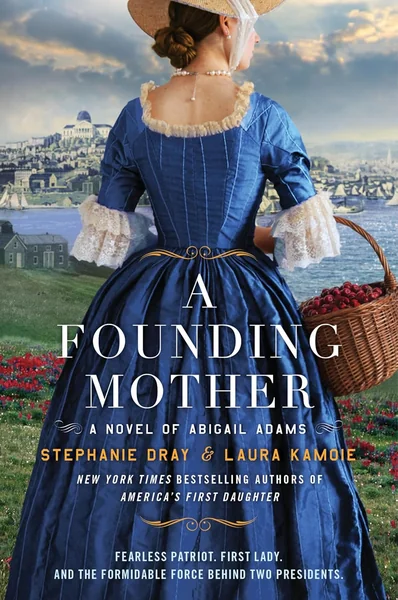
A Founding Mother: A Novel of Abigail Adams – A Historical Novel of the Woman Who Helped Shape America from the Shadows by Stephanie Dray, Laura Kamoie front cover
A Founding Mother, published by William Morrow in 2026, is a historical fiction novel co-authored by Stephanie Dray and Laura Kamoie that follows Abigail Adams from her marriage to John Adams in 1765 through roughly five decades of American history, ending in 1818. The story opens in the Massachusetts Bay Colony and moves across oceans and continents — into palaces, riots, and revolutions — charting Abigail's role as wife to the second President of the United States and mother to the sixth, John Quincy Adams. The novel is structured around Abigail's first-person vantage point, allowing readers to witness the political machinery of the founding era — the writing of the Declaration of Independence, the careers of Alexander Hamilton, Thomas Jefferson, and Benjamin Franklin — filtered through her uniquely sharp perspective. As the authors themselves have noted, readers may be surprised to discover that Abigail was often more radical than her husband on the great questions of the day.
wit, willpower and wisdom helped shape the fledgling republic

Historical Context and Significance

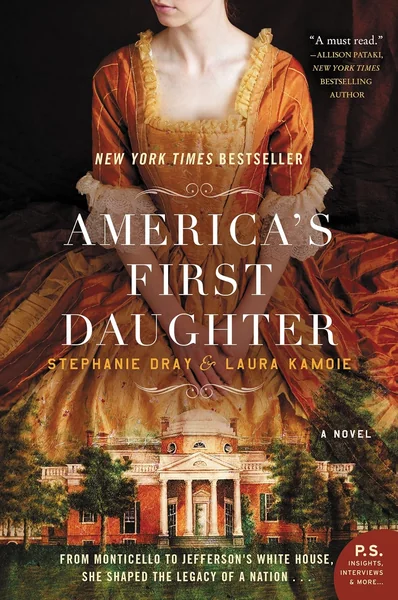
The novel is timed deliberately to the 250th anniversary of the July 4th signing of the Declaration of Independence, situating it as a commemorative work that aims to put a woman at the center of a story the national imagination has long organized around men. Laura Kamoie holds a doctoral degree in early American history from the College of William and Mary and has published two nonfiction books on early America, giving the collaboration a scholarly foundation uncommon in popular historical fiction. Dray and Kamoie have previously written biographical fiction about other founding-era women, and A Founding Mother represents their turn to arguably the most prominent figure in that tradition. The publisher's framing — "wit, willpower and wisdom helped shape the fledgling republic" — positions Abigail not as a supporting figure in her husband's story but as a shaping force in her own right.

Narrative Strengths and Craft

The novel's domestic and political threads are woven together throughout: as John travels the Colonies and Europe, Abigail manages children, a farm, and finances largely on her own, and those private struggles are presented alongside the grand public events of the age. The book gives readers direct access to Abigail's assessments of the famous men around her — her voice on Hamilton and Jefferson is rendered with pointed wit. Madeline Martin, a New York Times bestselling author, has called the novel "a vivid and meticulously researched portrayal of one of American history's most remarkable women," describing Dray and Kamoie's Abigail as "a fierce intellect" whose "courage, wisdom, and strength helped shape the nation," and declaring it "historical fiction at its absolute finest." The Historical Novel Society notes that matching Abigail's character with the tumultuous years between 1765 and 1818 yields a page-turning novel full of famous names and a story that "goes places many readers won't expect."

Who This Book Is For — and Where It Challenges

Readers drawn to immersive biographical fiction about founding-era women — particularly those who have enjoyed comparable titles such as Becoming Lady Washington, The Secret Wife of Aaron Burr, or The Hamilton Affair — are squarely in the target audience. The novel's scope is expansive: fifty years of marriage, multiple continents, and a cast that includes virtually every major figure of the American founding. Readers who prefer tightly contained narratives may find the breadth demanding, and those seeking a conventional political history will need to look elsewhere — this is, deliberately, Abigail's interior story as much as a chronicle of public events. Because the novel covers such a long span of American political life, readers less familiar with the founding era may find the density of historical figures and events a steep but rewarding climb.

The Authors and Their Approach

The co-authorship of Dray and Kamoie is itself a distinguishing feature of this book. Their collaboration combines Kamoie's academic grounding in early American history with a novelistic ambition to render Abigail Adams as a fully human protagonist rather than a historical footnote. The authors have spoken openly about their research, noting that Abigail admired many of the famous men she encountered even as she held clear-eyed, sometimes critical views of them — a nuance that separates this novel from hagiography. For readers coming to Abigail Adams primarily through popular culture touchstones, A Founding Mother offers a portrait grounded in primary sources and shaped by genuine scholarly investment in the period.

Sources & Further Reading

The key facts and claims in this review are grounded in the retrieved, verified sources listed below.

  1. Cited in this review
  2. 1
  3. 2
  4. Further reading
  5. 3

    Stephanie Dray, Laura Kamoie, Wikipedia

  6. 4
  7. 5
  8. 6
  9. 7
  10. 8