
8 min read
4.9
· 13,669 Amazon ratingsShare This Review
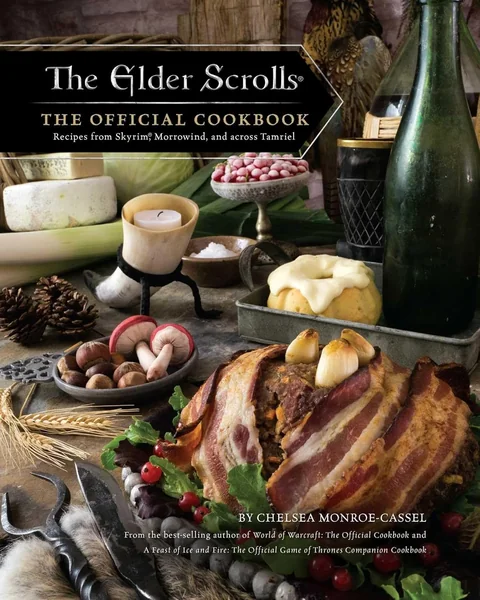
The Elder Scrolls: The Official Cookbook by Chelsea Monroe-Cassel Review: Fan-First Feast Through Tamriel
Chelsea Monroe-Cassel's The Elder Scrolls: The Official Cookbook translates over sixty in-game dishes from across the world of Tamriel — spanning Skyrim, Morrowind, and beyond — into real-world recipes for fans of the beloved video game franchise. Published by Insight Editions in March 2019, the cookbook is a confident piece of licensed fan merchandise from an author with deep experience in the video-game-cookbook niche. Publishers Weekly notes the book is "more gimmicky than go-to reference" but concedes it "will nevertheless inspire Elder Scrolls fans to create at least one feast" — a verdict that neatly frames both its appeal and its limits. This review assesses the book's content, organisation, and published reception from named sources, not a kitchen test.
LuvemBooks Verdict
Best for
Elder Scrolls fans who want to extend their connection to Tamriel into the kitchen — whether cooking for themselves, hosting a themed game night, or giving a gift to a fellow franchise devotee.
Worth it if
You have affection for the Elder Scrolls universe and want a full-meal cookbook — spanning appetisers, mains, desserts, and home-brewing — where the lore-soaked dish names and immersive difficulty indicators are part of the experience, not a distraction from it.
Skip if
Readers with no connection to the franchise who are seeking genuinely distinctive or challenging recipes will find the underlying dishes familiar and the book's primary appeal — its sense of in-universe place — largely invisible to them.
What readers & critics say
Publishers Weekly, the only trade review retrieved, frames the book as "the latest from Monroe-Cassel" and identifies the in-universe dish names as "the most inspired element in otherwise common recipes," characterising the volume as "more gimmicky than go-to reference." Fantasy Faction takes a warmer view, describing it as "a fun immersion into the games you hold dear" and suggesting it is enjoyable even for readers who have never played the series.
“The names of the dishes are the most inspired element in otherwise common recipes.”
— Publishers WeeklyIn This Review
- What Works & What Doesn't
- What the Book Contains and How It Is Structured
- Author Credentials and Place in the Genre
- Strengths: Immersion, Range, and Accessibility
- Limitations: Fan Souvenir More Than Culinary Reference
- Who This Book Is For
What Works & What Doesn't
What Works
- Covers over sixty recipes spanning appetisers, mains, desserts, and a drinks/mead-brewing section, offering a full-meal range for themed entertaining
- Each recipe carries a video-game-style numerical difficulty indicator, making the skill level immediately legible for cooks of all experience levels
- Chelsea Monroe-Cassel brings proven experience in officially licensed game-franchise cookbooks, including the New York Times bestselling A Feast of Ice and Fire
- In-universe dish names — from Baked Ash Yams to Seared Nordic Barnacles — create strong immersive appeal for Elder Scrolls fans, per Publishers Weekly
- Collider called it a must-own for fans of the Elder Scrolls franchise regardless of cooking level, pointing to its broad accessibility within its target audience
What Doesn't
- Publishers Weekly characterises the underlying recipes as 'otherwise common,' with the creative naming doing more work than the culinary content itself
- Described by Publishers Weekly as 'more gimmicky than go-to reference,' limiting its appeal as a standalone cookbook for readers without ties to the franchise
What the Book Contains and How It Is Structured
Author Credentials and Place in the Genre
Strengths: Immersion, Range, and Accessibility
Limitations: Fan Souvenir More Than Culinary Reference
Who This Book Is For
Frequently Asked Questions
Sources & Further Reading
The key facts and claims in this review are grounded in the retrieved, verified sources listed below.
- Cited in this review
- 1
barnesandnoble.com
- 2
fantasy-faction.com
- 3
publishersweekly.com
- Further reading
- 4
Related Reviews
Reviews of books we picked for readers who enjoyed The Elder Scrolls.
Reader Comments
No comments yet
Be the first to share your thoughts!