BOOKS
Published

Read Time

4 min read

Curated & edited by

LuvemBooks Editorial

How we create our reviews →
Share This Review

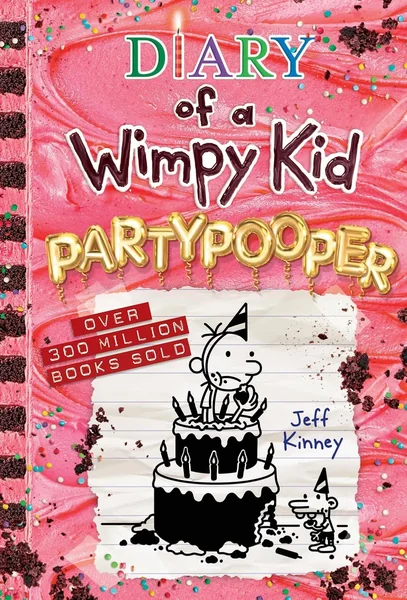
Partypooper (Diary of a Wimpy Kid Book #20) by Jeff Kinney Review: A Chaotic Birthday Bash Worth Celebrating

Partypooper is the twentieth entry in Jeff Kinney's long-running Diary of a Wimpy Kid series, published by Amulet/Abrams on October 21, 2025. In it, Greg Heffley's family forgets his birthday entirely — a mishap that goes viral on social media — setting off a chain of escalating chaos involving a doomed "blowout" party, a hunt for a rare misprinted MicroCreatures trading card, and an unlikely new side hustle. Kirkus Reviews calls it "a festive frolic" and praises Kinney's "rich mixture of deadpan monologue and cartoons laden with gags and punchlines."

LuvemBooks Verdict

Best for

Children aged eight to twelve who already know and love Greg Heffley's self-serving logic and spectacular bad luck, and who want a funny, fast-moving entry that skewers social-media pile-ons and trading-card mania alongside the usual birthday-party chaos.

Worth it if

You're a confirmed Diary of a Wimpy Kid fan — or a parent or educator hunting a guaranteed crowd-pleaser in the graphic/fiction hybrid format — and you want more of the series' proven formula delivered with the same unified comic voice Kinney brings as both writer and illustrator.

Skip if

Older readers who have followed all twenty books and are hoping for narrative evolution or a tonal shift will find little here that breaks from the established template, and those new to the series are better served starting at the beginning.

What readers & critics say

Kirkus Reviews (October 2025) praises the book's "rich mixture of deadpan monologue and cartoons laden with gags and punchlines," singling out its ability to make readers wince and laugh simultaneously and crediting the loopy resolution as a characteristically warm landing. NPR's Book of the Day featured Jeff Kinney in conversation about the series milestone and the inspiration behind Greg Heffley, underscoring the cultural weight the franchise carries at twenty installments.

This incident is neither the first nor the last time that Greg's narrative will have readers wincing and laughing at the same time.

Kirkus Reviews

Kinney's Diary of a Wimpy Kid series has sold more than 300 million books since the first installment was published in 2007.

NPR
Sources: Kirkus Reviews, NPR, Penguin NZ / Reading Time
4.7from 8,699 Amazon ratings— reader ratings, not a LuvemBooks score

Look inside the book

Preview the actual pages, via Google Books
In This Review
  • What Works & What Doesn't
  • What the Book Is and What Happens
  • Significance and Place in the Series
  • What the Book Does Well
  • Genuine Limitations
  • Who This Book Is For

What Works & What Doesn't

What Works
  • Kirkus Reviews praises a 'rich mixture of deadpan monologue and cartoons laden with gags and punchlines,' sustaining the series' signature simultaneous-wince-and-laugh comedy
  • Two distinct satirical subplots — social-media pile-ons and trading-card mania — give the humor range beyond the central birthday disaster
  • Greg's arc resolves with genuine ingenuity (the party-hosting side hustle) rather than pure defeat, lending the book more payoff than a simple fail-cascade
  • Written and illustrated by Jeff Kinney himself, keeping a unified comic voice across both text and cartoon throughout
  • Marks the series' twentieth book with a milestone-aware cover design, rewarding longtime fans with a sense of occasion
What Doesn't
  • The structural formula — grand plan, compounding disasters, Greg-engineered silver lining — is nearly identical to prior entries, offering little surprise to readers who have followed all twenty books
  • Pitched firmly at ages eight to twelve, so older readers who grew up with the earlier installments may find the humor and stakes calibrated younger than their current reading level
Partypooper delivers exactly what twenty books of practice have sharpened Jeff Kinney to do: turn everyday middle-school humiliation into slapstick gold.

What the Book Is and What Happens

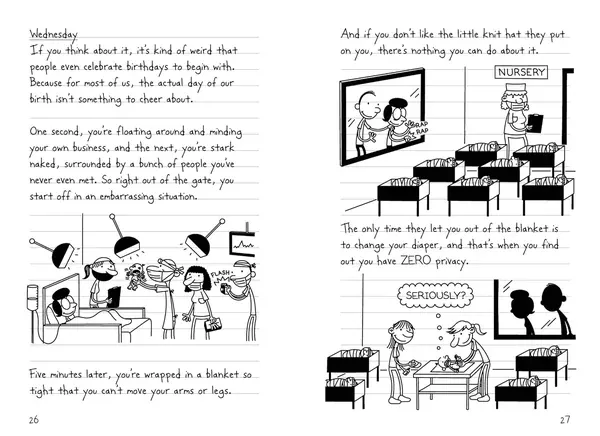
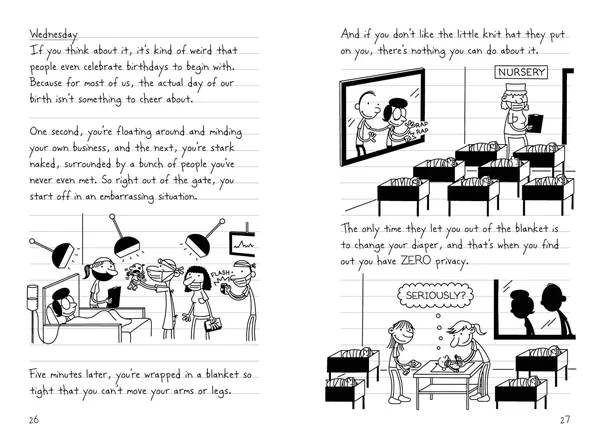
Interior spread showing humorous illustrations of birthday party mishaps and nursery room chaos with accompanying text.
Partypooper centers on Greg Heffley's birthday — specifically, the catastrophic fact that his entire family forgets it. Greg had assumed the pie-baking contest his mother was attending on his birthday was a cover for a surprise party; arriving at the contest, he discovers it is entirely real. The incident goes viral, public shame guilts his parents — particularly his mother, Susan — into organizing a "blowout" do-over party, and Greg, ever the schemer, sets about inviting as many guests as possible to maximize his haul of gifts. Running alongside the birthday plot is a trading-card subplot: Greg learns that a rare misprinted MicroCreatures card — a three-eyed "Theeble," which is the series' parody of a Pokémon — has been shipped near his home. He abandons a comic-book shopping trip with his father Frank to chase it, even as an online group called the three-eyed Theeble hunters pursues the same prize. The party ends in disaster (a deer in the neighbor's unmowed grass plays an unwelcome role), the trading card turns out to have been drawn by Greg's younger brother Manny and is eventually rendered worthless by mass production — and yet Greg lands on his feet, parlaying his notoriously chaotic party into a birthday-party-hosting side hustle with his best friend Rowley.

Significance and Place in the Series

Reaching a twentieth installment in any children's series is a genuine milestone, and Kinney marks it with a cover design Wikipedia notes was specifically conceived as a celebration of the achievement. Partypooper is the direct sequel to Diary of a Wimpy Kid: Hot Mess and arrives as book twenty of twenty-one in the series to date. The Diary of a Wimpy Kid franchise is a genuinely global phenomenon — a fact Barnes & Noble's product copy underscores in calling it a "global smash-hit series" — and Partypooper lands with all the built-in cultural weight that two decades of Greg Heffley's misadventures have accumulated. For longtime readers, the book's subplots — skewering social-media pile-ons and the mania around collectible trading cards — show Kinney updating the series' targets to reflect the specific anxieties of its current young readership.
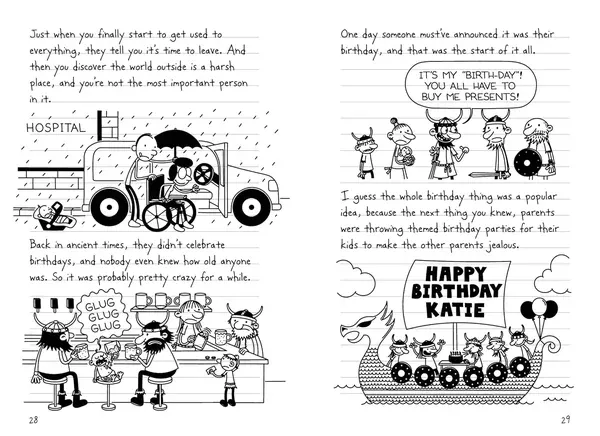
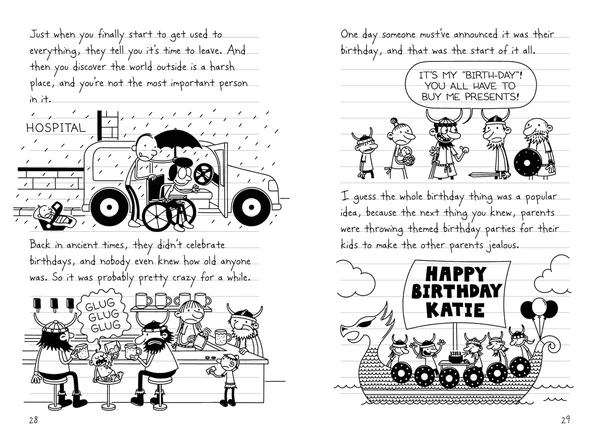
Interior spread showing illustrated scenes of birthday celebrations across different time periods, from casual gatherings to elaborate themed parties.

What the Book Does Well

Kirkus Reviews, in its October 2025 assessment, singles out Kinney's ability to generate simultaneous wincing and laughter — a balance that has defined the series from its earliest entries and that Partypooper sustains in full. The review specifically praises "a rich mixture of deadpan monologue and cartoons laden with gags and punchlines," crediting the book's graphic/fiction hybrid form as integral to its comedy. The trading-card subplot and the social-media storyline give the book two distinct satirical targets beyond the central birthday fiasco, so the humor never relies on a single gag. Kirkus also highlights Greg's closing philosophical shrug — "Sometimes you just gotta roll with it" — as evidence that the book lands its ending with more warmth than sourness, despite the cascade of disasters that precede it. Written and illustrated by Kinney himself, the book keeps its creative voice unified across both text and image.

Genuine Limitations

The series' formula is, by design, highly consistent — which is both its strength and the source of its most common criticism. Readers who have followed Greg Heffley across nineteen previous volumes will recognize the structural rhythm of Partypooper immediately: an ambitious plan, a spiral of complications, a chaotic collapse, and a Greg-engineered silver lining. Kirkus notes the resolution — other parents seeking to replicate Greg's notoriously disastrous party — as a characteristically loopy turn, but readers specifically hoping for narrative evolution or tonal departure from the established Wimpy Kid template are unlikely to find it here. The book is pitched squarely at ages eight to twelve (Kirkus's designation) and at grades three through seven (per the publisher), meaning older teens who aged into the series in its earlier years may find the humor and stakes calibrated for a younger audience than themselves.

Who This Book Is For

Partypooper is designed for the same readership that has made every prior Diary of a Wimpy Kid installment a fixture of middle-grade shelves: children roughly eight to twelve years old who respond to Greg's particular brand of self-serving logic and spectacular bad luck. For that audience, and for parents or educators looking for a guaranteed crowd-pleaser in the graphic/fiction hybrid format, this entry delivers on the series' established promise. Readers who enjoy satirical takes on social media culture and collector-item obsessions will find those threads woven into the familiar Heffley chaos. Fans collecting the full series have an obvious reason to add it; those new to Wimpy Kid would be better served starting at the beginning, but Partypooper is built to be accessible to anyone who knows Greg's world even loosely.

Sources & Further Reading

The key facts and claims in this review are grounded in the retrieved, verified sources listed below.

  1. Cited in this review
  2. 1
  3. 2
  4. 3
  5. Further reading
  6. 4
    Jeff Kinney — author profileHigh-authority source

    Jeff Kinney, Wikipedia

  7. 5
  8. 6
  9. 7
  10. 8
  11. 9
  12. 10
  13. 11
  14. 12