

Updated September 26, 2026
PISA 2025 Data Confirms Girls Outscore Boys in Reading Across 89 of 90 Systems
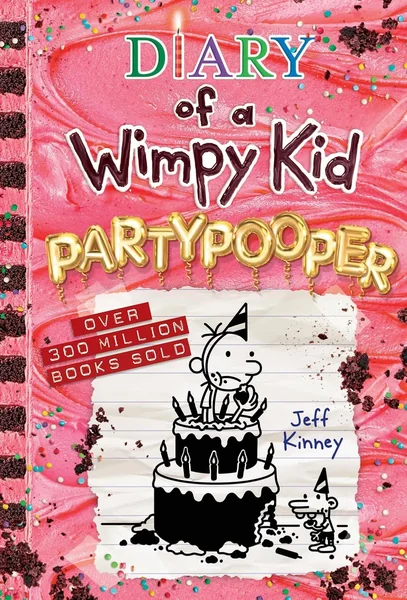
See all 2 updates ↓A new UK study has found that teenage boys aged 11 to 14 are overwhelmingly reading the same books they first picked up in primary school — and one series sits at the centre of the debate. According to a piece published by The Guardian on June 26, 2026, eight of the ten most-read titles among boys in that age group are Diary of a Wimpy Kid books, raising urgent questions about whether the series — now twenty instalments deep with Partypooper — is serving as a ladder into more complex reading or, as critics argue, a comfortable plateau boys are reluctant to leave.
The study's findings land at a charged moment in the ongoing conversation about children's literacy. The Guardian report notes a pronounced gender split: while boys in the 11–14 bracket cluster tightly around Jeff Kinney's series, girls the same age move on to a noticeably wider range of novels.
That divergence is significant not just as a reading statistic but as a potential indicator of longer-term engagement with books and language — a gap that educators and librarians have been flagging with increasing urgency.
Partypooper and the Question of a 20-Book Series That Won't Let Go
Partypooper, the twentieth book in Jeff Kinney's globally popular Diary of a Wimpy Kid series, arrived in October 2025. It is, by design, exactly what it has always been: a fast-paced, gag-driven story — this time centring on Greg Heffley's birthday chaos and a social-media spiral — aimed at readers aged nine and up.
The formula has remained almost deliberately unchanged across two decades, which is precisely what makes the study's findings so pointed. BookTrust acknowledges the magnetic pull of the series directly, noting that children can get "hooked" on a favourite series and struggle to find something they love as much — a dynamic that arguably describes exactly what the new data is measuring in teenage boys.
The debate is not new, but it has sharpened considerably. A recent New Yorker piece — published roughly three weeks before The Guardian's report — examined what critics have called book-shaming: the practice of discouraging children from reading series like Diary of a Wimpy Kid on the grounds that they are insufficiently literary.
Jeff Kinney himself addressed this tension at a bookstore appearance in May 2026, pushing back against the idea that his books represent a ceiling. His argument — that any reading is better than no reading, and that reluctant readers need entry points, not gatekeeping — is one that many literacy advocates share.
The counter-argument, now given statistical weight by the UK study, is that a bridge only works if readers eventually cross it.
What the Boy-Girl Reading Gap Tells Us About Literacy Intervention
The gender dimension of the study is arguably its most consequential finding. If girls aged 11–14 are demonstrably moving toward a broader reading diet while boys remain anchored to a single series, the policy question shifts from 'is Wimpy Kid too easy?' to 'what are we failing to offer boys that would give them the same appetite for variety?'
That is a harder problem, and one that cannot be laid at Jeff Kinney's door. The Diary of a Wimpy Kid books did not create the boy-reading gap; they are, at most, a symptom of it — and possibly, depending on who you ask, one of the few reliable treatments.
The practical implication for parents, teachers, and librarians is less about steering boys away from Greg Heffley and more about actively building bridges to what comes next. Books like Tom's Midnight Garden by Philippa Pearce or The Bed and Breakfast Star by Jacqueline Wilson represent the kind of emotionally richer, more varied fiction that sits just beyond the Wimpy Kid comfort zone — accessible in voice but more demanding in what they ask of a reader.
The challenge, as the study implicitly frames it, is making that next step feel like a natural progression rather than a rebuke.
For a closer look at whether Partypooper itself holds up as the series reaches its twentieth instalment, read our full review of Partypooper at LuvemBooks, and if you want context on where it all began, our review of the original Diary of a Wimpy Kid traces the series from its deceptively simple start.
Story updates
We track this developing story and add verified developments as they happen. Originally published July 17, 2026.
PISA 2025 Data Confirms Girls Outscore Boys in Reading Across 89 of 90 Systems
New PISA 2025 results show that girls outperform boys in reading in 89 of 90 education systems assessed, with reading performance — defined as how well students understand, evaluate, use, and reflect on written text — recording the steepest overall decline among all subjects measured. Separately, a Boston Globe report dated September 15, 2026 found that teens' widespread reluctance to read has prompted teachers across the United States to reduce full-length book assignments and cut back on literature discussion.
Atlantic Magazine Frames Boys' Reading Gap in Broader Literacy Crisis
The Atlantic's August 2026 print edition published a major feature arguing that the age of reading itself may be "a short anomaly in human history," with the New York Public Library's chief librarian Brian Bannon cited on the declining role of young-adult fiction. The piece broadens the conversation around the boys' reading gap — already highlighted by the UK study — into a wider cultural warning about a post-literate age.
Frequently Asked Questions
Is Partypooper (Diary of a Wimpy Kid Book #20) worth buying in 2026?
Partypooper delivers the same fast-paced, gag-driven formula that has made the series a global phenomenon across twenty instalments. Whether it's worth buying depends largely on your reader: devoted Wimpy Kid fans will find it exactly what they expect, while the broader debate in 2026 centres on whether boys aged 11–14 should also be encouraged to explore beyond it. Check our full review for a detailed verdict.
Why are teenage boys still reading Diary of a Wimpy Kid books at age 14?
A UK study reported by The Guardian in June 2026 found that eight of the ten most-read titles among boys aged 11–14 are Diary of a Wimpy Kid books. Literacy experts suggest the series functions as a reliable comfort zone for reluctant readers, though debate continues over whether it acts as a bridge to more complex fiction or a plateau that some boys don't move beyond.
Who should read Partypooper by Jeff Kinney?
Partypooper is aimed at readers aged nine and up, and it will appeal most strongly to existing fans of the Diary of a Wimpy Kid series who want more of Greg Heffley's chaotic humour. It is a strong pick for younger reluctant readers, though educators and parents of teenagers may want to pair it with other titles to encourage a broader reading diet.
Is the Diary of a Wimpy Kid series bad for children's reading development?
This is actively debated. Jeff Kinney and many literacy advocates argue the series is a vital entry point for reluctant readers, particularly boys. Critics, citing studies like the UK research reported by The Guardian in June 2026, worry that boys aged 11–14 are not progressing to more varied or challenging fiction. The emerging consensus is less about the books themselves and more about actively building pathways to what comes next.
What is Partypooper (Diary of a Wimpy Kid Book #20) about?
Partypooper is the twentieth instalment in Jeff Kinney's Diary of a Wimpy Kid series, published in October 2025. It follows Greg Heffley as his birthday spirals from a forgotten occasion into an over-planned party, a social-media shaming incident involving his parents, and an unlikely side hustle with best friend Rowley — all handled in the series' signature cartoon-diary format.
What books should boys read after Diary of a Wimpy Kid?
Literacy advocates often recommend moving toward books that share Wimpy Kid's accessible voice but demand slightly more from the reader emotionally or narratively. Titles like Tom's Midnight Garden by Philippa Pearce and The Bed and Breakfast Star by Jacqueline Wilson are frequently cited as natural next steps that retain humour and relatability while broadening a young reader's range.
No Discussion Yet
Be the first to share your thoughts on this news article.