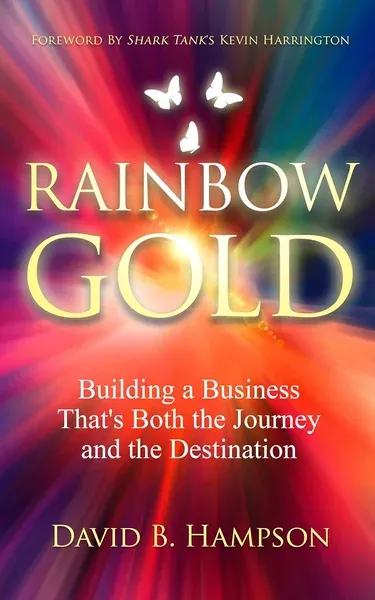
Is Rainbow Gold worth reading for the ambitious professional? David Hampson's exploration of entrepreneurship challenges the traditional binary between building wealth and finding meaning. Rather than treating business success as a destination to reach, Hampson argues for an integrated approach where the process of building becomes as valuable as the eventual outcomes. This perspective positions the book among must read books for men seeking both professional achievement and personal fulfillment.
The timing feels particularly relevant as more business leaders question the sustainability of purely profit-driven models. Where books like Good to Great focus on operational excellence and The Lean Startup emphasizes rapid iteration, Hampson takes a more philosophical approach to entrepreneurship. His central thesis suggests that businesses built with intentional values and mindful practices create more resilient organizations while providing deeper satisfaction for their founders.
The Philosophy Behind Rainbow Gold
Hampson structures his argument around the metaphor of rainbow gold—the idea that true business value emerges not from a single precious metal but from a spectrum of meaningful elements working in harmony. This framework moves beyond traditional metrics of success to encompass employee satisfaction, community impact, and the entrepreneur's own sense of purpose.
The author draws from both Eastern philosophy and Western business practices, creating a synthesis that feels neither forced nor superficial. His discussion of mindful leadership incorporates practical decision-making frameworks alongside contemplative practices. For professionals accustomed to purely analytical approaches, this integration of introspection with strategy may initially feel unfamiliar, but Hampson makes a compelling case for its necessity.
The book's core strength lies in its rejection of the common entrepreneurial narrative that glorifies sacrifice and delayed gratification. Instead, Hampson advocates for business models that sustain rather than drain their creators, arguing that burnout-driven success ultimately proves both unsustainable and unfulfilling.
Practical Applications and Frameworks
Despite its philosophical foundation, Rainbow Gold provides concrete tools for implementing its principles. Hampson introduces assessment frameworks for evaluating business decisions through multiple lenses—financial viability, personal alignment, team impact, and long-term sustainability. These tools avoid the abstract nature that often limits business philosophy books.
The author's discussion of team building emphasizes psychological safety and shared values over traditional performance metrics. His approach to hiring focuses on cultural fit and growth potential rather than purely technical qualifications. For leaders struggling with retention or team cohesion, these insights offer actionable strategies for building meaningful workplaces.
Hampson also addresses the practical challenges of maintaining principles under pressure. His chapter on difficult decisions provides case studies of companies that maintained their values during challenging periods, though some readers may find these examples somewhat idealized. The book would benefit from more discussion of the genuine trade-offs involved in purpose-driven business practices.
Where Philosophy Meets Reality
The book's treatment of financial success deserves careful consideration. Hampson doesn't dismiss profit motives but rather reframes them within a broader context of value creation. His argument that purpose-driven businesses often achieve superior long-term financial performance finds support in contemporary research, though he could strengthen this case with more rigorous data.
The main weakness emerges in Hampson's occasionally romanticized view of entrepreneurship. His examples tend to feature companies that found relatively smooth paths to integrating purpose with profit. Real-world entrepreneurs often face starker choices between ideals and survival, particularly in competitive markets or during economic downturns.
The author's writing style maintains accessibility while addressing complex topics, though some sections feel repetitive. His tendency to circle back to core themes works well for reinforcement but occasionally slows the book's momentum. Readers seeking dense, tactical content may find the pacing frustrating.
The Modern Business Landscape
Rainbow Gold arrives at a moment when many professionals question traditional definitions of business success. The book speaks particularly well to entrepreneurs and executives seeking greater meaning in their professional lives. Hampson's framework offers validation for leaders who instinctively resist purely profit-driven approaches while providing practical language for articulating alternative visions.
The book's emphasis on sustainable practices and stakeholder value aligns with broader shifts in business culture. However, Hampson could better address the real tensions between idealistic goals and market pressures. His discussion of investor relations, for instance, assumes a level of autonomy that many entrepreneurs don't possess.
For readers familiar with conscious capitalism or benefit corporation movements, some of Hampson's insights will feel familiar. The book's contribution lies less in revolutionary concepts than in its integration of philosophical reflection with practical business building.
A Different Kind of Business Guide
Rainbow Gold distinguishes itself from typical business books through its emphasis on the entrepreneur's internal journey alongside external achievement. This makes it particularly valuable for men seeking purpose in their professional lives, addressing the isolation and meaning crisis that often accompanies business success.
The book works best for readers already committed to values-driven approaches who seek frameworks for implementation. Those purely focused on growth hacking or operational efficiency may find Hampson's philosophical bent frustrating. The author assumes readers share his basic premise that business should serve broader purposes beyond wealth accumulation.
Hampson's integration of personal development with business strategy creates a holistic approach that many contemporary entrepreneurs crave. The bottom line: Rainbow Gold offers a thoughtful alternative to conventional business wisdom, though readers should approach it as philosophy enriched with practical insights rather than a tactical manual.
Where to Buy
You can find Rainbow Gold at Amazon, major bookstores, or directly from the publisher for those interested in exploring business as both journey and destination.