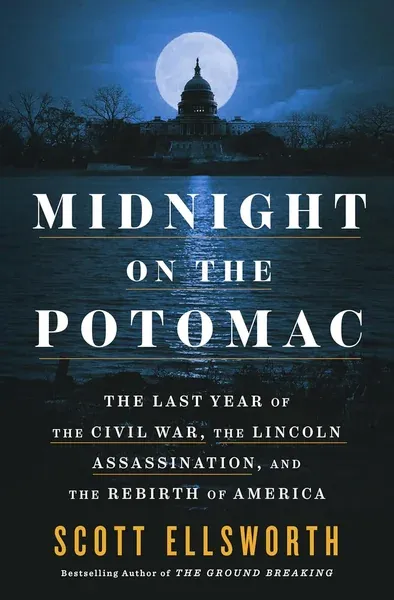
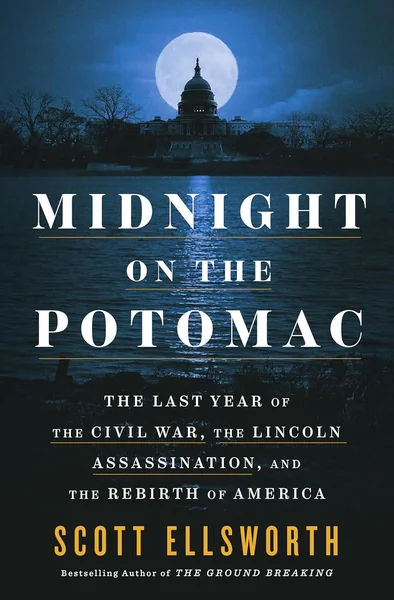
Is Midnight on the Potomac worth your time? In a crowded field of Civil War histories, Scott Ellsworth's latest work distinguishes itself by focusing intensely on the war's final twelve months—a period that witnessed not just military conclusion but profound national transformation. For readers seeking the best books about Civil War's final year, this 2025 release offers a compelling blend of military history, political intrigue, and social upheaval.
Ellsworth, known for his meticulous archival research, constructs a narrative that moves beyond familiar battlefield accounts to examine how a nation prepared to rebuild itself even as it tore itself apart. Unlike sweeping Civil War epics that span four years, Midnight on the Potomac zeroes in on the crucial months when Lincoln's vision for reconstruction took shape—and when that vision died with him at Ford's Theatre.
For history enthusiasts familiar with Team of Rivals by Doris Kearns Goodwin or Battle Cry of Freedom by James McPherson, Ellsworth's approach feels both intimate and expansive, capturing the human drama within larger historical forces.
The Final Act of America's Greatest Crisis
The book opens in early 1865 with Union forces closing in on Richmond while Lincoln grapples with reconstruction's complexities. Ellsworth skillfully weaves together multiple narrative threads: Grant's relentless military pressure, Lincoln's evolving thoughts on freed slaves' political rights, and the growing desperation of Confederate leadership.
What sets this apart from other Civil War histories is Ellsworth's attention to the political maneuvering happening simultaneously with military campaigns. He demonstrates how Lincoln's second inaugural address—with its famous "malice toward none" pledge—emerged from intense debates about punishment versus reconciliation. The author draws extensively from recently digitized correspondence to show Lincoln wrestling with questions that would define American democracy for generations.
The writing maintains scholarly rigor while remaining accessible to general readers. Ellsworth avoids the dry academic tone that can plague Civil War histories, instead crafting scenes that pulse with tension and uncertainty.
Meticulous Research Meets Compelling Storytelling
Ellsworth's research methodology deserves particular praise. He consulted over 200 manuscript collections, including previously overlooked correspondence from mid-level government officials who witnessed history unfold. This groundwork allows him to challenge several long-held assumptions about the period's key decisions.
The author's treatment of Lincoln's assassination stands out for its restraint. Rather than sensationalizing Booth's conspiracy, Ellsworth examines how the plot emerged from broader Confederate desperation and explores the attack's immediate political consequences. His analysis of how Lincoln's death altered reconstruction plans provides crucial context often missing from assassination narratives focused solely on the crime itself.
The book also benefits from Ellsworth's attention to primary sources from freed slaves and working-class whites, voices frequently marginalized in Civil War histories dominated by military and political elites. These perspectives illuminate how ordinary Americans experienced the war's final months and immediate aftermath.
Beyond Lincoln, Ellsworth brings several crucial historical figures into sharp focus. His portrayal of Andrew Johnson reveals a man unprepared for the presidency's demands, whose racial prejudices would soon derail Lincoln's reconstruction vision. Secretary of War Edwin Stanton emerges as a complex figure—simultaneously Lincoln's loyal ally and potential rival for controlling the Union's postwar direction.
The author also highlights lesser-known figures whose actions proved consequential. Frederick Douglass appears not just as an abolitionist icon but as a shrewd political strategist pushing Lincoln toward more radical positions on Black civil rights. Confederate General Joseph E. Johnston receives nuanced treatment as a professional soldier caught between military reality and political fantasy.
Ellsworth's character portraits avoid hagiography while maintaining respect for his subjects' complexity. He presents Lincoln as a masterful politician rather than a saint, showing how the president's pragmatic flexibility served the nation even when it frustrated allies and enemies alike.
Where History Meets Human Drama
The book's greatest strength lies in connecting grand historical movements to individual human experiences. Ellsworth describes how Washington's residents reacted to news of Richmond's fall, how freed slaves in Virginia received word of emancipation, and how Confederate families faced their world's collapse.
One particularly powerful section examines how Union soldiers processed their impending victory after four years of unprecedented carnage. Drawing from soldiers' letters and diaries, Ellsworth captures the mixture of relief, grief, and uncertainty that characterized the war's end for those who fought it.
The author's treatment of racial dynamics deserves special recognition. Rather than imposing contemporary perspectives, he carefully examines how different groups understood freedom, citizenship, and national identity in 1865. This approach illuminates why reconstruction's failures were neither inevitable nor accidental but resulted from specific political choices made during this crucial period.
Limitations and Critical Perspective
Despite its strengths, Midnight on the Potomac occasionally suffers from scope limitations. Ellsworth's focus on Washington and Virginia means Western theater developments receive less attention, creating an somewhat Eastern-biased perspective on national events.
The book's analytical framework sometimes feels constrained by its chronological boundaries. While the twelve-month focus creates narrative intensity, it limits Ellsworth's ability to fully explore longer-term causes and consequences of the developments he describes.
Additionally, some readers may find the book's scholarly apparatus overwhelming. Ellsworth includes extensive footnotes and archival citations that, while demonstrating thorough research, can interrupt the narrative flow for general readers seeking a more streamlined historical account.
Essential Reading for Civil War Enthusiasts
For readers asking whether this belongs among the best books about Civil War history, the answer is a qualified yes. Ellsworth has produced a work that advances our understanding of a crucial period while remaining engaging for non-specialist readers. The book's combination of archival research, narrative skill, and analytical insight places it alongside the finest recent Civil War scholarship.
This book works particularly well for readers already familiar with Civil War basics who want deeper insight into the war's conclusion and immediate aftermath. History buffs who enjoyed Drew Gilpin Faust's This Republic of Suffering will appreciate Ellsworth's similar attention to how ordinary Americans experienced extraordinary times.
The book also serves readers interested in understanding how democratic societies navigate existential crises. Ellsworth's examination of Lincoln's leadership during the republic's greatest test offers insights relevant beyond Civil War history, making this a valuable addition to any serious history collection.
Where to Buy
You can find Midnight on the Potomac at Amazon, independent bookstores, or directly from the publisher for the freshest copy of this 2025 release.